

HVAC Problems We Commonly Find During Inspections
A heating or cooling system can look fine from across the room and still have issues that matter during a real estate transaction. When clients ask about the HVAC problems we commonly find during inspections, they are usually trying to answer a practical question - is this a routine service item, or is this something that could affect safety, comfort, or negotiations?
In South Jersey homes, HVAC defects tend to fall into a few patterns. Some are age-related. Some come from deferred maintenance. Others are the result of older installation methods, quick repairs, or system modifications made over time. Our job during a home inspection is not to predict exactly how long a furnace or condenser will last, but to identify visible defects, performance concerns, and conditions that deserve further review before closing.
HVAC problems we commonly find during inspections
One of the most common findings is older equipment operating near or past its typical service life. That does not automatically mean the system has failed. We often inspect furnaces, boilers, air handlers, and condensers that are still running but show clear signs of age, wear, corrosion, or outdated components. For a buyer, that matters because an older unit may work on inspection day and still be approaching replacement.
Age by itself is not a defect, but age changes the conversation. A newer system with a minor issue may only need a repair. A much older system with the same issue may not make financial sense to repair, especially if parts are obsolete or the unit shows multiple signs of decline. That is where context matters more than a simple pass or fail mindset.
Unsafe or questionable venting
We pay close attention to venting on gas-fired furnaces and boilers. This is one of the more important safety-related areas in an inspection. We sometimes find improper vent connector slopes, loose connections, corrosion at flue piping, or evidence that vent materials are not appropriate for the appliance.
In older homes, especially where equipment has been replaced over time, the venting may not match the current unit the way it should. A furnace may be newer than the chimney or flue serving it. A water heater and furnace may share a vent in a way that raises concerns. These are not cosmetic issues. Improper venting can affect drafting and increase the risk of combustion gases not venting as intended.
Dirty filters and restricted airflow
This is a simple issue, but we see it often because it affects system performance right away. A dirty filter can restrict airflow, put added strain on the blower, reduce efficiency, and contribute to temperature imbalances from room to room. In some homes, restricted airflow also shows up through weak supply at registers, unusually dirty return grilles, or signs the system has been operating under stress.
The reason this matters in an inspection is not because replacing a filter is a major event. It matters because restricted airflow can be part of a larger pattern. If a system is dirty throughout, if the evaporator area appears neglected, or if airflow problems are obvious across multiple rooms, the issue may go beyond a routine filter change.
Rust, corrosion, and moisture-related damage
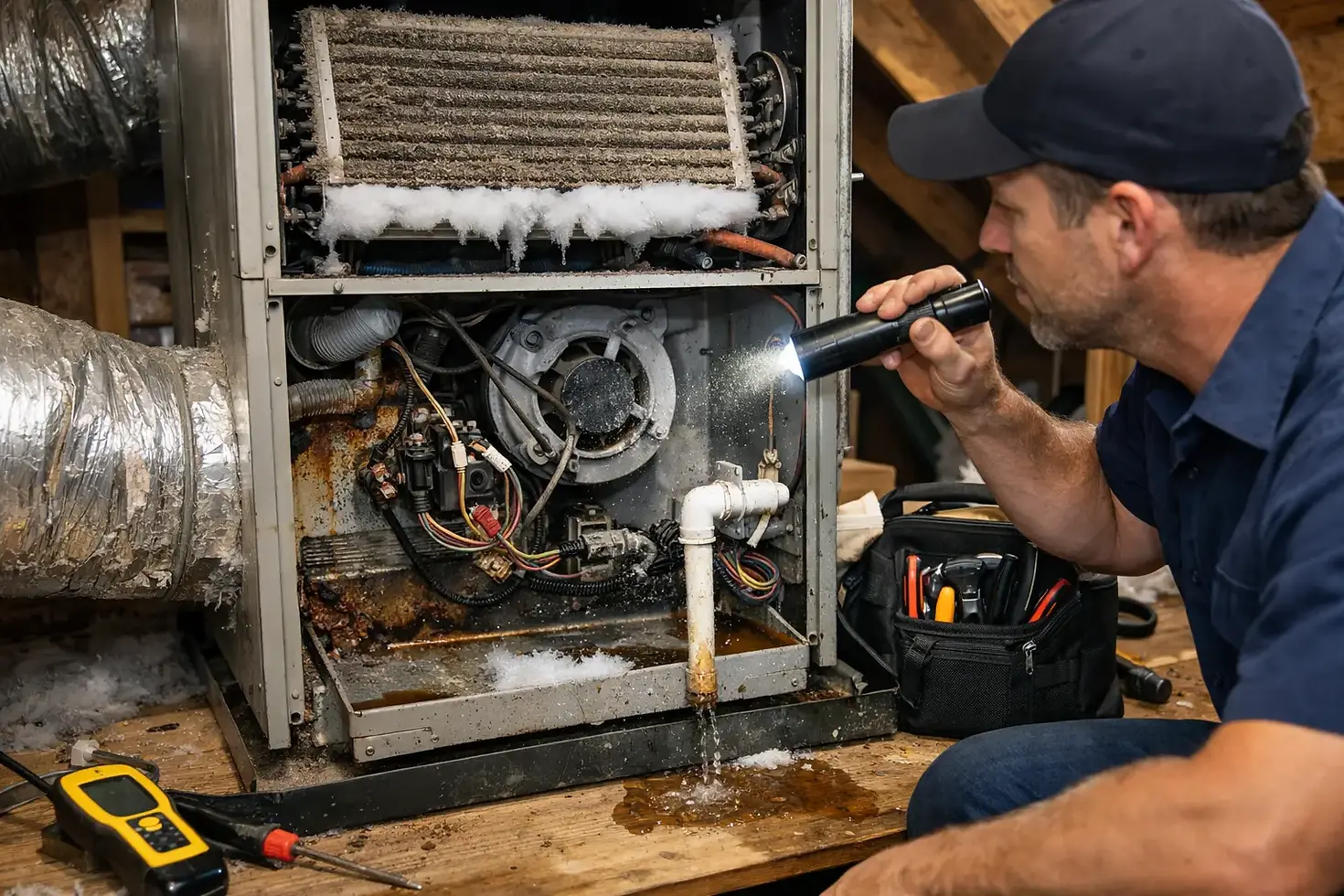
We commonly find rust inside furnace compartments, corrosion at fittings, deteriorated drain components, and staining around air handlers or condensate lines. In cooling season, condensation management is a major part of how an AC system performs. If condensate is not draining properly, it can lead to overflow, component damage, or surrounding material damage.
In South Jersey, where summer humidity can be substantial, moisture-related HVAC defects are not unusual. A rusted secondary drain pan, clogged condensate line, or signs of past leakage around an attic air handler deserve attention because they may indicate ongoing maintenance issues or hidden damage nearby. Sometimes the fix is limited. Sometimes the staining tells you this has been happening for a while.
Common HVAC problems we find with cooling equipment
Air conditioning condensers often show a different set of concerns than indoor heating equipment. We routinely note damaged fins, vegetation too close to the unit, units that are out of level, missing disconnect covers, deteriorated insulation on refrigerant lines, and signs of heavy wear. None of those should be ignored just because the unit powers on.
We also look at overall performance during normal inspection operation. If the system cools but struggles to produce an appropriate temperature differential, that can point to a service issue. It does not always mean a major repair is needed. It may indicate low refrigerant, dirty coils, airflow problems, or another defect that requires HVAC contractor evaluation. The key is that cooling is not judged only by whether air feels cold at one register.
Unsupported or poorly installed ductwork
In crawl spaces, basements, attics, and utility areas, duct defects are very common. We see disconnected ducts, sections with excessive sagging, damaged insulation, patched joints, and improvised connections that reduce airflow. In some homes, especially older properties that have had additions or partial system updates, the duct layout itself creates uneven comfort and efficiency problems.
This is one of those areas where buyers sometimes underestimate the impact. Duct defects can affect how well the home heats and cools, how hard the equipment has to work, and whether certain rooms ever get consistent airflow. A furnace or condenser can be in acceptable operating condition while the delivery system still has significant defects.
Thermostat and control issues
Another common inspection finding is a system that does not respond normally to thermostat controls. That can be as simple as an outdated or improperly programmed thermostat, but not always. We also see systems where heating and cooling stages do not respond as expected, fan settings behave inconsistently, or wiring changes appear to have been made over time.
For a buyer, this matters because control issues can be misleading during a showing. A home may feel comfortable at the moment, but that does not tell you whether the system is cycling correctly or controlling temperature the way it should throughout the day.
Inadequate heating or cooling at the time of inspection
Sometimes the concern is straightforward - the system runs, but performance is limited. A furnace may produce heat but not deliver it evenly. An AC system may operate but fail to cool adequately under inspection conditions. We document what is observable and recommend further evaluation when system response is not consistent with normal function.
There is an important trade-off here. HVAC inspection during a home inspection is a visual and operational assessment, not a destructive evaluation or full mechanical service. That means we can identify many common concerns, but some problems require specialized tools, extended run time, or seasonal conditions to fully confirm. Clear reporting matters because buyers need to understand both what was observed and where the limitations are.
Improper clearance, access, or installation details
We also find units installed too close to stored items, systems with limited service access, missing panel screws, open cabinet gaps, and other installation-related deficiencies. These may sound minor compared to a failed compressor or cracked heat exchanger, but they are still relevant. A system that cannot be serviced properly is more likely to be neglected, and missing or damaged access components can affect safe operation.
In attics and tight utility closets, these concerns come up often. Even when the equipment is functioning, poor installation detail can make future maintenance harder and can suggest that the overall installation was not done carefully.
What these HVAC findings mean for buyers
Most HVAC findings fall somewhere between minor maintenance and major replacement. The challenge for buyers is understanding where a specific issue fits. A loose duct connection is different from widespread duct deterioration. Surface rust is different from heavy corrosion and active leakage. An older condenser that cools properly is different from an older condenser showing poor performance and visible wear across multiple components.
That is why inspection language should be clear and practical. The goal is not to create alarm around every defect, and it is not to minimize issues that deserve attention. It is to help the client understand current condition, likely significance, and when a licensed HVAC contractor should step in before closing.
For homebuyers and agents in South Jersey, that clarity is especially useful in older housing stock and shore-area properties, where moisture, salt air exposure, age, and past alterations can all influence HVAC condition. Next Day Property Inspections focuses on documenting those real-world conditions in a way that helps clients make decisions quickly and with less guesswork.
A good inspection does not tell you that every HVAC system is bad or that every older unit needs to be replaced. It tells you what is there, how it appeared to perform on the day of inspection, and which findings deserve a closer look before the house becomes your responsibility.


