Egg Harbor Township Home Inspection Concerns
- Eric Price
- May 24
- 6 min read
A house in Egg Harbor Township can look clean at a showing and still raise serious questions once the inspection starts. That is why egg harbor township home inspection concerns usually come down to conditions you do not see during a quick walk-through - moisture in crawlspaces, aging roofing, settlement patterns, deferred maintenance, and mechanical systems near the end of their service life.
In this part of Atlantic County, buyers are often looking at a mix of older homes, updated resales, seasonal-use properties, and newer developments built on lots with drainage challenges. The concern is not whether a house is perfect. It is whether the condition matches the asking price, the seller disclosures, and your risk tolerance once you move in.
The most common Egg Harbor Township home inspection concerns
The homes that create the most inspection questions are not always the oldest ones. A newer house with poor grading or neglected exterior maintenance can present just as many issues as an older property with original components. What matters is how the house has handled moisture, movement, and wear over time.
Moisture and crawlspace conditions
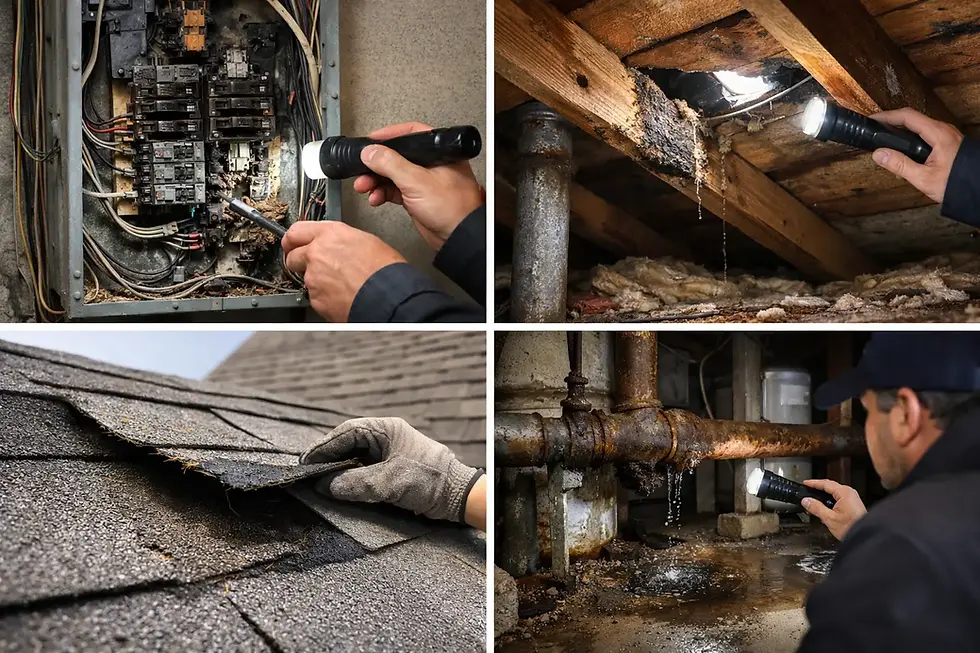
Crawlspaces are a frequent source of concern in South Jersey inspections, especially where the ground stays damp or exterior drainage pushes water back toward the foundation. In Egg Harbor Township, this often shows up as elevated humidity, visible microbial growth on framing, insulation hanging down, or signs of past standing water.
Sometimes the issue is active water entry. Other times it is long-term dampness that has never been fully corrected. Buyers tend to focus on kitchens and bathrooms, but the crawlspace often tells the more useful story about how the house is performing underneath. When we see excessive moisture below the home, we are also thinking about how that condition may affect floor framing, air quality, and the overall durability of the structure.
Roof wear and flashing defects
Roof concerns are common, and not just on visibly older homes. Shore-area weather patterns, wind exposure, and regular moisture can shorten the practical life of roofing materials if installation details were weak from the start. Missing shingles are only one part of the picture. We also pay close attention to flashing at roof penetrations, wall intersections, chimneys, and valleys.
A roof may still have usable life left, but that does not mean it is defect-free. Small flashing failures can allow moisture intrusion into attics or wall cavities long before interior staining becomes obvious. Buyers should understand the difference between a roof that is simply aged and a roof that is actively leaking or poorly detailed.
Attic ventilation and hidden moisture
Attics in this area often reveal issues that are not visible from the living space. Inadequate ventilation, bath fans terminating improperly, and old leak staining are all common findings. Sometimes the insulation pattern also suggests long-term moisture cycling or uneven air movement.
This matters because an attic can become the first warning sign of larger building envelope problems. A home may show no active ceiling damage inside, but if the attic has compressed insulation, fungal-like growth, or sheathing staining, that deserves a closer look. In an inspection, context matters. One isolated old stain is different from widespread signs of moisture-related deterioration.
Why drainage matters more than many buyers expect
A lot of buyers walk the inside carefully and barely look at the lot. That is a mistake. Exterior grading and water management are a major part of property performance in Egg Harbor Township. When downspouts discharge too close to the house, patios slope the wrong way, or low areas collect water near the foundation, those conditions often connect directly to crawlspace moisture, foundation movement, or basement seepage.
The concern is not only standing water after a storm. It is what repeated saturation does over time. We often see homes where the interior appears well maintained, but the site is quietly working against the structure. In Atlantic County properties, drainage problems can be subtle at first and expensive later.
Settlement cracks versus structural concern
Not every crack means structural failure. That is one of the biggest misunderstandings buyers have during inspections. Minor settlement-related cracking can be common, especially in homes that have been in place for years. What we are watching for is pattern, size, location, and whether the cracking appears cosmetic or connected to movement that is still ongoing.
A hairline crack above a doorway is different from differential movement that affects floor slope, door operation, and foundation walls. The point of the inspection is to separate normal aging from conditions that warrant further evaluation. Alarm does not help buyers. Good interpretation does.
Electrical and HVAC issues that come up often
Many inspection concerns are less dramatic than a roof leak but just as important to understand before closing. Electrical defects and HVAC performance issues show up regularly, especially in homes with partial updates.
Mixed-era electrical systems
A house may have a newer kitchen and bathrooms but still contain older wiring methods, double-tapped breakers, missing panel labeling, open junction boxes, or improper amateur modifications. These are common findings in resales where improvements were made in phases over many years.
The issue is usually not one single defect. It is the pattern of workmanship. When a panel has several installation concerns or visible signs of heat damage, the conversation changes from routine correction to safety and reliability. Buyers should know whether they are looking at a manageable punch list or a system that needs more significant attention.
Heating and cooling systems in South Jersey take a beating from seasonal swings and humid conditions. In inspections, we often find equipment that is operational at the time of the inspection but near the end of expected service life. That does not automatically make it a deal-breaker, but it should affect planning.
We also see disconnected duct sections, poor condensate management, rusted components, dirty coils, and temperature differentials that suggest the system is not performing as it should. An HVAC unit can turn on and still have meaningful concerns. Buyers need clear reporting on condition, not just a note that the unit responded to controls.
Windows, siding, and exterior trim tell you a lot
Exterior materials often show how well a house has been protected from long-term moisture exposure. In Egg Harbor Township, that can mean failed window seals, soft trim, deteriorated caulking, siding gaps, and wood components that have absorbed repeated wetting.
These are not cosmetic details when they create pathways for water intrusion. Sometimes the damage is localized and straightforward. Sometimes it points to a broader maintenance history that affects multiple sides of the home. A sharp inspection looks at exterior clues as part of the bigger condition story, not as isolated items.
Older homes versus newer homes
Buyers sometimes assume older homes bring more risk and newer homes bring fewer surprises. In practice, it depends. Older homes often have more predictable age-related concerns - original windows, dated electrical components, or long-term settlement patterns that are easier to see and understand. Newer homes can have construction defects, incomplete finishing, drainage issues, or rushed workmanship that has not had time to fully show itself.
That is why a careful home inspection in South Jersey should not rely on age alone as a shortcut. A 20-year-old house with consistent upkeep may present fewer real concerns than a much newer property with poor grading and visible moisture indicators.
What buyers should take seriously after the inspection
The most useful inspection report does not bury the important issues under minor observations. Buyers should focus first on moisture intrusion, structural movement, roof defects, electrical safety concerns, and major mechanical issues. Those tend to carry the greatest impact on safety, cost, and future deterioration.
After that, look at the pattern. A house with one larger issue may still be a solid purchase if the rest of the property is well maintained. A house with ten smaller issues spread across roofing, exterior trim, crawlspace moisture, and electrical work may indicate a longer history of deferred attention. Context is everything.
For buyers, sellers, and agents in Atlantic County, the goal is not to make a house fail inspection. It is to understand the real condition clearly enough to make a smart decision without guesswork. That is where local experience matters most. A report should tell you what is typical, what is unusual, and what deserves action before you move forward.
If you are looking at a property in Egg Harbor Township, pay close attention to the parts of the home that manage water, support the structure, and keep core systems running safely. Those are the areas that tend to matter most after closing, when the showing is long over and the house is finally yours.