What Buyers Miss Without a Home Inspection
- Eric Price
- May 22
- 6 min read
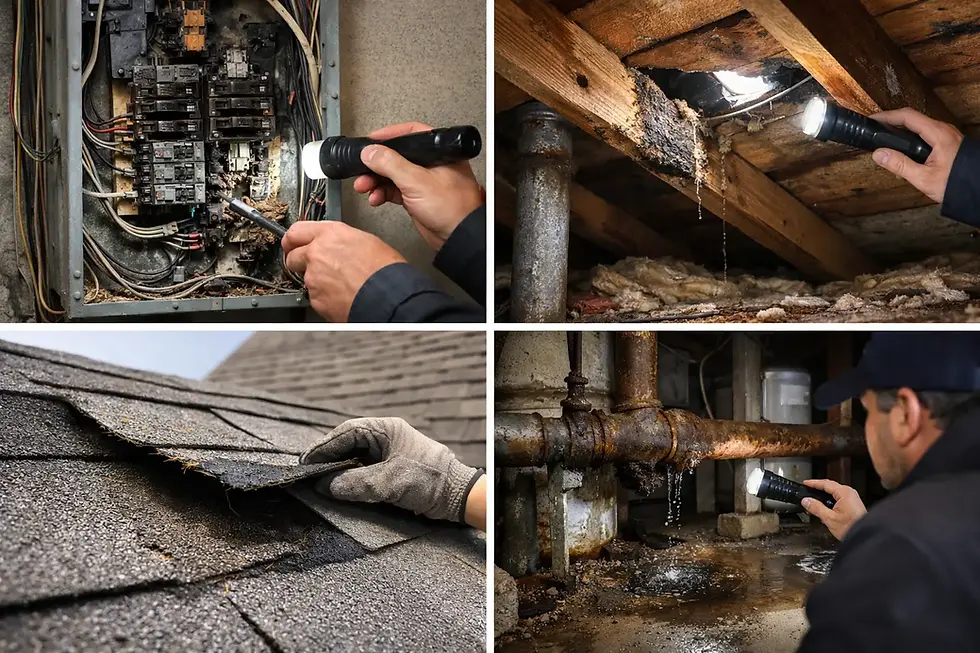
A house can show well for twenty minutes and still have thousands of dollars' worth of problems behind the walls, above the ceiling, or under the crawlspace. That is the real issue behind what buyers miss without a home inspection. Most major defects are not dramatic. They are subtle signs of wear, poor repairs, moisture entry, or safety concerns that only stand out when someone knows what to look for.
In South Jersey, that matters even more because the housing stock is varied. You may be looking at an older shore property with a long history of repairs, a mid-century ranch with deferred maintenance, or a newer home where installation shortcuts are the problem instead of age. In all three cases, a clean showing does not tell you enough.
What buyers miss without a home inspection in the first place
The biggest misconception is that a walkthrough tells you how a house is performing. It does not. A buyer sees finishes, layout, and natural light. An inspector is looking at roof conditions, drainage patterns, active moisture staining, electrical safety, HVAC operation, insulation issues, structural movement, and signs that components are near the end of their service life.
That difference is where expensive surprises happen. Buyers often assume they would notice a serious problem on their own, but many serious problems do not look serious until they have been developing for a while. A small stain can point to chronic roof leakage. A slightly sloped floor can be tied to framing movement. A bathroom that looks recently updated may be covering older plumbing defects or moisture damage.
The defects that stay hidden during a normal showing
Roof problems that do not announce themselves
A roof does not have to be actively leaking into the living room to be a problem. We often see aging shingles, failed flashing, soft areas, exposed fasteners, and patchwork repairs that suggest repeated leakage. On some properties, the interior has already been painted over, so the visible signs are minimal even when the roof condition is not.
Near the shore and in other wind-driven rain areas, flashing details matter as much as the shingle surface. Chimney intersections, vent penetrations, and low-slope transitions are common problem points. Buyers rarely catch those issues from the ground.
Moisture intrusion where no one is looking
Moisture is one of the most common and most underestimated inspection findings. It may show up as staining in an attic, elevated moisture around windows, water entry in a basement, or high humidity and deterioration in a crawlspace. None of that is obvious during a quick tour, especially if the home is staged well and the weather is dry.
In South Jersey homes, crawlspaces and basements often tell the real story. Efflorescence, damaged insulation, wood deterioration, and previous water marks can reveal ongoing conditions that affect air quality, structural materials, and future repair costs. Thermal imaging can also help identify temperature differences that support a closer look at possible hidden moisture.
Electrical issues behind a neat-looking interior
A freshly painted room says nothing about wiring quality. We regularly find double-tapped breakers, open knockouts, missing bonding, improper wiring methods, unsafe panel conditions, and amateur modifications hidden in otherwise attractive homes. Older homes may also have a mix of original and updated electrical work, which is where inconsistencies often show up.
This is one area where buyers can easily underestimate risk. Electrical defects are not always about immediate failure. Sometimes the issue is a system that has been altered over time without proper protection or evaluation. That can affect safety, insurance concerns, and future upgrade needs.
HVAC systems that are running, but not running well
It is common for buyers to feel cool air or warm air and assume the system is fine. That is not the same as evaluating how the equipment is performing, whether installation defects exist, or whether the unit appears near the end of its expected service life.
We see missing service access, rusted components, improper venting, dirty or damaged evaporator areas, unsafe clearances, and signs of condensation issues that a buyer would never catch during a showing. A system can operate on inspection day and still show clear indicators of deferred maintenance or shortened remaining life.
Structural movement that gets dismissed as normal settling
Not every crack is serious, and that is exactly why experience matters. Some movement is cosmetic. Some is a sign of ongoing settlement, moisture-related deterioration, or framing concerns. The challenge for buyers is that they usually do not know the difference.
Stair-step cracking, sloping floors, out-of-square door frames, joist alterations, undersized supports, and previous structural repairs are all things that need context. A proper inspection does not turn every imperfection into a crisis, but it does help you separate a manageable condition from a more significant concern.
Updated homes can hide just as much as older ones
One of the more common mistakes buyers make is assuming that renovated homes are safer bets. Sometimes they are. Sometimes they are simply better at hiding defects.
A new kitchen does not tell you whether the dishwasher drain is installed properly, whether there is active leakage under the sink, or whether the receptacles nearby are correctly protected. A remodeled bathroom may look sharp while still having poor exhaust, hidden moisture damage, or plumbing issues below the fixtures. New flooring can also conceal uneven subfloors or past staining.
This is especially relevant in fast-turn resale properties. Cosmetic improvements tend to stand out. Workmanship behind those surfaces often does not, at least not until the home has been occupied for a few months.
What buyers miss without a home inspection when safety is involved
Fire and shock hazards
Some of the most important inspection findings are not expensive repairs. They are safety issues. Missing GFCI protection, exposed conductors, improper appliance connections, damaged flue components, and unsafe electrical panel conditions may not affect how a house shows, but they absolutely affect whether the home is safe to occupy.
These are the kinds of findings that buyers rarely identify on their own because they are not obvious unless you are testing, opening panels, and evaluating installation details.
Moisture, mold-like conditions, and indoor air concerns
Not every moisture issue leads to microbial growth, but repeated moisture creates the right conditions for it. Bathrooms with poor ventilation, attics with inadequate airflow, wet basements, and damp crawlspaces can all contribute to conditions buyers may not notice right away.
That matters for comfort, building durability, and for some occupants, health concerns. When moisture is active or suspected, additional services such as mold inspection or more targeted evaluation may be warranted depending on what is found.
Radon and wood-destroying insect evidence
These are good examples of issues that are easy to miss because they are not part of a typical visual showing. Radon has no visual cue. Evidence of wood-destroying insects may be subtle, concealed, or limited to specific areas. A buyer can walk through a property and have no idea either condition is present.
That is why inspection planning matters. The right scope depends on the house, its age, location, and what the initial inspection reveals.
Why this matters during the transaction, not after it
A home inspection is not just about finding defects. It gives buyers timing. Knowing the condition before closing gives you the chance to ask better questions, request further evaluation where needed, and make a decision based on the actual property rather than the listing presentation.
That does not mean every finding should derail a purchase. Most homes have issues. The value is in understanding which issues are routine, which ones are more costly, and which ones suggest active leakage, safety concerns, or neglected systems. Without that context, buyers are negotiating blind.
For investors, this matters for budgeting and project scope. For first-time buyers, it matters because the difference between a manageable repair list and a major surprise can affect the first year of ownership in a big way. For agents, a thorough inspection helps set realistic expectations and reduces the chance of avoidable post-closing disputes.
The real cost of skipping the inspection
When buyers skip an inspection, they are not just skipping a report. They are skipping a trained evaluation of how the home is actually put together and how it is currently performing. They may miss active roof leaks, unsafe electrical defects, concealed moisture damage, failing HVAC components, structural concerns, or signs that major systems are near replacement.
Some of those conditions are fixable and common. Some are more significant. The point is not that every house is full of hidden problems. The point is that you do not know which house has which issues until someone checks it properly.
That is where a detailed inspection earns its value. Clear findings, same-day reporting, and practical explanations help buyers make decisions with their eyes open instead of hoping a clean showing means a clean house.
If you are buying a property, the smartest approach is simple - look past the finishes, get the house evaluated thoroughly, and make your decision based on the condition you cannot see at first glance.