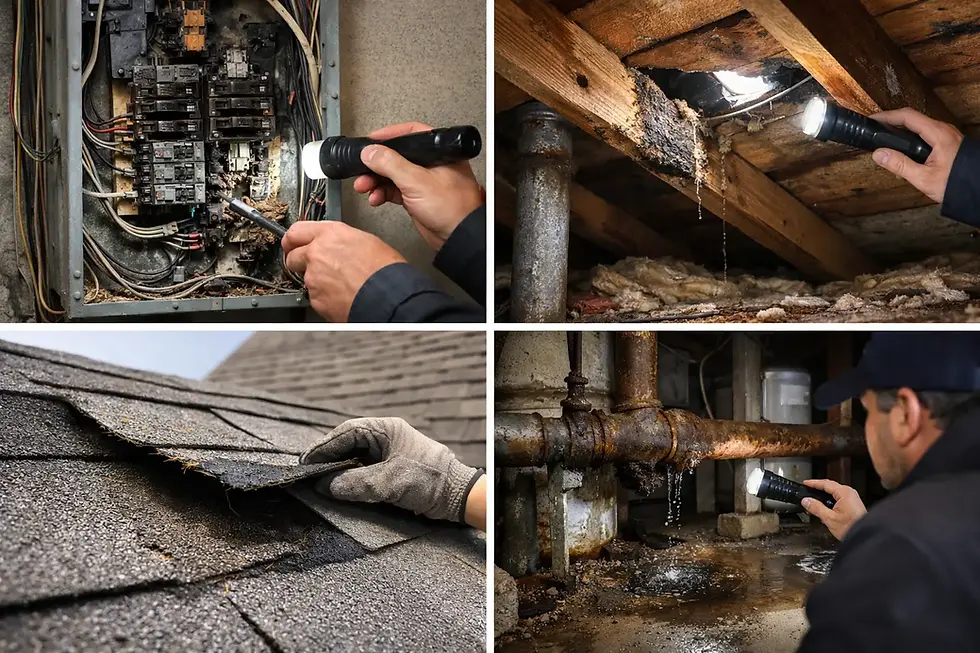
7 New Construction Inspection Mistakes
- Eric Price
- May 29
- 6 min read
The walkthrough looks clean, the paint is fresh, and everything feels untouched. That is exactly why new construction inspection mistakes happen. Buyers assume a brand-new home should have fewer issues, so they lower their guard right when they should be paying closest attention.
A newly built home can absolutely have defects. In South Jersey, we regularly see issues tied to rushed schedules, multiple subcontractors, incomplete finishes, grading problems, missing safety items, and mechanical systems that were installed but not fully corrected after testing. A new house is not the same thing as a finished, properly inspected house.
Why new construction inspection mistakes are so common
Most of the problems start with expectations. Buyers hear that the home passed code inspections and assume that means everything has been fully evaluated. It has not. Municipal code inspections are limited in scope and tied to minimum standards at specific stages. They are not a substitute for an independent inspection focused on how the house actually performs as a whole.
The other issue is timing. New construction moves fast near closing. Final touch-up work may still be underway, appliances may be installed late, and weather can affect exterior grading, drainage, and roof conditions. In shore-adjacent parts of Atlantic and Cape May County, where moisture, wind exposure, and humidity can affect materials early, those details matter even more.
Mistake #1: Believing code approval means defect-free construction
This is probably the most common misunderstanding we hear from buyers. A home can pass local inspections and still have missing insulation at an attic access, reversed hot and cold water lines, loose fixtures, disconnected duct sections, unsafe stair details, or improperly sloped exterior surfaces.
Code inspectors and independent home inspectors are looking at different things. Code compliance is not the same as quality control. A licensed South Jersey home inspector is evaluating visible conditions, system function, installation concerns, and signs that one issue may be affecting another. That wider view is where many new-build defects get identified.
In practical terms, we often find conditions that are not dramatic on their own but become expensive if they stay hidden. A poorly sealed exterior penetration may not seem urgent on day one, but in a humid coastal environment it can allow moisture intrusion that leads to staining, material deterioration, or mold concerns over time.
Mistake #2: Waiting until the final walkthrough to inspect
The final walkthrough is not an inspection. It is a buyer orientation and confirmation that agreed-upon items appear complete. By that point, many important components are already covered, insulated, or finished.
For buyers purchasing a home early enough in the build process, pre-drywall inspections can be extremely valuable. That is when framing, rough plumbing, rough electrical, and ductwork may still be visible. You can catch installation concerns before they are hidden behind finished walls and ceilings.
Even if a pre-drywall inspection is no longer possible, a final inspection before closing still matters. It gives buyers a clearer picture of visible defects, incomplete work, safety concerns, and systems that do not perform as expected. The mistake is assuming there is only one moment to evaluate the property, and that the last-minute walkthrough is enough.
Mistake #3: Ignoring grading and drainage because the lot is new
New lots often look clean and orderly, but that does not mean drainage is correct. Freshly disturbed soil settles. Downspout discharge may be too close to the foundation. Final grading may pitch water toward the structure instead of away from it. Low areas can develop near patios, walkways, crawlspace vents, or garage slabs.
This matters in South Jersey because drainage problems do not stay outside for long. We see crawlspaces with elevated moisture, damp foundation walls, settlement cracks, and water entry risks tied to exterior grading that should have been corrected before turnover. On seasonal and shore properties, where moisture exposure is already a factor, poor drainage can become a recurring issue quickly.
A house can be brand new and still show early warning signs - muddy perimeter areas, negative grading, ponding near foundation walls, or settling at utility trenches. These are not cosmetic details. They are conditions that deserve attention before closing, when there is still leverage to get them addressed.
Mistake #4: Overlooking attic, roof, and ventilation details
Buyers tend to focus on finishes they can see at eye level. Inspectors spend plenty of time looking above and below that line. Some of the most important new construction defects show up in attics, roof penetrations, soffit areas, and ventilation systems.
We commonly look for disconnected bath fan ducts, insufficient insulation at access openings, roof flashing concerns, blocked soffit vents, and signs that venting paths were not completed properly. In homes exposed to coastal moisture conditions and salt-air exposure, weak points in the building envelope can show themselves early.
A roof can be new and still have deficiencies. Flashing details around penetrations, kick-out flashing at wall intersections, fastening issues, or damaged shingles from late-stage trades are all examples of items that may not be obvious during a casual walkthrough. This is one reason many buyers choose independent home inspections even on recently completed homes.
Mistake #5: Assuming all systems were fully tested and adjusted
Mechanical systems are one of the biggest blind spots in new construction. Equipment may be newly installed, but that does not mean it has been fully commissioned, properly balanced, or corrected after startup issues. We still find loose registers, temperature inconsistencies, missing insulation on refrigerant lines, improper condensate discharge, and electrical labeling issues.
The same goes for plumbing fixtures, water heaters, GFCI protection, and appliance operation. Sometimes the issue is incomplete installation. Other times the system technically works, but not as intended. A bathroom exhaust fan may run but terminate improperly. A heating and cooling system may respond at the thermostat but show airflow concerns at multiple rooms.
This is where an inspection adds value beyond a punch list. A punch list usually focuses on cosmetic completion. An inspection is concerned with performance, safety, and installation quality.
Mistake #6: Treating cosmetic issues as minor when they point to larger workmanship problems
Not every cosmetic defect matters equally. A small paint touch-up is one thing. But repeated finish defects in the same area can be a signal that something underneath was rushed, patched, or adjusted after the fact.
For example, a misaligned interior door by itself may be a simple correction. A cluster of sticking doors, trim separation, uneven floors, and drywall cracking in the same section of the home may point to settlement or framing movement worth documenting. Similarly, cracked exterior caulk at multiple penetrations may not be just a finish issue if it suggests poor weather sealing.
The key is context. Experienced inspectors are not alarmist about cosmetic items, but we also do not dismiss patterns. In a new home, workmanship details can tell you a lot about how carefully the build was completed.
Mistake #7: Skipping the inspection because of a builder warranty
A builder warranty can be useful, but it is not a reason to skip an inspection. Warranties are reactive. They come into play after you discover the problem, report it, and work through the builder's process. An inspection is proactive. It helps identify concerns before closing, when documentation is easier and correction can often happen before occupancy.
There is also a practical side to this. Once a buyer moves in, it becomes harder to separate a construction defect from a wear issue, furniture damage, or a comfort complaint. It is better to document visible conditions while the home is still in turnover.
Some buyers also choose an 11-month warranty inspection before the builder warranty period ends. That can be a smart step, especially if the home has gone through a full cycle of seasons. In South Jersey, where humidity, winter temperature swings, and wet weather can expose deficiencies in crawlspaces, attics, and exterior drainage, a later inspection may reveal issues that were not visible on day one.
What buyers should pay attention to before closing
The best approach is not to assume a new house is problem-free, but also not to expect every issue to be major. Most findings in new construction are correctable. What matters is identifying them clearly and early.
Buyers should pay close attention to areas where defects are often hidden in plain sight - attic access points, crawlspaces, roof edges, exterior grading, windows and doors, garage safety features, HVAC distribution, and signs of incomplete sealing at penetrations and trim transitions. On South Jersey shore homes and other moisture-prone properties, the building envelope and drainage details deserve extra scrutiny.
That is where a thorough, clearly documented inspection helps. A good report should separate routine punch-list items from conditions that affect safety, moisture control, or system performance. It should also explain the finding in plain language so buyers, agents, and builders understand what needs follow-up.
At Next Day Property Inspections, that practical clarity is what helps clients move forward with confidence instead of guesswork.
A new home should feel like a clean start, not a leap of faith. The right inspection keeps it that way.