What South Jersey Property Inspections Reveal
- Eric Price
- 1 day ago
- 6 min read
A clean showing and a fresh coat of paint can make a property feel ready for closing. South Jersey property inspections are where the less visible parts of that property come into focus: the damp crawlspace, the aging roof covering, the electrical panel with mixed-era work, or the slow drainage issue that has not yet reached the surface.
For buyers, sellers, investors, and real estate professionals, the purpose is not to make a house sound worse than it is. It is to establish its present condition clearly enough to make a sound decision. In Atlantic, Cape May, Cumberland, and neighboring counties, that means looking closely at how local weather, soil, age, and seasonal use affect the building.
Why Local Conditions Change the Inspection
South Jersey has a broad mix of housing. A shore bungalow, a year-round home in Galloway, a historic property in Cape May County, and a newer development in Gloucester County can all have very different inspection priorities. The building may look similar from the street, but its exposure and construction tell a different story.
Coastal moisture conditions are a regular factor near the shore. Humid air, wind-driven rain, and salt-air exposure can accelerate corrosion at exterior metal components, HVAC equipment, fasteners, electrical connections, and deck hardware. Those conditions do not automatically mean a major defect is present. They do mean the inspector needs to distinguish normal weathering from deterioration that affects function or safety.
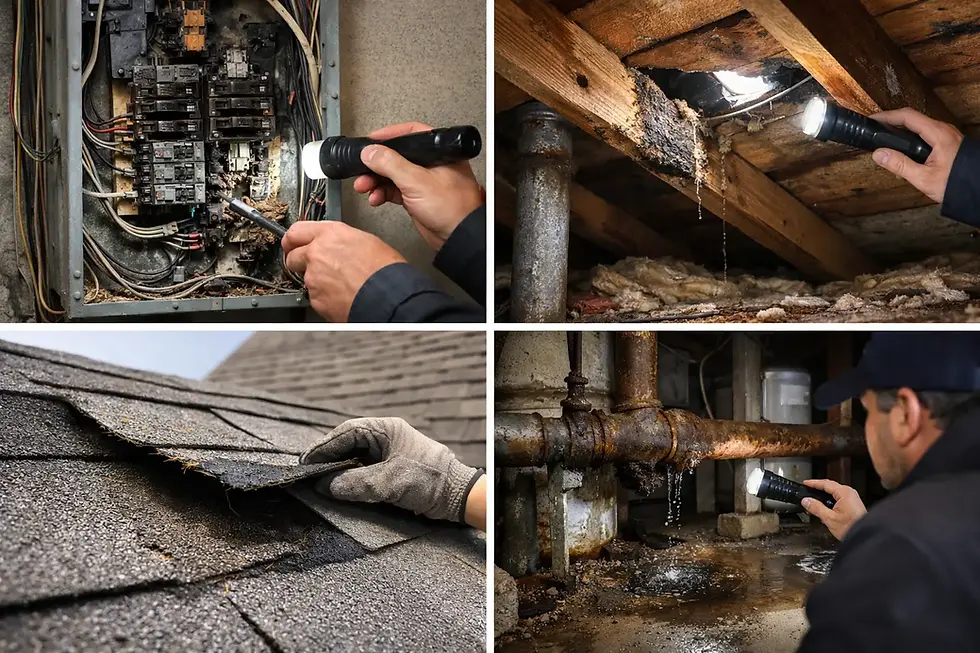
Crawlspaces are another frequent point of concern. Many South Jersey homes have low crawlspaces that are difficult to access and prone to moisture. During an inspection, we are looking for more than standing water. Damp soil, microbial-like growth, insulation falling from floor framing, rusted supports, vapor barrier conditions, and signs of past water entry all help explain how the space is performing.
Drainage also deserves close attention. Flat terrain, high water tables in certain areas, and lot grading can direct water toward a foundation rather than away from it. A stained basement wall or a wet crawlspace may be related to one event, an ongoing drainage pattern, or a past repair. The inspection report should describe the observed evidence rather than guess at a cause that cannot be confirmed visually.
What a Thorough Home Inspection Covers
A home inspection is a visual, noninvasive evaluation of readily accessible systems and components. It is broader than a quick walkthrough, but it is not a guarantee that every concealed condition will be found. Walls, finished ceilings, buried piping, and areas blocked by belongings can limit what is visible on inspection day.
The value comes from evaluating the property as a working system. A roof issue can lead to attic moisture. Poor grading can contribute to foundation moisture. An older electrical panel may be serviceable, but visible installation conditions may call for further evaluation by a qualified electrician. The report connects those observations in practical terms.
Roofs, Attics, and Exterior Surfaces
Roof conditions are especially important because leaks often begin long before they become visible on an interior ceiling. Inspectors assess the roof covering, flashing, penetrations, gutters, visible chimney areas, and accessible attic framing. On homes where a roof cannot be safely walked, drone roof inspections can provide a clearer view of elevated surfaces without taking unnecessary risks.
In shore homes, we often see roofing and trim materials exposed to stronger weather cycles than inland properties. Loose siding, deteriorated sealant, corroded fasteners, and worn flashing can allow water into the building envelope. The key question is not whether a material looks weathered. It is whether its present condition is allowing or likely to allow water intrusion.
Attics can reveal a great deal about ventilation, insulation, and roof performance. Staining on framing, damp sheathing, visible mold-like growth, or an improperly vented bath fan may point to conditions worth addressing. These findings need context. A small old stain with dry framing is different from active moisture at the time of inspection.
Structure, Foundation, and Moisture Evidence
A crack in a foundation is not automatically a structural failure, just as a level-looking floor does not rule out movement. Inspectors look at the type, location, pattern, and apparent significance of visible cracks, along with related evidence such as doors that do not close properly, separated trim, sloping floors, or displaced masonry.
In aging housing stock, prior repairs are common. Some are well executed and some require closer review. A thorough report identifies what is visible and explains when a specialized evaluation may be appropriate. Buyers should not be left trying to interpret technical conditions from a photograph alone.
Moisture findings deserve the same measured approach. Moisture meters and thermal imaging can help identify areas that warrant further investigation, particularly around plumbing fixtures, exterior openings, ceilings, and crawlspaces. Thermal imaging is useful when it supports a visual inspection, but it is not an X-ray of the building. A temperature difference can result from insulation gaps, air movement, moisture, or even sun exposure. The finding must be interpreted in context.
Electrical, Plumbing, Heating, and Cooling Systems
Older South Jersey homes often contain a mix of original and updated systems. It is common to see newer HVAC equipment connected to older electrical components, or remodeled kitchens with wiring changes that do not match the rest of the house. A licensed South Jersey home inspector evaluates visible conditions such as panel labeling, grounding, accessible wiring, plumbing leaks, water-heating equipment, and the installed heating and cooling systems.
The inspection does not replace a trade contractor’s detailed diagnosis. It identifies visible deficiencies, safety concerns, and conditions that should be evaluated further before closing. That distinction matters in a transaction. A buyer may need to know whether a system is operating on inspection day, whether visible installation concerns are present, and whether additional information is needed from a qualified specialist.
When Specialty Inspection Services Add Value
Not every property needs every add-on service. The right scope depends on the property’s age, location, visible conditions, and the buyer’s level of risk tolerance. A thorough home inspection is the starting point, while specialty services answer questions that a standard visual inspection cannot fully resolve.
Radon testing is often a reasonable consideration for buyers who want measured results rather than assumptions. Mold inspections may be appropriate when there is visible growth, recurring moisture evidence, a history of water intrusion, or occupant concerns. A termite or wood-destroying insect inspection can identify visible evidence of activity or damage that is outside the scope of a general inspection.
Sewer camera inspections can be particularly useful for older homes, properties with mature trees, or houses where the condition of the lateral line is unknown. A home can have fixtures that drain during an inspection while still having a damaged, offset, or obstructed sewer line farther from the house. That is a separate system and requires its own evaluation.
For buyers considering an Atlantic City home inspection or a property closer to the coast, the right combination of services often depends on the home’s specific exposure. A seasonal property that sits closed for long periods may have different moisture and plumbing concerns than an occupied year-round residence. An independent inspection should be tailored to the property, not treated as a checkbox.
How to Use the Inspection Report Before Closing
A good report should help the client prioritize, not overwhelm them with a long collection of photographs. Most properties, including well-kept ones, have findings. The useful question is which findings involve safety, water entry, active system concerns, major repair decisions, or specialist review.
Look for clear descriptions of the condition, location, and observed impact. Photographs should support the finding, and the report should separate material concerns from normal cosmetic wear. This is especially helpful for first-time buyers, who may not know the difference between a common age-related condition and a problem that needs attention.
Fast reporting matters because real estate deadlines are real. Same-day digital reports give buyers and their representatives time to review findings, ask focused questions, and decide what follow-up is appropriate. At Next Day Property Inspections, the goal is to provide that clarity without turning routine conditions into unnecessary alarm.
The most useful inspection is one that leaves you with a clearer view of the property you are considering. Before the next negotiation, repair request, or closing decision, use the report to ask specific questions about the conditions that matter most to your plans for the home.