New Jersey Radon Risk Trends in South Jersey
- Eric Price
- Aug 4
- 6 min read
A low radon reading at the neighbor’s house does not tell you what to expect in the house you are buying. That is one of the most practical lessons behind New Jersey radon risk trends. Radon levels can vary sharply from one property to the next, even on the same street, because the result depends on the soil below the home, the foundation configuration, air movement, and how the building is used.
For South Jersey buyers, the real trend is not that every home is suddenly high-risk. It is that more buyers, sellers, and real estate professionals understand that radon testing is a property-specific question. A properly conducted test provides useful information about the home in front of you, rather than relying on a county label, a neighborhood assumption, or a previous owner’s recollection.
Why New Jersey Radon Risk Trends Are Property-Specific
Radon is a naturally occurring radioactive gas that comes from the breakdown of uranium in soil and rock. It has no odor, color, or taste. When soil gas enters a house and becomes trapped indoors, levels can build up. The point of testing is to measure indoor conditions, not to guess based on appearance.
In the homes we see across Atlantic, Cape May, Cumberland, and nearby counties, the entry path is often as relevant as the soil conditions. Soil gas can move through cracks in a slab, gaps around utility penetrations, sump areas, floor drains, exposed earth in a crawlspace, or openings around foundation walls. A clean, recently renovated house can still have an elevated result. So can a modest older home with no visible foundation damage.
That is why broad radon maps are useful for awareness but cannot clear an individual home. Maps describe the likelihood of elevated readings across larger areas. They do not measure the conditions inside a specific rancher, shore cottage, townhouse, or investment property.
What We Are Seeing in South Jersey Transactions
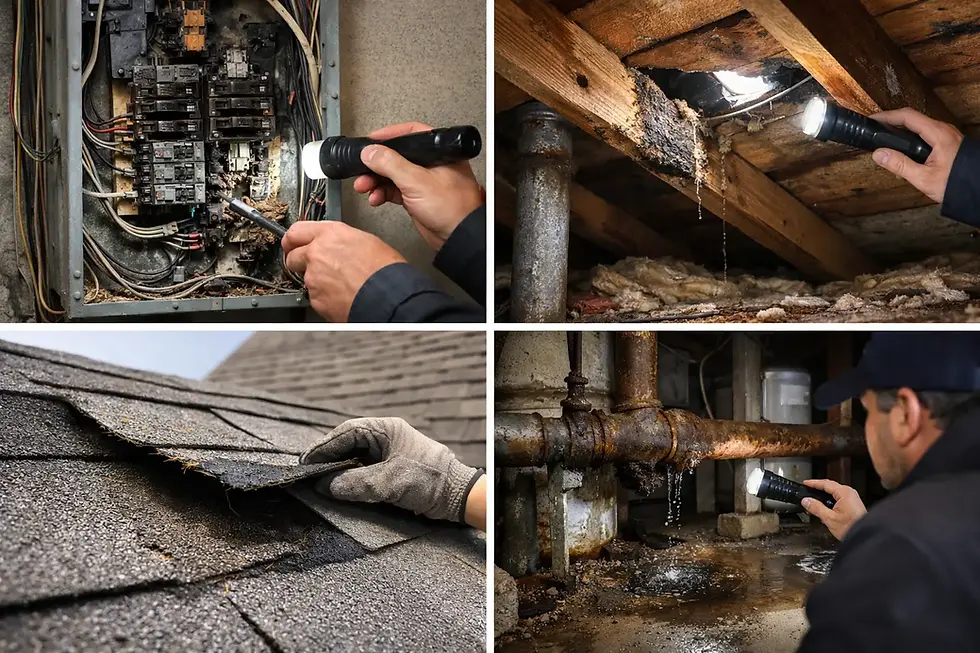
Radon testing has become a more routine part of the inspection period, particularly among buyers who want a complete picture before contingencies expire. This is a sensible shift. Buyers are already assessing roofing, electrical systems, moisture conditions, and structural concerns. Radon belongs in that same fact-finding process because the result can affect the next step in the transaction.
There is also greater attention to prior mitigation systems. A visible radon vent pipe or fan is not proof that the issue is permanently resolved. It generally shows that the property had a system installed at some point. The important questions are whether the system appears active, whether its components are intact, and whether current testing confirms an acceptable result. A fan that is not operating, a disconnected pipe, or an altered basement or crawlspace can change performance.
Seasonal and shore properties deserve particular care. A home that sits closed for extended periods may have different indoor air behavior than a year-round residence. In coastal areas, people sometimes focus only on humidity, salt-air exposure, or crawlspace moisture. Those are legitimate inspection concerns, but they do not rule out radon. Moisture and radon are separate conditions that can both be influenced by foundation and crawlspace details.
Foundation Type Changes the Testing Conversation
The lowest lived-in level of the home is usually where radon testing matters most. That sounds simple, but the way the space is used can make a meaningful difference.
Basements and Finished Lower Levels
Finished basements are common places for buyers to picture a family room, office, bedroom, or recreation area. Once a lower level is part of daily living space, its radon result has a direct connection to how the home will be used. Finished walls and flooring may conceal slab cracks or utility gaps, so a visual inspection alone cannot determine radon conditions.
In older housing stock, we also see basement spaces that have been altered over time. A formerly unfinished area may have new walls, a drop ceiling, or flooring added without changing the way soil gas enters the building. The upgrades can make the room more comfortable, but they do not replace testing.
Crawlspaces and Raised Shore Homes
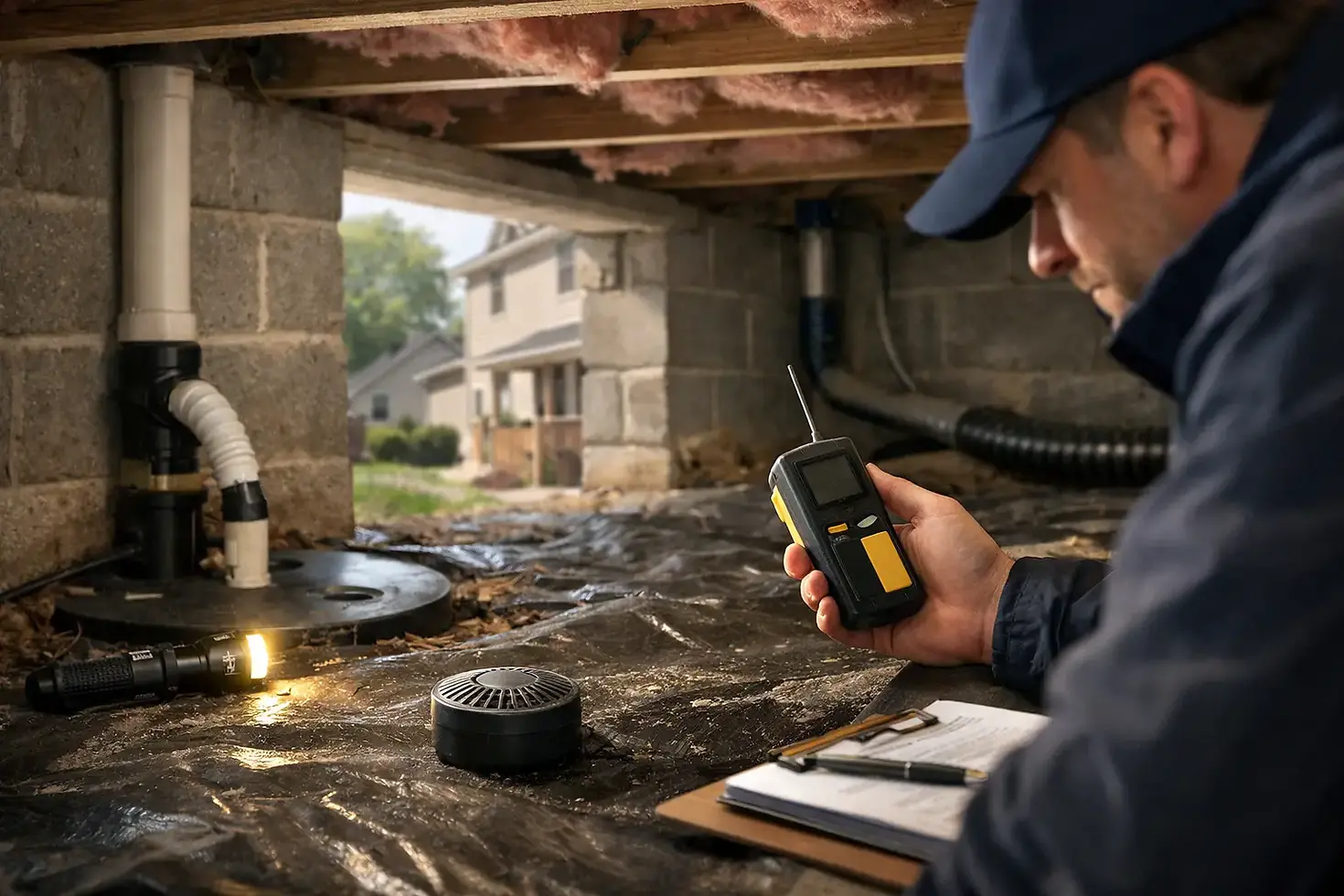
Crawlspaces are a recurring South Jersey inspection issue, especially in homes with aging construction, additions, or elevated coastal designs. A crawlspace may be vented, partially enclosed, conditioned, or simply difficult to access. Those details affect air movement under and within the home.
An earth-floor crawlspace can be one potential pathway for soil gas. A home on pilings or with an elevated enclosure is not automatically exempt from concern either. The living area, ductwork paths, utility openings, and foundation transitions all matter. The right approach is to test the occupied area instead of assuming that a raised home has enough natural ventilation to eliminate risk.
Slab-on-Grade Homes
Slab homes are sometimes wrongly treated as lower concern because they do not have a basement. In reality, a slab is in direct contact with the soil. Penetrations for plumbing, electrical lines, and other utilities, along with joints and cracks, can provide routes for soil gas entry. Testing remains the only way to know what is occurring inside the home.
How to Read a Radon Result Without Overreacting
A radon result is not a verdict on the overall quality of a property. It is a measurement taken under defined test conditions. A higher reading does not mean the house is unsafe to enter, poorly built, or impossible to buy. It means the finding should be addressed through an informed next step.
The EPA action level commonly used in real estate decisions is 4.0 pCi/L. Results at or above that level typically call for further evaluation and mitigation planning. Readings below that number are lower, but no radon level is considered entirely risk-free. Whether a lower reading leads to additional testing can depend on the result, the home’s layout, the duration of the test, prior system history, and how the lowest level will be used.
Short-term tests are commonly used during real estate transactions because they fit the inspection timeline. They are useful, but they capture a period of time rather than every condition the home will experience over a year. Radon levels can change with weather, heating and cooling patterns, closed-house conditions, and pressure differences between indoors and outdoors. That does not make short-term testing unreliable. It means the result should be interpreted in context, especially when it is close to a decision threshold.
Common Assumptions That Lead Buyers Astray
The most frequent mistake is treating a prior test as a permanent clearance. A test from several years ago may be helpful background, but it does not replace a current result during a purchase. Construction changes, a new HVAC system, foundation work, finishing a basement, or changes to crawlspace conditions can affect indoor air movement.
Another assumption is that newer homes cannot have radon concerns. Newer construction may be tighter, which can reduce uncontrolled air exchange. That can be beneficial for efficiency, but it may also allow indoor pollutants to remain concentrated if there is an entry pathway. Age alone is not a dependable predictor.
Buyers also sometimes assume coastal areas are automatically low risk. Local geology varies, but no regional reputation should take the place of testing. We have found that the most dependable transaction advice is also the least dramatic: test the particular house, review the documented result, and make decisions from that evidence.
Building Radon Testing Into a Complete Inspection Strategy
Radon testing works best when it is part of a broader understanding of the property. During a home inspection in South Jersey, foundation configuration, crawlspace accessibility, drainage patterns, moisture evidence, and the condition of any existing mitigation components can help explain what should be looked at more closely. They do not predict a numerical radon reading, but they add useful context.
For buyers, timing matters. Schedule testing early enough in the due-diligence period to allow for results, questions, and any necessary negotiations. For sellers, pre-listing testing can reduce last-minute uncertainty, particularly if the home has a finished basement, an older crawlspace, or a previously installed mitigation system. Investors should consider the intended use of the lowest level, since a storage-only basement and a future finished rental space present different exposure questions.
A clear test report gives everyone in the transaction a shared starting point. It keeps the discussion centered on measured conditions rather than assumptions, which is exactly where a good inspection process should begin.
If you are evaluating a South Jersey property, treat radon as a measurable condition, not a reason to panic or a detail to dismiss. A current test, read alongside the home’s actual foundation and occupancy conditions, gives you the practical information needed to move forward with confidence.