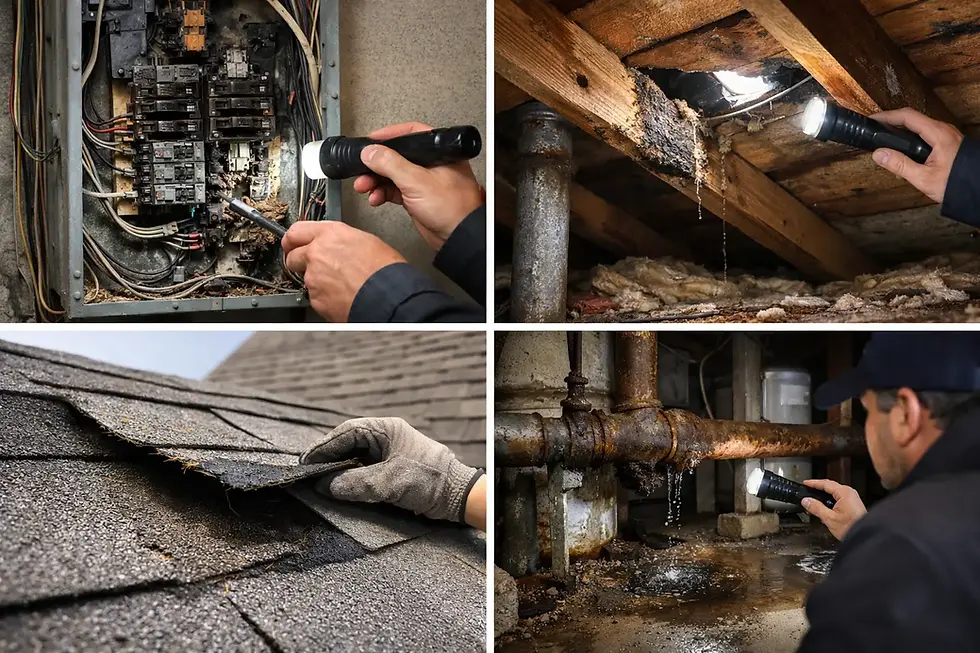
Egg Harbor City NJ Crawlspace Moisture Issues
- Eric Price
- Jun 16
- 6 min read
A crawlspace can tell you more about a house than a freshly painted living room ever will. In Egg Harbor City, the common moisture and crawlspace issues found during home inspections often point to larger patterns involving drainage, ventilation, wood damage, air quality, and deferred repairs.
That matters because many Atlantic County homes deal with a mix of shallow grading, heavy seasonal humidity, older foundation construction, and periods of standing water after storms. From an inspection standpoint, crawlspace conditions are rarely just cosmetic. They affect how the home performs, how the structure ages, and what a buyer should expect after closing.
Common moisture and crawlspace issues found during home inspections in Egg Harbor City NJ
One of the most frequent findings is visible moisture on the soil surface or signs that water has entered the crawlspace before. Sometimes that shows up as damp earth, staining on masonry piers, rusted metal components, or tide marks along the interior foundation walls. In other cases, the space looks dry on the day of the inspection but still shows a history of moisture through microbial growth, deteriorated insulation, or warped wood.
In Egg Harbor City, this is often tied to exterior drainage rather than one isolated defect. A low area near the foundation, short downspout discharge, clogged gutters, or poor yard slope can keep feeding water toward the crawlspace. On homes with older construction, we also see open vents, thin vapor barriers, or no meaningful ground cover at all, which allows ground moisture to keep rising into the space.
Another common issue is elevated humidity without obvious standing water. That distinction matters. A crawlspace does not need to be flooded to have a moisture problem. When the air stays damp long enough, framing members can start to show fungal growth, insulation can sag, and metal hangers or duct components can corrode faster than they should.
Why Egg Harbor City homes see these conditions so often
Local conditions play a big role. Homes in and around Egg Harbor City can be affected by flat lots, wooded surroundings, and the broader coastal moisture patterns that impact much of South Jersey. Even when a property is not directly near shore, the regional humidity profile still affects crawlspaces, especially in warmer months.
We also inspect plenty of homes where age is part of the story. Older Atlantic County properties may have crawlspaces built to standards that were common at the time but do not manage moisture well by current expectations. That can mean minimal drainage control, limited clearance, exposed soil, or repairs layered over older problems. A clean-looking crawlspace is not always a dry or healthy one.
Seasonal and part-time properties add another wrinkle. When a home sits with limited conditioning or irregular monitoring, crawlspace humidity can build unnoticed. By the time a transaction is underway, the signs may be visible in the subfloor, insulation, ductwork, or support framing.
What inspectors commonly find in damp crawlspaces
Standing water or water intrusion evidence
This is the clearest red flag, but it is not always active at the time of inspection. We often find past evidence instead - water staining, mud lines, debris patterns, rust, or deteriorated wood near lower structural components. If the area has recently been dry, those clues still matter because they show the crawlspace has a history.
Damaged or missing vapor barriers
A vapor barrier is one of the first things we look at in a crawlspace. In many homes, it is missing, poorly installed, torn, or too limited in coverage to be effective. When exposed soil is left uncovered, ground moisture can continue moving into the space. That does not guarantee major structural damage, but it does create conditions that support ongoing humidity problems.
Wood rot and fungal growth
Subflooring, joists, beams, and sill plates are all vulnerable when moisture remains elevated. Sometimes the damage is minor surface deterioration. In other cases, the wood has softened, decayed, or been altered enough to warrant further evaluation by a qualified contractor. During a home inspection, the goal is to document what is visible and explain the likely implications without overstating the condition.
Insulation problems
Crawlspace insulation often tells the story quickly. Wet insulation, fallen batts, compressed material, or insulation with visible staining usually points to moisture exposure. Once insulation starts sagging or absorbing moisture, it no longer performs as intended and can hide defects above it.
Corroded metal components
Metal hangers, fasteners, ductwork, and plumbing supports frequently show corrosion in damp crawlspaces. This is especially common in homes exposed to persistent humidity over time. Surface rust does not always mean immediate failure, but it is a useful indicator that the space has had prolonged moisture exposure.
Signs of previous repair without full moisture correction
This comes up often in real inspections. You may see replaced joists, sistered framing, new insulation, or patched masonry, while the original moisture source still appears unresolved. That is an important distinction for buyers. Repairing damage is one part of the equation. Controlling the conditions that caused it is the other.
Crawlspace moisture issues that can affect the rest of the house
A crawlspace does not stay isolated from the living space above it. Moisture below the home can contribute to musty interior odors, uneven floors, higher indoor humidity, and in some cases visible staining or air quality concerns inside. Buyers are sometimes surprised when the issue they noticed in a hallway or first-floor room turns out to have a crawlspace connection.
That is why these findings deserve context during a home inspection. The concern is not just whether the crawlspace looks messy. The question is whether the observed conditions suggest structural movement, material deterioration, or moisture migration into the occupied areas of the home.
In South Jersey homes with aging housing stock, that connection can be especially clear. We regularly see crawlspace conditions tied to cupped flooring, soft spots, insulation defects, and moisture-related microbial growth patterns. Not every damp crawlspace leads to major interior problems, but it is rarely something to ignore during a real estate transaction.
Common moisture and crawlspace issues found during home inspections in Egg Harbor City NJ often overlap
Most crawlspace problems do not show up one at a time. A home may have poor grading outside, an incomplete vapor barrier below, high humidity inside the crawlspace, and visible wood deterioration at the same time. That overlap is what makes a thorough inspection valuable.
It also explains why simple labels like dry or wet can be misleading. A crawlspace may be dry on the day of the inspection and still have a long-term moisture pattern. Another may show high humidity with no visible structural damage yet. The findings need to be read together, not in isolation.
That is where an experienced inspection approach matters. At Next Day Property Inspections, the crawlspace is assessed as part of the home’s larger moisture picture, including visible grading concerns, foundation conditions, insulation performance, ventilation, and signs of active or previous deterioration.
What buyers and agents should pay attention to in the report
When reviewing a report, the key is not just whether moisture was observed. Pay attention to how the condition is described. Is the issue active water intrusion, elevated humidity, damaged materials, limited access, or evidence of prior repair? Those are different findings, and they lead to different next steps.
It also helps to look for language about visibility and limitation. Crawlspaces are sometimes tight, obstructed, or partially inaccessible. If sections could not be fully viewed, that should be taken seriously, especially where moisture history is already present. Limited visibility does not mean a defect is confirmed, but it does mean uncertainty remains.
For real estate professionals, this is where clear communication helps keep the transaction grounded. A damp crawlspace does not automatically make a house a bad purchase. In many cases, it is a manageable condition. But buyers should understand whether they are looking at a monitoring issue, a repair issue, or a broader water management concern that may involve multiple corrections.
The most useful inspection reports do not create drama around these findings. They identify what is visible, explain what the condition may indicate, and point the client toward the right type of follow-up when needed.
A crawlspace in Egg Harbor City does not have to be perfect to be serviceable, but it should make sense. When the moisture patterns, material condition, and drainage clues do not line up, that is usually where the real story starts.