

Mold Inspection vs Testing: What You Need?
If you are buying a home and someone tells you the property needs mold testing, the first question should be simple: do we actually need testing, or do we need a proper inspection first? That is the real issue in mold inspection vs testing. They are not the same service, and treating them like they are can lead to missed conditions, unnecessary sampling, or a report that does not fully explain what is going on.
In the field, we see this confusion often. A buyer notices staining in an attic, a musty crawlspace, or visible growth near an HVAC air handler, and the conversation jumps straight to lab samples. Sometimes that is appropriate. Sometimes it is not. The right approach depends on what is visible, how moisture is entering the area, and what decision the client needs to make during the transaction.
Mold inspection vs testing: the practical difference
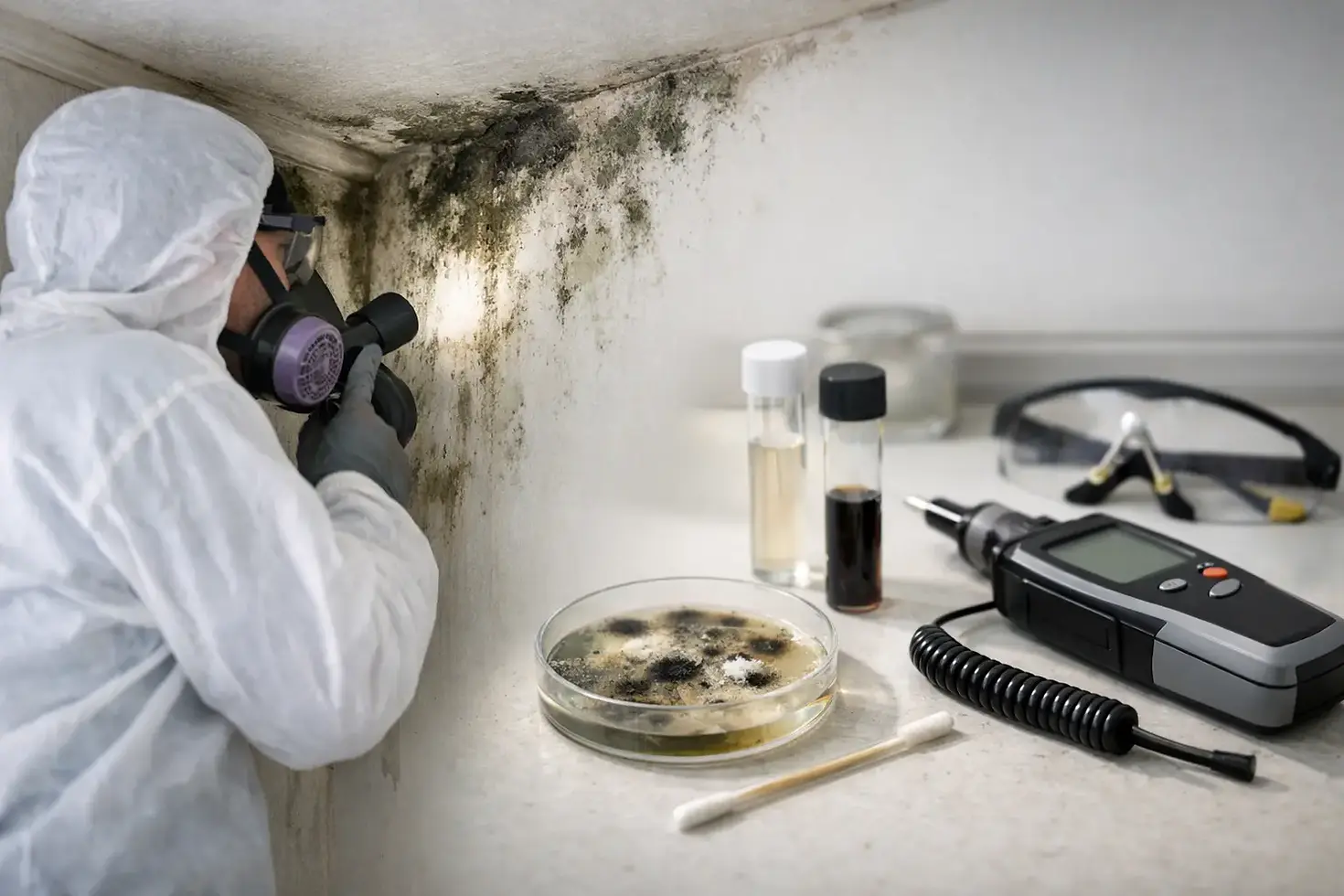
A mold inspection is the broader evaluation. It looks at the conditions that support mold growth, the areas where growth is visible or suspected, and the building issues that may be driving it. That means the inspector is not just looking for mold-like material. They are looking at roof leakage patterns, humidity levels, ventilation concerns, crawlspace moisture, bathroom exhaust issues, window condensation, and other defects that explain why the condition is there.
Mold testing is narrower. It usually involves taking samples, often air or surface samples, and sending them to a lab for analysis. The lab may identify spore types, concentration levels, or whether a sampled material contains mold growth. Useful information, yes, but only part of the picture.
That distinction matters because a lab result does not inspect a house. It does not tell you whether the source is an active roof leak, a damp crawlspace, poor attic ventilation, or long-term coastal humidity. It gives data from the sample collected at that moment. Without a solid inspection around it, that data can be easy to misread.
When a mold inspection is the better first step
In many real estate situations, inspection comes first because the visible conditions already tell part of the story. If there is obvious fungal growth on framing in a crawlspace, heavy staining around a skylight, or suspect material on attic sheathing, the next question is usually not whether something exists. The next question is how widespread it is, what caused it, and what else may be affected.
This comes up often in South Jersey homes, especially in crawlspaces and shore-area properties where moisture conditions are not subtle. Humid summers, seasonal occupancy, salt-air exposure, and older venting details can create persistent damp conditions. In those homes, an experienced inspection often provides more immediate value than a stack of sample results because it connects what is seen to the building conditions causing it.
For buyers and agents, that matters during negotiations. A useful inspection finding explains location, extent, likely moisture source, and whether the issue appears limited or more systemic. That gives the client something they can act on.
Visible growth does not always require testing
If growth is clearly visible, testing may add less than people expect. From an inspection standpoint, visible organic growth combined with moisture intrusion is already a material concern. Whether the lab identifies one spore type or another does not change the need to address the moisture source and evaluate cleanup.
That is why a good inspector does not rely on sampling as a substitute for observation. If the problem is in plain view, the inspection should focus on documenting conditions clearly and identifying contributing defects.
When mold testing makes sense
Testing has a place. It is just most useful when there is a specific question to answer.
One common example is when there is a strong musty odor but no obvious visible growth. Another is when a buyer wants additional documentation because occupants have sensitivity concerns, or because a seller has reported prior remediation and the client wants more data. Testing can also help when the concern is whether indoor air appears impacted compared with outdoor control samples.
In some cases, surface sampling helps identify whether staining is active growth or just old residue. That can be useful in attics, basements, or utility areas where dark discoloration may have multiple causes.
Still, testing is not magic. Air samples reflect conditions at the time of sampling. Open windows, HVAC operation, weather, occupant activity, and recent cleaning can all influence results. A clean lab report does not always mean a house has no mold-related issue. It may only mean the samples collected did not capture elevated levels under those exact conditions.
Testing is most helpful when the question is specific
The best testing requests are focused. Is there hidden mold impact suggested by odor? Does this stained surface appear to be fungal growth? Is the indoor environment meaningfully different from outside air at the time of testing? Those are clearer uses than simply saying, test the house for mold.
Houses are not tested like a single product off an assembly line. They are variable, and the interpretation matters as much as the sampling itself.
What buyers should watch for during a real estate transaction
During a purchase, mold concerns are often tied to another visible condition. A damp crawlspace, failed grading, attic condensation, plumbing leakage, or an unvented bath fan is usually part of the story. In that sense, mold is often the result, not the root problem.
That is why inspection quality matters. If the report only says mold-like substance observed, that is incomplete. Buyers need to understand where it was found, what building conditions were present, and whether those conditions suggest a localized issue or a larger moisture pattern.
In Atlantic County and Cape May County homes, for example, we regularly pay close attention to crawlspaces, attic sheathing, and areas around air handlers. Shore homes and seasonal properties can develop conditions that are tied to long periods of closure, elevated humidity, and inconsistent climate control. Older housing stock may also have patched-over leaks or long-term staining that deserves closer interpretation.
Why inspection and testing are sometimes used together
This is not always an either-or decision. Sometimes the best approach is inspection supported by targeted testing.
That combination works well when there are visible conditions plus uncertainty about whether adjacent areas are affected, or when the client needs lab-backed documentation in addition to the site observations. The inspection frames the issue. The testing adds another layer of evidence.
Used together, they can answer both practical and documentation-based questions. Used poorly, testing without a strong inspection can create a false sense of certainty.
Common misunderstandings about mold testing
One misunderstanding is that testing tells you everything you need to know. It does not. A sample is limited by location, timing, and collection method.
Another is that no visible mold plus a normal sample means no concern exists. Hidden moisture conditions can still be present. Likewise, elevated airborne spores do not automatically tell you exactly where the source is located.
A third is that every mold concern needs a long list of samples. In many cases, a careful inspection of the property condition is more useful than broad sampling that is not tied to a clear purpose.
How an experienced inspector approaches the decision
A practical inspector starts with the building, not the lab form. What do the surfaces show? Are there active moisture conditions? Is the concern confined to one area, or are there repeated signs in multiple parts of the structure? Is the odor consistent with hidden dampness? Are we seeing a ventilation problem, a drainage problem, or evidence of a prior leak that may or may not still be active?
Those questions shape whether testing adds value.
That is especially true in South Jersey, where coastal moisture conditions, vented crawlspaces, aging homes, and seasonal use patterns can all affect what shows up during an inspection. A report needs to reflect those realities clearly. Buyers are not helped by alarmist language, but they are also not helped by oversimplified comments that skip the underlying cause.
Next Day Property Inspections approaches mold-related concerns the same way a solid property inspection should be handled: observe carefully, document clearly, and explain what the conditions actually suggest.
If you are deciding between mold inspection vs testing, the best move is usually to start with the question you need answered. If you need to understand why a condition exists and how significant it appears, inspection is often the right first step. If you already know the condition and need targeted lab data, testing may be appropriate. The most useful answer is the one that helps you understand the house, not just the sample.


