Home Inspector Qualifications That Matter Most
- Eric Price
- Aug 8
- 6 min read
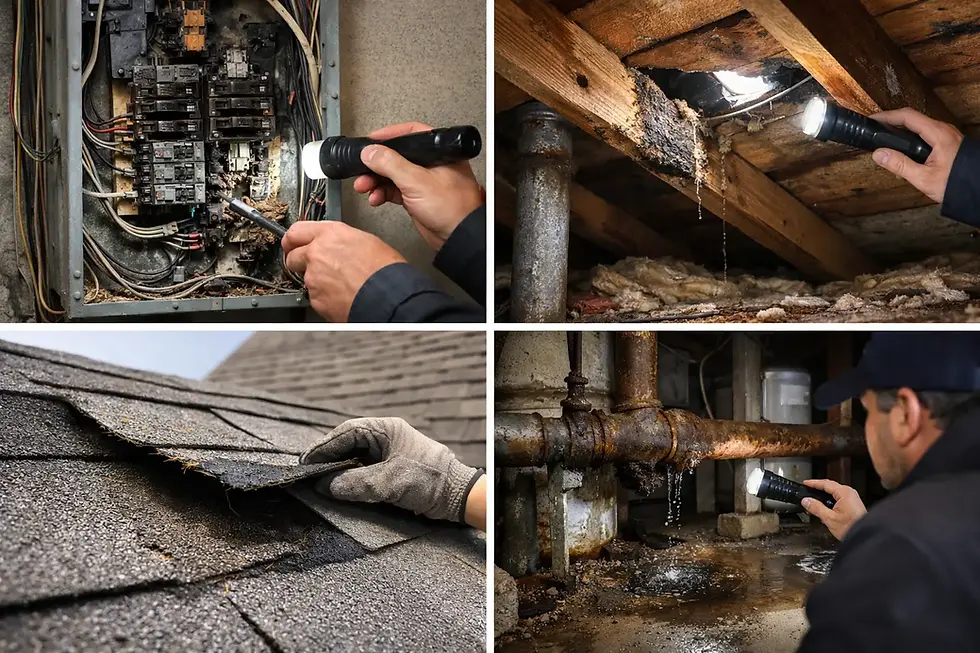
A clean-looking house can still have a damp crawlspace, an aging electrical panel, hidden roof concerns, or a drainage pattern that only becomes obvious after a hard South Jersey rain. That is why home inspector qualifications matter more than a polished website or a quick promise to “look everything over.” The inspector’s training, license, field experience, and reporting process directly affect what you learn before committing to a purchase.
For buyers, sellers, investors, and agents, the goal is not to find an inspector who predicts every future repair. It is to choose someone qualified to identify visible, accessible defects, explain their significance clearly, and document the property’s condition in a way that supports an informed decision.
Start With a New Jersey Home Inspector License
In New Jersey, a home inspector should hold an active state license. Licensing is the baseline, not the finish line, but it matters. It confirms the inspector has met state requirements involving education, supervised field experience, examination, and other professional standards.
A licensed inspector is also expected to inspect defined systems and components under New Jersey’s standards of practice. That creates a consistent framework for the inspection: structure, exterior, roofing, plumbing, electrical, heating, cooling, interiors, insulation, ventilation, fireplaces, and built-in kitchen appliances are evaluated within the limits of what is visible and safely accessible at the time.
Buyers should be cautious when someone uses vague titles such as “property consultant,” “building expert,” or “certified inspector” without clearly confirming a New Jersey home inspector license. Certifications may add value, but they do not replace the state credential required to perform a home inspection in New Jersey.
Experience Should Include the Homes You Are Buying
Qualifications on paper tell part of the story. Field experience tells the rest.
South Jersey housing is not one uniform market. An inspector may encounter a century-old Atlantic County bungalow in the morning and a newer shore condominium in the afternoon. Older homes often show generations of alterations: mixed wiring methods, aging service equipment, remodeled basements, prior settlement repairs, and plumbing that has been updated in stages. Newer homes can have issues too, including incomplete drainage details, improperly installed flashing, attic ventilation concerns, or construction defects that are easier to spot before they become long-term problems.
Coastal and near-coastal properties add another layer. Humidity, wind-driven rain, salt-air exposure, elevated foundations, and seasonal occupancy can affect materials differently than they do farther inland. In crawlspaces, we regularly look closely for moisture staining, damaged insulation, microbial-like growth, wood deterioration, vapor barrier conditions, and signs that drainage is directing water toward the foundation instead of away from it.
This is where local inspection experience has real value. A qualified inspector does not assume every stain is active damage or every crack is structural failure. They evaluate the pattern, location, material, and surrounding conditions, then explain what appears to be present and what level of follow-up is reasonable.
Ask About Volume and Type of Inspection Work
An inspector who performs regular residential inspections develops pattern recognition. They know where defects tend to hide, which conditions deserve a closer look, and which findings need immediate attention before closing.
It is reasonable to ask whether the inspector regularly works with single-family homes, condominiums, townhomes, older properties, shore homes, investment properties, and commercial buildings. The answer should match the property you are considering. A condo inspection, for example, still requires close attention to the unit, but the buyer also needs to understand which systems may be maintained by an association and which conditions remain the unit owner’s responsibility.
Specialized Qualifications Matter When the Service Is Separate
A standard home inspection is comprehensive, but it does not answer every question a property can raise. Certain services require separate training, equipment, credentials, or licensing. A qualified inspection company should explain those distinctions instead of treating every concern as though it is covered by the basic inspection.
Radon testing, mold-related inspections, wood-destroying insect inspections, thermal imaging, drone roof evaluations, and sewer camera inspections each serve a different purpose. For example, a visual plumbing inspection may identify slow drainage, corrosion, leakage, or older piping materials, but a sewer camera inspection can provide a view inside the lateral line where visible inspection cannot reach.
Likewise, thermal imaging is a useful diagnostic tool, not a magic camera. It can identify temperature differences that may point to missing insulation, air leakage, moisture, or electrical concerns. A qualified inspector interprets the image in context and, when needed, uses moisture readings or visual confirmation rather than labeling every temperature variation as a defect.
For wood-destroying insect inspections, buyers should confirm the inspector is qualified to provide the appropriate WDI inspection documentation. For radon and mold-related services, ask what training, protocols, and laboratory procedures apply. The best answer is a clear explanation of what the service can determine, what it cannot determine, and how results will be reported.
Reporting Quality Is One of the Most Overlooked Qualifications
An inspection report is not just a checklist sent after the appointment. It is the document buyers, agents, attorneys, contractors, and sellers may rely on to understand the property’s visible condition. A strong report is organized, specific, and supported by photographs.
Look for reports that identify the location of a concern, describe the observed condition, explain why it matters, and recommend an appropriate next step when further evaluation or repair is warranted. “Repair as needed” is not particularly useful if the report does not say what was observed or where it was found.
Clear reporting is especially valuable when the house has multiple issues that are not necessarily emergencies but need to be prioritized. A loose handrail, an active plumbing leak, an older roof near the end of its service life, and evidence of crawlspace moisture do not carry the same urgency. The report should help clients separate safety concerns and active damage from routine defects, deferred repairs, and items to monitor.
At Next Day Property Inspections, same-day digital reports are designed to make that review easier. Fast delivery matters during a real estate transaction, but speed should not mean vague language or missing detail. The useful report is the one that gives a buyer enough context to have a productive follow-up conversation with the right professional.
The Inspection Should Be Independent and Clearly Scoped
A qualified inspector should work independently of repair work. The purpose of the inspection is to evaluate and report on conditions, not to create pressure for a particular repair solution. That separation helps protect the client’s ability to make decisions based on the property rather than a sales pitch.
The inspector should also set reasonable expectations before the appointment. Home inspections are visual and non-invasive. Inspectors do not open finished walls, move furniture, dismantle equipment, or guarantee the remaining life of a roof, furnace, or appliance. Weather, locked rooms, stored belongings, snow cover, and inaccessible crawlspaces can limit what can be evaluated.
Those limits are not excuses when they are communicated properly. They are part of an honest inspection process. A good inspector documents inaccessible areas and tells the client what was not inspected and why. That is far more useful than implying complete certainty where none exists.
Questions Worth Asking Before You Schedule
Before choosing an inspector, ask whether they are actively licensed in New Jersey, how long they have performed inspections, and whether they regularly inspect homes similar to yours. Ask what is included in the inspection, which specialized services are available, and whether the report includes detailed photos and explanations.
It also helps to ask how the inspector handles client questions after the report is delivered. Buyers often need clarification once they have reviewed the findings with an agent or attorney. An inspector who can explain the condition without exaggerating it helps keep the transaction grounded in facts.
Qualifications Should Lead to Better Decisions
The right inspector is not the person who finds the longest list of defects or makes the property sound alarming. The right inspector is qualified to recognize material conditions, distinguish between minor issues and meaningful concerns, and communicate the difference in plain language.
For a South Jersey purchase, that means choosing a licensed professional with real local experience, appropriate specialty credentials, and a reporting process that gives you usable information quickly. A thorough inspection cannot make a house perfect, but it can make the property’s condition much clearer before you move forward.