Commercial Property Inspections Before You Commit
- Eric Price
- Jul 31
- 5 min read
A vacant storefront can look clean, newly painted, and ready for a tenant while concealing a roof leak above the ceiling grid, water intrusion at a rear wall, or an aging HVAC unit that has been running beyond its expected service life. Commercial property inspections put those visible and less-visible conditions into a clear report before a buyer, investor, or tenant makes a commitment.
In South Jersey, the building's use, age, location, and history matter as much as its appearance. A small professional office in Galloway has a different risk profile than a shore-adjacent restaurant, a warehouse in Cumberland County, or a mixed-use building with apartments above retail. The inspection needs to account for how the structure is built, how it is currently being used, and what conditions could affect ownership, occupancy, or future negotiations.
What Commercial Property Inspections Should Establish
The purpose of a commercial inspection is not to make a building pass or fail. It is to document observable conditions and help the client understand where further evaluation, repair estimates, or specialist review may be warranted. That distinction matters. Commercial properties often have systems that are older, larger, or more specialized than those found in a typical residence.
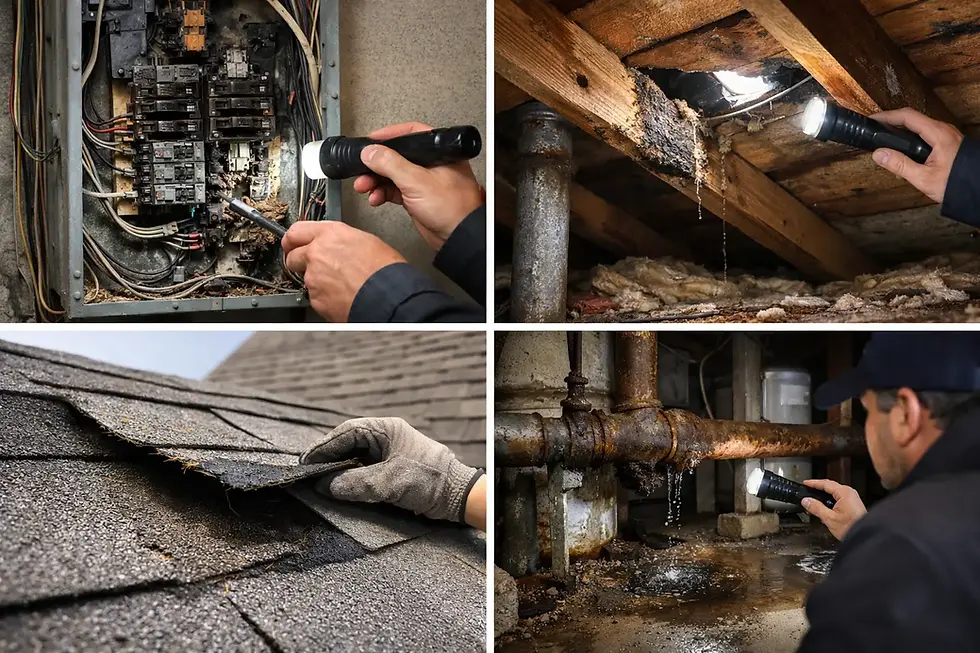
A thorough inspection generally examines accessible structural components, roofing, exterior conditions, electrical panels and visible wiring, plumbing fixtures and visible supply and drain lines, heating and cooling equipment, interior finishes, insulation where accessible, and safety-related observations. The scope should be confirmed before the inspection, especially for buildings with multiple suites, tenant spaces, detached structures, commercial kitchens, or rooftop equipment.
For an investor, the most useful report separates immediate concerns from conditions that should be budgeted or evaluated further. A cracked sidewalk is not the same issue as active foundation movement. Surface staining on a ceiling is not automatically an active leak, but it should be traced when possible and compared with roof conditions, moisture readings, and the surrounding area.
The Conditions We Commonly See in South Jersey Buildings
Commercial buildings across Atlantic and Cape May counties regularly face moisture-related issues. Coastal humidity, wind-driven rain, seasonal vacancy, and salt-air exposure can accelerate wear at exterior trim, roofing components, metal flashing, doors, and mechanical equipment. In shore properties, a building may have spent years closed for part of the season. That limited climate control can leave behind condensation staining, elevated moisture conditions, or mold-like growth in utility rooms, ceiling cavities, and lower-level spaces.
Older commercial buildings can also contain layers of renovations. We often see abandoned wiring, patched plumbing, altered partitions, and ceiling areas that conceal prior repairs. These conditions are not always defects by themselves, but they can make it harder to determine what is active, what serves the building, and whether modifications were completed in a workmanlike manner.
Drainage deserves careful attention around South Jersey properties. Flat lots, paved parking areas, downspouts discharging too close to the building, and low exterior grades can direct water toward foundations. In buildings with crawlspaces or low-clearance utility areas, that water may show up as damp soil, deteriorated framing, insulation damage, rusting components, or persistent humidity. A dry day does not erase evidence of recurring moisture.
Roof observations are especially important in low-slope commercial roofs. Ponding areas, open seams, deteriorated flashing, clogged drainage components, and patched sections can all point to a roof nearing a decision point. The inspection can identify visible conditions, but roof age, warranty status, and remaining life are separate questions that may require documentation from the owner or review by a qualified roofing contractor. When access and conditions allow, drone roof inspection can provide a better view of areas that cannot be safely reached from the roof surface.
Mechanical Systems Need Context, Not Guesswork
Commercial HVAC equipment is frequently located on roofs, in mechanical rooms, or above suspended ceilings. A unit may operate during an inspection yet still show corrosion, damaged insulation, condensate issues, unusual noise, aging components, or installation concerns. Conversely, a unit that does not operate may be affected by a control setting, disconnected power, or a more significant defect. The inspector's role is to report observed performance and visible condition, then recommend appropriate evaluation when the evidence supports it.
This is where building history helps. A retail space that has been vacant for months may have equipment that has not been under normal load. A restaurant conversion may have mechanical systems sized or configured for a prior use. Buyers should not assume that a system working briefly during an inspection is necessarily adequate for their intended operation.
Electrical observations also require a practical reading of the building. Older panels, unlabeled circuits, open junction boxes, corrosion, double-tapped connections, and visible damaged wiring are common findings in aging properties. The concern is not simply whether a panel looks old. It is whether accessible components show conditions that could affect safety, reliability, insurance review, or the ability to support the proposed use of the space.
Why the Building's Next Use Changes the Inspection Conversation
A commercial inspection should begin with one direct question: what will this property be used for after closing or lease-up? A buyer converting an office into a salon, fitness studio, daycare, food-service space, or medical practice may face requirements beyond the condition of the existing building. Occupancy, accessibility, fire protection, ventilation, and utility demand can change substantially with the use.
The inspection report does not replace municipal code review, engineering analysis, environmental assessment, or specialty trade evaluations. Those are different services with different purposes. But an experienced inspector can identify visible conditions that prompt the right questions early, before a buyer assumes that a prior use can be duplicated without changes.
For mixed-use buildings, the separation between commercial and residential areas also matters. Shared utilities, common entrances, roof access, fire separations, plumbing routes, and moisture migration can affect both portions of the property. A leak above a retail ceiling may originate from a residential bathroom, roof penetration, or exterior wall. The location and pattern of damage often tell the story more clearly than the stain alone.
Getting More Value From the Inspection Report
The best time to clarify inspection scope is before the appointment. Provide the address, property type, approximate square footage, current and planned use, number of units or suites, known vacancies, and any concerns already identified during walkthroughs. If areas are locked, utility rooms are inaccessible, or rooftop equipment cannot be reached, those limitations should be known and documented.
During the inspection, buyers and their representatives benefit from asking about observed conditions in terms of priority and next steps. Is there evidence the condition is active? Is it isolated or repeated? Does it need prompt evaluation by a specialist? What portion of the building is affected? Those questions turn a long report into a usable due-diligence tool.
Thermal imaging and moisture meters can be valuable when conditions warrant them. They can help identify temperature differences or elevated moisture behind finished surfaces, but neither tool should be treated as a stand-alone diagnosis. Findings need to be interpreted with the building assembly, weather, plumbing layout, and visible evidence in mind.
At Next Day Property Inspections, the goal is to give South Jersey buyers a detailed, same-day picture of observable conditions without overstating what the building is telling us. A clear report gives clients time to bring in the right specialists, review documents, and make decisions based on facts rather than assumptions.
A commercial building does not need to be perfect to be a sound purchase. It does need to be understood. The right inspection helps you see where the property stands now, what deserves closer review, and which questions should be answered before the deal moves forward.