Why Older Homes in Egg Harbor City NJ Need Inspections
- Eric Price
- Jun 10
- 6 min read
A house built decades ago can have solid bones and real character, but in Egg Harbor City, age alone tells you very little about actual condition. That is exactly why older homes in Egg Harbor City NJ need thorough home inspections before a buyer commits, a seller lists with confidence, or an investor assumes a renovation will stay on budget.
In this part of Atlantic County, older homes often come with a mix of original construction, partial updates, and repairs done at different times by different owners. On paper, that can sound manageable. In the field, it often means one section of the home performs like a much newer property while another still carries defects that have been developing for years.
Why older homes in Egg Harbor City NJ need thorough home inspections
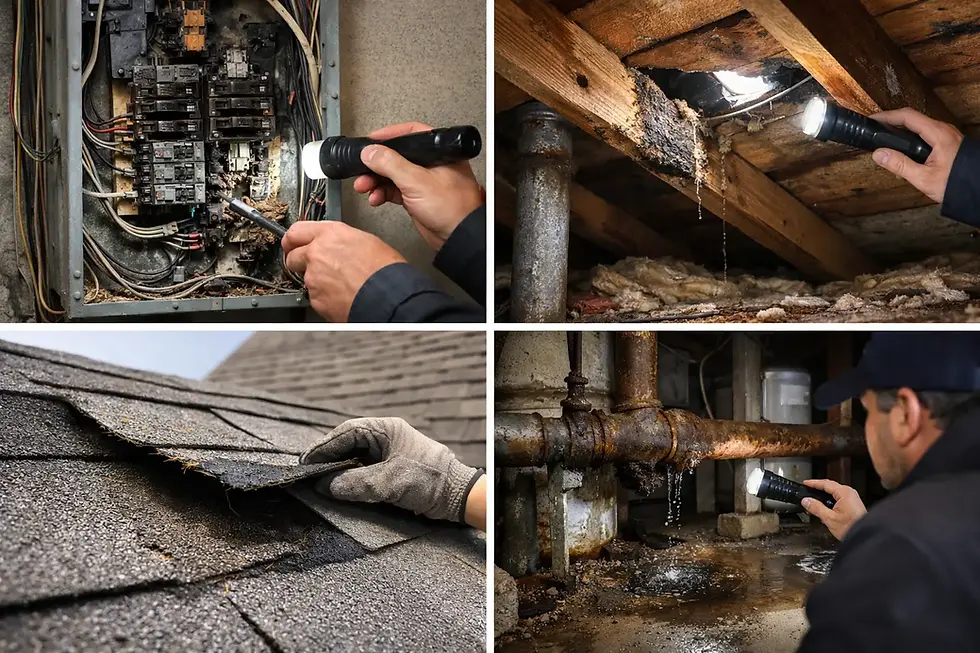
Older homes do not fail for one simple reason. They usually show layered issues. A roof may be serviceable, but flashing details may be weak. The electrical panel may have been replaced, but branch wiring in parts of the house may still be outdated. A bathroom may look recently renovated, but moisture damage may still be present below the finished surfaces.
That is where a thorough inspection matters. The goal is not to make an old home look bad. It is to identify how the house is really functioning today, what conditions are active, and what may need closer attention soon after closing.
In Egg Harbor City, we also see local conditions that can speed up wear. Humidity, storm exposure, drainage issues, and damp crawlspaces all affect how older materials age. Homes that have stood for generations can still be excellent purchases, but they need to be evaluated with care and with an understanding of South Jersey housing stock.
Moisture is often the real story
When we inspect older homes in this area, moisture intrusion is one of the most common underlying concerns. It may show up as staining, elevated moisture readings, wood deterioration, musty conditions, or insulation issues in crawlspaces and attics. Sometimes the source is obvious, such as roof leakage or poor grading. Other times it is more gradual, like condensation, chronic humidity, or minor foundation seepage that has gone unchecked.
Older homes were not always built with the same moisture management details buyers expect today. Over time, that matters. Once moisture gets into framing, subflooring, or wall assemblies, the visible issue is often only part of the picture.
This is especially relevant in South Jersey properties where crawlspaces are common. A crawlspace may look accessible enough at first glance, but once inspected closely, it can reveal wood rot, fungal growth, insulation damage, vapor barrier problems, or signs that seasonal dampness has been affecting the structure below the living areas.
Structural movement is not always dramatic, but it is meaningful
Buyers often expect structural issues to be obvious - large cracks, sloping floors, or doors that do not close. Sometimes that happens. More often, the signs are subtler.
In older homes, settlement and framing movement may have developed slowly over many years. That does not always mean a house is unsafe, but it does mean the condition needs context. One crack in plaster may be cosmetic. A pattern of uneven floors, framing alterations, support concerns in the crawlspace, and repeated patching around openings tells a different story.
Older additions are another common factor. A main home may be original, while a rear room, porch conversion, or enclosed area was built much later. Those transitions are where we often find inconsistencies in support, floor framing, insulation, and moisture control. A thorough inspection helps separate normal age-related wear from conditions that deserve further evaluation.
Electrical systems in older homes often tell a mixed story
One of the most common inspection findings in older houses is partial updating. A home may have a modern-looking panel, but that does not automatically mean the full electrical system was updated at the same time. We regularly see homes where some wiring has been replaced while other portions remain older, altered, or extended in ways that raise safety and performance concerns.
That can include improper splices, missing protection in unfinished areas, ungrounded receptacles, overloaded circuits, or signs of amateur modifications. In some homes, electrical work was added over time to support newer kitchens, HVAC equipment, or finished spaces without the kind of planning a full upgrade would require.
This is one reason older homes should not be judged by cosmetics. Fresh paint and updated fixtures can make a home feel move-in ready, but the real condition of the electrical system has to be evaluated behind that surface impression.
Plumbing and heating issues tend to be hidden until they are not
Older plumbing systems can remain functional for years while still showing clear signs of age. Corrosion, outdated supply materials, aging drain lines, and active leakage under sinks or at basement and crawlspace piping are common findings. Sometimes the concern is a current defect. Sometimes it is evidence that a system is nearing the point where more substantial repair will be needed.
Heating and cooling systems deserve the same level of attention. In older homes, the equipment may have been changed, but ductwork, distribution, venting, or condensate management may still show deficiencies. In a house with multiple generations of updates, the HVAC system often reflects that patchwork history.
That does not mean the home is a bad purchase. It means the buyer should understand what is newer, what is aging, and what appears to have been installed or modified without full coordination with the rest of the structure.
Attics, roofs, and ventilation reveal long-term patterns
A roof inspection on an older home is about more than shingle age. We are also looking at flashing details, decking condition as visible, signs of prior leakage, ventilation performance, and how the attic is handling heat and moisture.
In this region, seasonal weather and humidity can expose weak points quickly. An older roof may not be actively leaking on the day of the inspection, but water staining, past repair evidence, and poor ventilation can still show a pattern of vulnerability. That is useful information for a buyer because it changes how you plan for ownership after closing.
Attics in older homes also reveal prior work quality. Insulation may be inconsistent. Exhaust may terminate improperly. Framing may show alterations. These are not small details. They help explain comfort issues, moisture concerns, and the overall quality of past improvements.
Why a fast walkthrough is not enough
With older housing stock, a limited or rushed inspection tends to miss the relationships between defects. A sticking door by itself may not mean much. Combine it with settlement indicators, crawlspace support concerns, and repeated interior crack repair, and now the finding carries more weight.
The same is true for moisture. A stain on a ceiling, a damp crawlspace, elevated humidity, and visible deterioration around exterior trim may all connect to larger drainage or envelope problems. That is why thoroughness matters. The value is not just in spotting isolated defects. It is in understanding the pattern.
For buyers and agents, that level of detail supports better decisions during a transaction. For sellers, it reduces surprises. For investors, it helps avoid underestimating scope when an older property looks cleaner than it really is.
What a thorough inspection should clarify
A good inspection of an older home should answer practical questions, not create noise. What appears to be original? What has been updated? Are the updates consistent and professionally integrated? Where are the active concerns versus the expected age-related limitations? Which conditions affect safety, function, or moisture performance right now?
That clarity matters more than a simple pass-fail mindset. Older homes are rarely perfect. Most buyers are not expecting perfection. They are expecting a clear understanding of what they are buying.
For properties in Atlantic County, that often means paying especially close attention to crawlspaces, drainage, exterior deterioration, attic conditions, and the interaction between older construction and newer repairs. Those are the areas where hidden issues tend to show themselves.
A licensed company such as Next Day Property Inspections approaches these homes with that local perspective in mind. The goal is not to overstate defects or minimize them. It is to document conditions clearly so clients can move forward with real information.
Older homes in Egg Harbor City can be great properties to own, but they reward buyers who look past charm and pay attention to condition. The smartest next step is not guessing what is behind the walls or under the floors - it is getting a thorough inspection that shows you how the house is actually performing today.