Why Inspection Report Clarity Matters Before Closing
A home inspection report can contain dozens of photos, technical terms, and observations from roof level to crawlspace. That volume only helps a buyer when the findings are easy to understand. Inspection report clarity is what allows a client to see the difference between an older but serviceable component, a condition that needs monitoring, and a defect that should be addressed before closing.
For South Jersey buyers, that distinction matters. A shore property may show moisture-related wear that looks concerning in a photograph but is limited in scope. An older Atlantic County home may have several aging systems that are functioning at the time of inspection, along with one issue that deserves prompt evaluation. A clear report puts those findings in their proper context without minimizing them or creating unnecessary alarm.
What Inspection Report Clarity Looks Like
A useful report does more than state that something is “deficient.” It identifies the component, describes the observed condition, explains why it matters, and provides a practical next step. If a bathroom exhaust fan terminates in an attic, for example, the report should identify the visible discharge point and explain that moisture can accumulate in an enclosed space. The client then understands the condition instead of trying to interpret a vague label.
Clear reporting also separates observation from speculation. During a home inspection, we report visible and accessible conditions on the day of the inspection. We do not guess at concealed damage behind finished walls or represent that a component will perform indefinitely. That boundary is not a limitation in the usefulness of the report. It is what makes the report reliable.
The best reports use photographs to support the written finding, not replace it. A photo of staining in a crawlspace should be accompanied by an explanation of where it was found, whether active moisture was observed, and what further evaluation may be appropriate. Without that context, a buyer can easily assume the worst or overlook a condition that deserves attention.
Why Clear Reports Matter More Than Long Reports
A detailed report is valuable, but length alone does not make it better. An inspection report can run many pages because it documents every accessible system, summarizes limitations, and includes photos. The client still needs to know where to focus first.
A properly organized report helps buyers prioritize. Safety concerns, active water entry, electrical defects, damaged structural elements, and significant plumbing conditions should not get buried between minor cosmetic observations. At the same time, normal wear should not be written in language that makes an otherwise manageable property appear unbuyable.
This is especially useful for first-time buyers, who may not know whether an older water heater, weathered exterior trim, or a GFCI issue carries the same weight. They do not. An experienced inspector explains the condition as it exists, while the report provides a record the buyer can revisit with a contractor, attorney, agent, or seller.
For investors and experienced buyers, clarity makes due diligence more efficient. They may be evaluating several properties, estimating renovation scope, or deciding whether a condition changes the terms of a deal. A report that clearly distinguishes immediate concerns from deferred items gives them a stronger basis for that decision.
Age Is Context, Not Automatically a Defect
South Jersey has a wide range of housing stock, from older homes with original layout features to newer construction near the coast. Age alone does not mean a component has failed. A furnace near the end of its typical service life may still be operating properly. A cast iron drain line may be older but show no visible leakage at accessible sections.
The report should state what was observed and recognize age where it affects planning. It should not promise remaining service life or declare replacement necessary simply because a component is old. That approach gives buyers useful context while avoiding a conclusion the inspection cannot support.
Local Conditions Need Local Context
Coastal moisture conditions change how certain findings should be read. In Cape May County and shore areas, humidity, wind-driven rain, and salt-air exposure can affect exterior materials, fasteners, window components, crawlspaces, and attic ventilation. A clear report identifies the visible impact instead of using broad language that leaves the buyer guessing.
For example, corrosion on exterior HVAC components or electrical equipment may be more common near the coast. The meaningful question is not whether corrosion exists at all, but whether it is superficial, affecting operation, or contributing to deterioration that requires further review. The same principle applies to moisture staining under a seasonal or shore property. The inspector should document the visible evidence, the location, and whether active moisture was present during the inspection.
Crawlspaces deserve careful explanation in this region. We commonly see insulation that has been displaced, exposed soil conditions, staining, elevated moisture indicators, and plumbing or ductwork installed in limited-access areas. A report should make clear when a crawlspace was only partially accessible and when visibility was restricted. That tells a buyer what was inspected, what was not, and why a particular concern may need additional evaluation.
Clear Sewer Findings Protect Buyers From a Hidden Risk
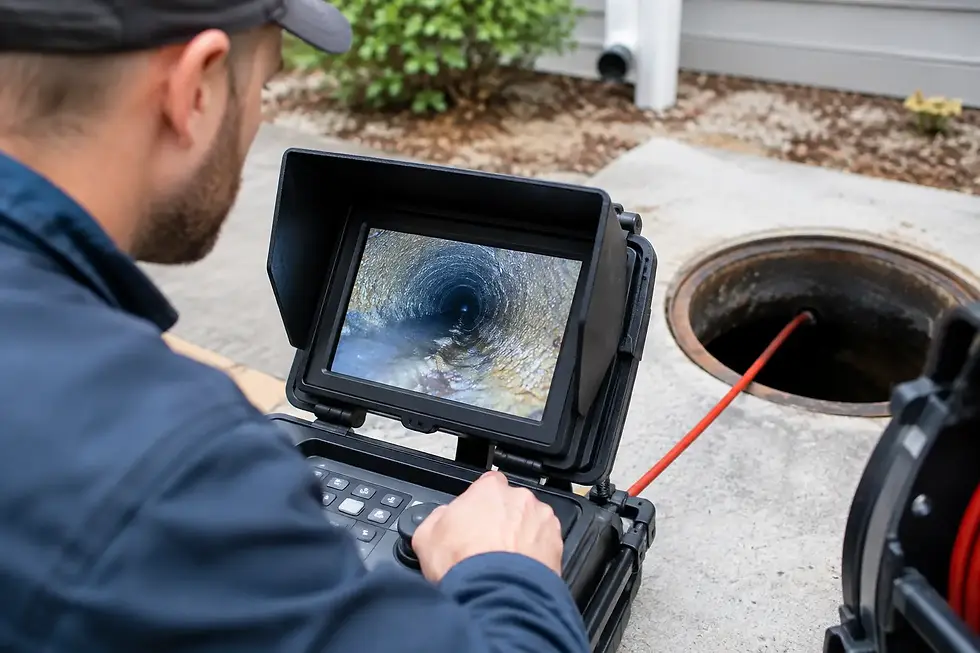
A standard home inspection does not provide a visual evaluation of the underground sewer line. That line is concealed below grade, and its condition can materially affect a purchase even when interior plumbing fixtures appear to drain during the inspection.
A sewer scope inspection uses a specialized camera to evaluate accessible portions of the sewer line from an appropriate entry point. This is particularly useful with aging housing stock, properties with mature trees, homes that have changed ownership several times, and houses where the pipe material or repair history is uncertain.
Inspection report clarity is especially valuable with sewer camera findings because video alone can be misleading. Roots may be visible in a joint, but the report should explain whether the intrusion is minor or substantial, where it was observed, and whether the camera was able to continue through the line. A dip in the pipe, an offset joint, deteriorated cast iron, cracking, or an obstruction should be described in practical terms rather than reduced to a screenshot.
Cast iron deterioration is a common concern in older properties. Internal scaling and channeling can reduce the usable interior diameter of the pipe, even when the plumbing is draining at the time of the inspection. Pipe offsets may indicate movement at a connection. Root intrusion can recur where joints are compromised. These conditions do not always mean an immediate sewer failure, but they deserve clear documentation and, when warranted, review by a qualified sewer contractor.
For a buyer, the point is not to turn every sewer observation into a deal-breaker. It is to avoid discovering a concealed underground issue after closing with no prior indication that the line needed further attention. Next Day Property Inspections provides sewer scope inspections as an added service or standalone inspection because this portion of the plumbing system cannot be evaluated through a typical visual home inspection alone.
The Difference Between a Finding and a Negotiation List
An inspection report is not a repair estimate, a code compliance certification, or a negotiation strategy. It is an objective record of observed property conditions. Clear language helps buyers and real estate professionals use the report appropriately without treating every note as a demand for the seller.
Some findings may justify prompt specialist review before closing. Others may be matters for future budgeting, seasonal observation, or ordinary ownership planning. Which category a condition falls into depends on its location, extent, visible impact, safety implications, and whether the system was operating at the inspection.
A good report makes that conversation easier. It gives an agent enough detail to discuss the issue accurately, gives a buyer enough context to ask informed questions, and gives a contractor a useful starting point when further evaluation is needed. It also prevents a common problem: a minor observation being repeated from person to person until it sounds more serious than the inspection actually found.
What Buyers Should Be Able to Take From the Report
After reading a report, a buyer should be able to answer a few practical questions. What was found? Where is it located? Was it visible and accessible at the inspection? Why does it matter? What should happen next?
If those answers are missing, follow-up is appropriate. Ask the inspector to clarify the condition in plain language. In many cases, a short conversation can prevent a misunderstanding about the age of a system, the significance of a stain, or the reason a specialist was recommended.
For buyers considering a home inspection in South Jersey, clear reporting is not an extra feature. It is part of the inspection itself. The value is not just receiving a report quickly. It is receiving information that helps you understand the property well enough to make your next decision with your eyes open.