12 First Time Buyer Inspection Questions
- Eric Price
- Jun 13
- 7 min read
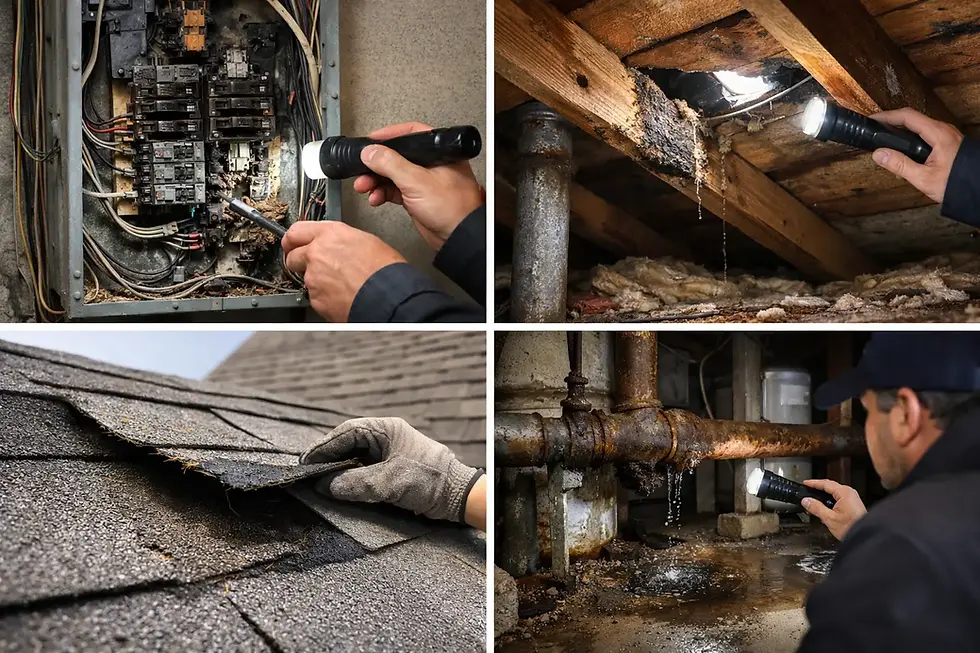
Most first-time buyers show up to the inspection looking at finishes - paint, flooring, kitchen updates. Within ten minutes, the real questions usually change. Once you see how the roof is aging, how the crawlspace handles moisture, or how the electrical panel is wired, first time buyer inspection questions become a lot more practical and a lot more important.
For buyers in South Jersey, that matters. A house near the shore, an older Atlantic County property, or a home with a damp crawlspace can look fine at first glance and still have conditions that deserve a closer look. The goal of an inspection is not to scare you out of a purchase. It is to show you how the house is performing right now, what defects are significant, and what should be addressed first.
Why first time buyer inspection questions matter
A good inspection is not just a report. It is your best chance to understand the property before closing, while you still have room to make informed decisions. First-time buyers sometimes assume the main issue is whether the home passes or fails. That is not really how home inspections work.
What matters more is severity, timing, and pattern. One loose handrail and one active roof leak are not in the same category. A crack in concrete may be cosmetic, or it may suggest movement that needs more review. Staining in an attic may be old, or it may point to an ongoing moisture issue. Asking the right questions helps you understand where the house falls on that spectrum.
In South Jersey, context is a big part of the answer. Shore homes deal with salt-air exposure, wind-driven rain, and elevated moisture loads. Inland homes often show settlement, drainage issues, and older mechanical systems. Seasonal properties can have deferred maintenance that is not obvious from a quick showing. The same defect can mean different things depending on the type of home and where it sits.
The first time buyer inspection questions to ask on site
The best questions are not dramatic. They are specific. They help separate a manageable repair list from a problem that changes the deal.
1. What are the biggest issues in this house?
Start there. Not every finding carries the same weight, and a detailed report can contain a lot of information. Ask the inspector to identify the handful of items that matter most from a safety, water intrusion, structural, or major system standpoint.
This keeps your attention where it belongs. In many homes, the most important defects involve moisture entry, roofing, electrical hazards, HVAC performance, or movement around the foundation. Cosmetic wear may fill pages, but it usually should not drive your decision.
2. Which issues need attention right away, and which can wait?
This is one of the most useful first time buyer inspection questions because it turns a long report into a workable plan. Some defects are active and need prompt correction. Others are aging conditions that should be budgeted for but may not require immediate work.
For example, an actively leaking roof boot is urgent. An older water heater near the end of its typical service life is different - it may still be functioning, but you should plan for replacement sooner rather than later. Good inspectors will help you distinguish between monitor, repair soon, and repair now.
3. Is this a common issue for homes like this in this area?
That question matters more than buyers realize. In Atlantic County, Cape May County, and other coastal areas, we regularly see elevated moisture conditions in crawlspaces, rusting exterior components, and wear related to salt air and humidity. In older housing stock, original wiring methods, outdated panels, and settlement-related cracking are also common.
Common does not mean acceptable. It means the condition should be interpreted by someone who understands the local housing mix. A musty crawlspace in a shore-area home is not unusual, but it still needs to be evaluated for moisture management, insulation condition, wood damage, and possible mold-like growth.
4. Are you seeing a symptom, or the main problem?
This is a strong question because visible defects are often downstream from the real issue. Water staining on a ceiling is a symptom. The actual cause could be a roof leak, flashing failure, plumbing leak, or condensation problem. Efflorescence on a basement wall is a symptom. The larger issue may be exterior drainage or moisture intrusion through the foundation.
Buyers get into trouble when they negotiate around the stain and miss the source. Ask what is causing the condition, whether the source appears active, and what further evaluation may be appropriate.
Questions about structure, moisture, and major systems
5. Do you see signs of water intrusion or chronic moisture?
In this region, this question belongs near the top of the list. Moisture is one of the most common drivers behind bigger house problems. It affects wood framing, insulation, indoor air quality, finishes, and crawlspace conditions. It can also be subtle.
Ask where moisture was found, how severe it appears, and whether the pattern looks active or historical. In many South Jersey homes, the problem areas are crawlspaces, basements, attic sheathing, around chimney flashings, below older windows, and along exterior grading transitions. If the home is near the shore, humidity and salt-air exposure can accelerate deterioration and make marginal conditions worse.
6. Are there structural concerns, or signs that need more evaluation?
Not every crack is structural. Not every sloped floor means the house is failing. But some patterns deserve more attention, especially when multiple indicators show up together.
Ask the inspector what they are seeing and why it matters. Uneven floors, repeated door binding, significant cracking, displaced supports in a crawlspace, or modified framing may suggest more than normal age-related movement. The key is not to jump to the worst-case scenario. The key is to understand whether the condition looks typical, stable, or outside what an inspector would expect.
7. How old are the roof, HVAC, water heater, and electrical components?
Buyers often focus on defects and forget about age and remaining service life. A system can be operating on inspection day and still be near the end of its useful life. That affects your planning, even if it is not an immediate defect.
Ask what appears older, what is performing adequately, and what may need near-term replacement. This is especially important in homes that have been lightly updated. A renovated kitchen does not tell you much about the furnace, roof covering, or panel condition.
8. Is the electrical system safe by current standards?
This question is especially relevant in older homes and in properties with pieced-together upgrades. Inspectors often find double-tapped breakers, improper wiring methods, missing bonding, open knockouts, or service equipment that shows age and defects.
The right question is not whether the house has modern everything. Many older homes do not. The real question is whether the observed installation presents a safety concern, whether repairs are recommended, and whether a licensed electrician should review specific conditions before closing.
Questions that help with the decision, not just the report
9. What should I ask the seller to address?
An inspector should not negotiate for you, but they can help identify which issues are reasonable to raise based on significance. Focus on material defects, active leaks, safety hazards, structural concerns, and major systems not performing as intended.
This keeps the conversation grounded. First-time buyers sometimes want every item corrected, which usually is not realistic. It is better to understand which findings actually affect habitability, safety, or immediate cost exposure.
10. What needs a specialist, and what is routine repair?
A home inspection is broad by design. Some findings need another level of review. If there are signs of active roof leakage, structural movement, suspected mold conditions, wood-destroying insect activity, or safety concerns in electrical equipment, ask whether further evaluation is recommended.
That answer should be clear and specific. You do not want vague reassurance, and you do not want unnecessary alarm. You want to know when a condition is beyond normal maintenance and deserves targeted expertise.
11. If this were your purchase, what would you pay closest attention to?
This is a practical way to cut through noise. Good inspectors are careful not to make the decision for you, but experienced ones know which findings tend to cause ongoing trouble after closing.
In many cases, those are moisture-related conditions, poor drainage, older roofs with limited remaining life, unsafe electrical defects, and neglected crawlspaces. These are the issues that can keep turning into larger repairs if they are underestimated at the time of purchase.
12. What should I read first in the report tonight?
Same-day digital reports are helpful, but a first-time buyer can still feel buried in information. Ask the inspector where to start. Usually that means reading the summary carefully, then reviewing the supporting photos and comments on major systems and any moisture or structural findings.
A detailed report should help you understand condition, not just document defects. If something is not clear, ask. The inspection is most useful when you leave knowing what was found, how serious it is, and what comes next.
A better way to use the inspection window
The inspection is not a test of whether an older house is perfect. In South Jersey, many homes have some age, some history, and some level of deferred maintenance. The point is to understand the difference between a house with manageable issues and one with conditions that materially change your risk.
That is where local experience matters. A licensed South Jersey home inspector who regularly sees coastal moisture conditions, aging crawlspaces, settlement patterns, and shore-area exterior wear can usually tell you not just what is wrong, but what is typical, what is unusual, and what deserves immediate attention. That kind of clarity helps buyers stay calm and make better decisions.
If you are attending the inspection, keep your questions simple and direct. Ask what matters most, what is active, what can wait, and what the condition really means in this type of home. You do not need to know everything about houses in one afternoon. You just need enough clear information to move forward with confidence.