Why Atlantic City Properties Need Independent Inspections
- Eric Price
- Jun 8
- 6 min read
A condo can look clean, freshly painted, and move-in ready on a showing day - and still have active moisture intrusion behind a wall, corrosion at key mechanical components, or structural wear in a crawlspace that never makes it into the listing photos. That is exactly why Atlantic City properties need independent home inspections. In this market, appearance does not tell the full story, especially near the shore where weather, humidity, age, and deferred maintenance can change a building faster than many buyers expect.
For buyers, investors, and even sellers, the value of an independent inspection is simple: you need an objective look at the actual condition of the property. Not the staged version. Not the assumed version. The real one.
Why Atlantic City Properties Need Independent Home Inspections
Atlantic City homes and condos come with conditions that are common along the South Jersey coast but often missed by people who do not inspect these properties regularly. Salt air, wind-driven rain, elevated moisture, aging exterior materials, and long periods of vacancy all leave a signature. In many cases, defects are not dramatic. They are subtle, cumulative, and expensive when ignored.
An independent home inspection helps identify those issues before a buyer is fully committed. It also helps separate cosmetic updates from meaningful improvements. A renovated kitchen does not tell you whether the electrical system is properly grounded. New flooring does not tell you if there is moisture in the subfloor below. Fresh paint in a lower level or utility area can sometimes hide prior water entry, not solve it.
That independent perspective matters even more in transactions involving shore homes, investment properties, seasonal units, and older Atlantic County properties that have seen multiple owners, partial repairs, or years of inconsistent upkeep.
Coastal Conditions Change the Inspection Priorities
Atlantic City is not just another housing market. Coastal exposure changes what inspectors pay close attention to and how findings should be interpreted.
Salt-air exposure affects more than metal railings
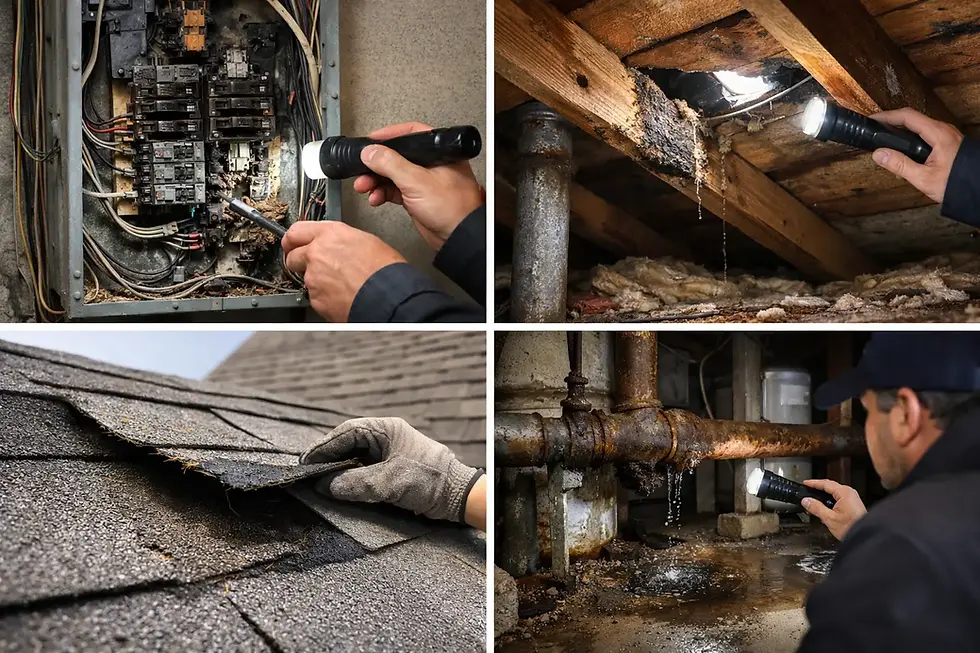
Most buyers understand that salt air can rust exterior hardware, but the effect goes well beyond visible railings or fasteners. We often see accelerated corrosion at HVAC components, electrical panels, disconnects, exterior fixtures, and metal connectors. In some cases, the system still operates on inspection day, but visible corrosion suggests shortened service life or the need for closer evaluation by a specialist.
That does not mean every shore property has failing systems. It means the environment is tougher on materials, and a thorough inspection should account for that reality.
Moisture behaves differently near the shore
Coastal moisture conditions create a different set of concerns than a typical inland property. Humidity can linger in crawlspaces, attics, utility rooms, and wall cavities. Condensation issues may show up around ductwork, windows, and poorly insulated surfaces. In older homes and some multifamily buildings, ventilation and vapor control are often not what modern buyers assume they will be.
This is where independent home inspections are especially valuable. Moisture staining, mold-like growth, soft materials, and musty conditions are not always obvious during a quick showing. A detailed inspector is looking at patterns - not just isolated spots.
Older Housing Stock Can Hide Layered Problems
A large share of Atlantic City and nearby shore-area housing includes older construction. That does not automatically mean a property is a bad purchase. Many older homes are solid. But older homes tend to have more layered repair histories, and that is where inspection experience matters.
It is common to find a mix of original and updated systems in the same property. For example, a home may have newer windows, an updated kitchen, and a recently replaced water heater, but still have older wiring methods in parts of the structure, long-term settlement indicators, or outdated safety conditions at the electrical panel. In condos and attached properties, interior upgrades can also distract from larger building-related concerns that affect the unit.
A proper Atlantic City home inspection should look past finishes and focus on how the property performs as a structure and system. Buyers need that distinction because cosmetic improvements are easy to see. Hidden defects are not.
Common Issues in Atlantic City Homes and Condos
Every property is different, but certain patterns show up regularly in this part of South Jersey.
Crawlspaces and lower areas often tell the real story
In many South Jersey shore homes, crawlspaces reveal far more than the main living area. Excess moisture, damaged insulation, wood deterioration, microbial growth, prior water entry, and makeshift repairs often show up there first. If a crawlspace is tight, damp, or difficult to access, it becomes even more important to have an inspector who takes the time to evaluate what is visible and explain the limitations clearly.
Roofing and exterior wear are often underestimated
Wind exposure, salt-air conditions, and deferred exterior maintenance can accelerate wear at roofing materials, flashing, trim, and penetrations. A roof may not be actively leaking at the moment, yet still show installation defects or aging conditions that increase the likelihood of future water intrusion. The same goes for siding transitions, balconies, decks, and exterior stairs where moisture and corrosion often work together.
Electrical and HVAC issues are common in mixed-age properties
Atlantic County properties that have been renovated in phases often show mixed workmanship. We regularly see newer fixtures tied into older electrical conditions, missing safety protections, service equipment with corrosion, or HVAC systems that are operating but showing signs of hard coastal wear. These are not always deal-breakers, but they are exactly the kind of findings buyers should understand before closing.
Independent Means Objective
The word independent matters here. A home inspection should give the client a clear, unbiased picture of the property's condition, without pressure to minimize defects or smooth over concerns.
That is useful for first-time buyers who need plain-English explanations, but it is just as important for experienced investors and real estate professionals. Atlantic City transactions can move quickly, and there is often pressure to focus on location, rental potential, or surface-level updates. An independent inspection brings the conversation back to the building itself.
It also helps clients make smarter decisions about what actually matters. Not every issue is major. Some findings are maintenance-related, some are safety-related, and some indicate larger moisture, structural, or system concerns. A good inspection report should sort that out clearly so buyers are not left guessing.
Why This Matters for Condos, Multifamily Units, and Investment Properties
Atlantic City has a mix of single-family homes, condos, converted properties, and investment-oriented purchases. Each comes with its own inspection considerations.
In condos, buyers sometimes assume the association handles most major risks. That can be true for certain shared components, but interior moisture issues, HVAC performance, electrical defects, window concerns, and signs of water intrusion within the unit still matter. In addition, conditions visible inside a unit can sometimes suggest larger building envelope issues.
With investment properties, the risk is often in deferred maintenance and partial repairs done to keep a unit rentable rather than fully corrected. A property can produce income and still have significant defects. That is one reason an independent inspection is valuable even for experienced buyers who have purchased before.
What Buyers Gain From a Thorough Local Inspection
The biggest benefit is not just a report. It is better decision-making.
A detailed inspection helps buyers understand whether they are looking at a property with expected age-related wear, a manageable repair list, or signs of bigger problems involving moisture, corrosion, structural movement, or unsafe components. That difference matters in negotiations, in planning for ownership, and in deciding whether the property fits the buyer's goals at all.
Local experience also matters. A licensed South Jersey home inspector who regularly evaluates coastal and Atlantic County properties is more likely to recognize the patterns that show up here repeatedly. That includes damage related to humidity and salt-air exposure, concerns in seasonal and shore properties, and the hidden conditions that often appear in crawlspaces, attics, and utility areas.
For that reason, buyers looking at an Atlantic City home inspection should not treat the service as a box to check. It is one of the few points in the transaction where someone is focused entirely on the condition of the property rather than the deal moving forward.
Next Day Property Inspections sees this often across South Jersey - homes that present well at first glance but tell a different story once the inspection begins.
If you are buying in Atlantic City, the goal is not to find reasons to walk away from every property. The goal is to know what you are buying, what conditions deserve attention now, and what risks may be developing out of sight. That kind of clarity is what makes an independent inspection worth having before the papers are signed.