Why a Third-Party Home Inspection Protects Buyers
- Eric Price
- Jun 6
- 6 min read
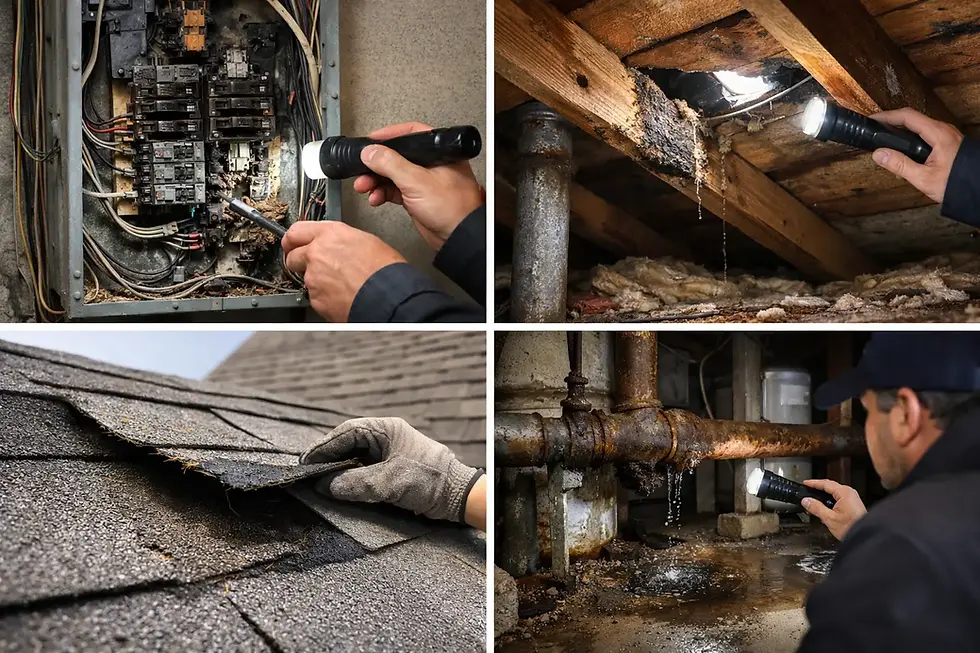
A house can look clean, freshly painted, and move-in ready - and still have a wet crawlspace, an aging roof, unsafe wiring, or active moisture around windows. That is why a third-party home inspection helps protect buyers. It gives you an independent look at the property’s actual condition before you take on the cost, responsibility, and risk of ownership.
For buyers in South Jersey, that independent perspective matters even more than people sometimes realize. We regularly see homes affected by coastal moisture conditions, salt-air exposure, aging building materials, and drainage problems that do not always show up during a quick showing. A property can present well for an open house and still have issues in the attic, crawlspace, roof system, or foundation area that deserve a closer look.
Why a third-party home inspection helps protect buyers from blind spots
When you are under contract, a lot is happening at once. You are reviewing documents, coordinating financing, and trying to make decisions quickly. In that environment, buyers often focus on layout, finishes, and location. An independent inspection shifts the focus back to condition.
That is the main value. A third-party inspector is not evaluating the home based on emotion, staging, or sales momentum. The job is to document what is visible, identify material defects, and explain where the property may need further evaluation, repair, or monitoring. That separation helps buyers make decisions based on facts rather than pressure.
In real terms, this often means finding issues that were not obvious during a walkthrough. In Atlantic County and Cape May County homes, for example, it is common to see crawlspace moisture, signs of deferred exterior maintenance, aging HVAC equipment, inconsistent grading, and roof wear that may be more advanced than it first appears. None of that automatically kills a deal. But it absolutely changes how a buyer should understand the property.
A neutral inspection gives buyers leverage and clarity
A third-party inspection is not just about finding defects. It is about understanding severity, timing, and likely impact. Buyers do not need a dramatic report. They need a clear one.
Some conditions are immediate safety concerns, such as double-tapped breakers, missing GFCI protection in key locations, damaged steps, or evidence of active water intrusion. Other conditions are more about planning ahead, like an older water heater near the end of its expected service life or a roof with visible wear but no active leakage at the time of inspection. Both matter, but they matter in different ways.
That distinction is where an experienced inspector protects the buyer. If every issue is treated like an emergency, the report is less useful. If serious conditions are minimized, the buyer is left exposed. A good inspection tells you what appears significant, what is common for the age and type of home, and what deserves follow-up before closing.
That clarity can support negotiations, but more importantly, it supports judgment. Buyers can decide whether to move forward, request repairs, seek specialist review, or adjust expectations about the property. For investors, that may affect renovation scope. For first-time buyers, it often prevents unpleasant surprises in the first year of ownership.
Why a third-party home inspection helps protect buyers in South Jersey homes
Local housing conditions matter. A buyer looking at a shore property, an older inland home, or a seasonal residence is not dealing with the same risk profile.
In South Jersey shore homes, humidity and salt-air exposure can accelerate deterioration around exterior components, fasteners, trim, and some mechanical systems. Moisture around windows and doors may be more than a cosmetic issue. On homes with crawlspaces, especially in lower-lying or poorly drained areas, we often see signs of high moisture, insulation concerns, or conditions that can affect air quality and structural materials over time.
In older housing stock across parts of Atlantic, Cumberland, Camden, and Gloucester Counties, inspection findings often involve a mix of updates and legacy conditions. A home may have a newer kitchen and still have older electrical components in other areas. The roof covering may be replaced while flashing details, attic ventilation, or underlying moisture staining tell a more complete story. Cosmetic improvements can make a home feel updated, but they do not guarantee that the major systems have been evaluated carefully.
That is where independent home inspections are especially valuable. They help connect the visible condition of the house with the less visible systems that affect safety, function, and long-term cost.
The report matters as much as the inspection
A rushed inspection or vague report does not help much. Buyers need detailed findings, clear photos, and direct language that explains what was observed. The goal is not to overwhelm people with technical wording. The goal is to document the property in a way that is useful after the inspection is over.
This is especially important in a fast-moving transaction. If you are reviewing a same-day report, discussing repair requests, and trying to stay on schedule, you need information that is organized and easy to understand. A strong digital report allows buyers and their agents to identify major concerns quickly while still having enough detail to review the full scope of the property condition.
It also creates a record. After closing, buyers often go back to the report to prioritize repairs, monitor certain conditions, or better understand how the home is put together. That is one reason many clients looking for a South Jersey home inspector are not just looking for someone to check a box. They want a clear inspection process and reporting they can actually use.
Third-party inspections help separate normal aging from real risk
Every home has defects. Even well-maintained properties do. The question is whether the issues are minor, typical for the age of the home, or signs of larger concerns.
This is where field experience makes a difference. A cracked sidewalk is not the same as structural movement. A stain on a ceiling is not the same as confirmed active leaking. Rust at a component does not always mean immediate failure, but it may still indicate advanced wear in a coastal environment. Buyers need that kind of measured explanation.
An independent inspector should also know when additional evaluation makes sense. Signs of possible mold-like growth, elevated radon levels, termite activity, concealed roof concerns, or hard-to-access areas may call for added testing or specialized review. That is not alarmism. It is part of protecting the buyer from making decisions with incomplete information.
For example, thermal imaging can sometimes help identify patterns of moisture intrusion or insulation deficiencies that are not obvious to the naked eye. Drone roof inspections can provide a closer view of roof surfaces and components that may be difficult to assess fully from the ground. Those tools do not replace a sound inspection process, but they can add useful context when conditions warrant it.
Buyers benefit when the inspector is working for the inspection, not the sale
The real reason a third-party inspection matters is simple. The inspector’s role is to evaluate the house, not help the transaction move along. That independence protects the buyer.
When an inspector is focused on objective findings, buyers get a more honest picture of the property. That does not mean the report has to be negative. Many homes have manageable issues. But buyers deserve to know whether they are walking into routine maintenance, significant deferred repair, or conditions that deserve reconsideration.
This is especially true for out-of-area buyers, first-time buyers, and anyone purchasing a seasonal or shore property. Those buyers are often making decisions without a long history of looking at local homes. They may not know how common it is to find moisture in a crawlspace, corrosion at exterior equipment, or drainage patterns that move water toward the foundation. A licensed South Jersey home inspector can put those findings into context without downplaying them.
What buyers should expect from an independent inspection
A useful inspection should leave you with fewer assumptions and better questions. You should understand the major systems, the visible defects, and the areas where more review may be appropriate. You should also understand that no inspection predicts the future. Houses change, hidden conditions exist, and some problems only become visible over time.
Still, that uncertainty is exactly why the inspection matters. It reduces avoidable risk. It helps buyers separate appearance from condition. It gives real estate professionals better documentation. And it gives buyers a more grounded basis for one of the biggest financial decisions they will make.
Around South Jersey, where housing conditions can vary widely from shore homes to older inland properties, that kind of independent assessment is not an extra. It is one of the few points in the transaction where someone is focused entirely on what the house is actually showing that day.
A home does not need to be perfect to be worth buying. But a buyer should know what they are buying, what may need attention, and what deserves a closer look before closing papers are signed.