What Buyers Should Expect From an Independent Home Inspector
- Eric Price
- Jun 3
- 6 min read
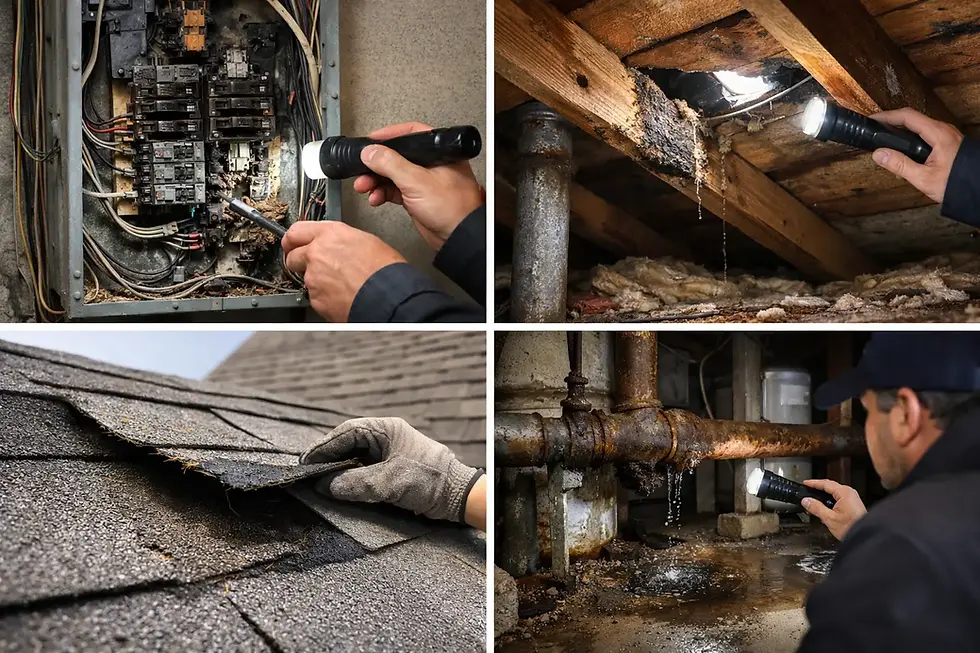
The inspection usually gets real the moment everyone reaches the crawlspace hatch, the attic access, or the electrical panel. That is where buyers start to see what buyers should expect from an independent home inspector - not a sales pitch, not a quick walk-through, but a clear look at the property’s actual condition.
A good independent inspector works for the client’s understanding of the house, not for the deal itself. That distinction matters. Buyers are often deciding under deadlines, with limited chances to revisit a property, and the inspection is one of the few points in the transaction where someone is focused on condition instead of negotiation. The best inspections are detailed, calm, and specific. They help buyers understand what is typical, what is aging, and what deserves immediate attention.
What buyers should expect from an independent home inspector
First, expect independence in the practical sense. An independent inspector should approach the home without minimizing issues to keep a transaction moving and without exaggerating conditions to create alarm. Most houses have defects. Even well-kept homes have deferred maintenance, aging components, or installation issues that only show up when systems are closely evaluated. The inspector’s job is to document those conditions accurately and explain their significance.
Buyers should also expect the inspection to be visual, methodical, and grounded in accessible areas. A professional home inspection is not destructive testing, and it is not a code compliance certification. It is a trained visual assessment of the home’s major systems and readily visible components. That includes roofing, exterior, structure, electrical, plumbing, HVAC, insulation, interior rooms, windows, doors, and areas like basements, attics, and crawlspaces when accessible.
In South Jersey, that often means paying close attention to moisture patterns, crawlspace conditions, grading and drainage, older electrical components, and signs of wear related to humidity and salt-air exposure. Shore properties and seasonal homes can present a different set of concerns than an inland property that has been occupied year-round. A strong inspection reflects those differences.
Expect clear communication during the inspection
The best inspectors do not just gather findings and disappear until the report is sent. They explain what they are seeing as they move through the property. That does not mean turning the inspection into a running commentary on every minor cosmetic issue. It means helping the buyer separate routine wear from material concerns.
For example, a cracked switch plate is not in the same category as double-tapped breakers, active water entry, or a damaged roof surface. An experienced inspector explains those differences in plain language. Buyers should leave the inspection understanding not only what was found, but why it matters.
This is especially helpful for first-time buyers, but experienced buyers benefit from it too. In older Atlantic County and Cape May County homes, it is common to see multiple age-related issues at once. A house may have an older service panel, signs of previous crawlspace moisture, and patchwork repairs in the attic. None of that tells the full story by itself. The value comes from having someone explain the overall pattern.
A thorough inspection should go beyond the obvious
A rushed inspection tends to focus on whatever is easy to see from the middle of the room. A thorough one follows the evidence. If there are stains on a ceiling, the inspector should be thinking about roof penetrations, attic conditions, insulation compression, and whether the issue looks active or historical. If a floor feels uneven, the question is whether it reflects long-term settlement, framing modification, or moisture-related movement below.
That is where experience matters. Buyers should expect the inspector to look closely at transitions between systems and materials, because that is where problems often show up. Around chimneys, roof edges, foundation penetrations, window perimeters, and crawlspace vents, small installation defects can lead to larger moisture or structural concerns over time.
In South Jersey homes, crawlspaces are a frequent example. Many buyers expect a quick look from the hatch. A proper inspection often reveals much more - exposed soil, damaged insulation, high moisture readings, deteriorated supports, fungal growth concerns, or poorly routed ductwork. These are not rare findings in this market, especially in older homes or houses with known drainage issues.
Reports should be detailed, readable, and delivered fast
Buyers should expect a report that reflects the actual inspection, not a generic checklist with vague comments. Good reports include clear descriptions, location-specific notes, and photos that help the buyer identify the issue. The language should be direct. If a component is at or near the end of its service life, the report should say that. If further evaluation by a specialist is warranted, the reason should be clear.
Speed matters too. Real estate timelines move quickly. A delayed report can compress negotiations and create unnecessary stress. Same-day digital reporting is especially useful because it gives buyers and agents time to review findings while the inspection details are still fresh.
That said, fast only helps if the report is still complete. Buyers should not have to choose between turnaround time and depth. A strong inspector can provide both.
Expect photos, context, and prioritization
Not every defect carries the same weight. A useful report gives buyers context so they can prioritize next steps. Safety concerns, active leaks, structural movement, electrical hazards, and major system deficiencies should stand out. Less urgent maintenance-type observations may still belong in the report, but they should not overshadow the more significant issues.
Photos are part of that clarity. It is one thing to read that insulation is displaced in the attic or that the flashing appears compromised. It is another to see exactly where the condition exists. Good documentation helps buyers, agents, and contractors talk about the same issue without confusion.
Specialty findings should be identified when conditions call for it
An independent home inspector should also recognize when standard inspection findings suggest a need for additional testing or evaluation. That does not mean recommending every ancillary service on every house. It means knowing when conditions support it.
In this region, radon testing may be reasonable depending on the property and buyer concerns. Mold-related observations can become relevant when there are visible growth-like substances, chronic moisture conditions, elevated humidity, or long-term staining in crawlspaces, attics, or interior spaces. Wood-destroying insect concerns may also be part of the picture in homes with conducive conditions or visible damage.
Thermal imaging and drone roof inspections can add value in the right circumstances as well. A steep roof, hard-to-view areas, or moisture patterns not fully explained by a visual scan may justify a closer look. The key is judgment. Buyers should expect the inspector to use available tools and recommend further testing when the property conditions support it, not as a routine add-on with no clear purpose.
What an independent inspector should not do
Buyers should not expect certainty where certainty is not possible. A home inspection is not a guarantee against future failure, and no honest inspector should present it that way. Systems can operate on inspection day and fail later. Concealed conditions exist. Occupied homes may have blocked access. Weather can affect what is visible, especially on roofs and exteriors.
An inspector also should not act like a contractor bidding repairs during the inspection. The role is to identify and explain observed conditions. Buyers need objective findings first. Repair decisions and estimates come after that.
It is also worth being cautious if the inspection feels overly casual. If major systems get only a quick glance, if questions are brushed off, or if the report turns serious concerns into vague language, the buyer is not getting the full value of the inspection period.
Why local experience changes the quality of the inspection
Not every defect is unique to South Jersey, but patterns absolutely are. Coastal moisture conditions, older crawlspaces, settlement in certain neighborhoods, and weather exposure near the shore all shape how homes age here. A licensed South Jersey home inspector who sees these conditions every week will often recognize subtle warning signs earlier and explain them more accurately.
That is one reason buyers often look for independent home inspections from firms with strong regional experience. A house in Galloway, Atlantic City, or Cape May may present issues that do not stand out the same way in another market. Salt-air exposure, intermittent occupancy, and aging housing stock can create combinations of wear that require a trained local eye.
For buyers, the practical takeaway is simple. You should expect an inspection that is thorough, clearly explained, well documented, and grounded in the realities of the type of home you are buying. If the process leaves you with a sharper understanding of the property and a report you can actually use, the inspector did the job right.
A good inspection does not tell you whether to buy the house. It tells you what house you are buying.