What a South Jersey Home Inspection Should Reveal
- Eric Price
- Aug 5
- 6 min read
A home inspection is most valuable when it turns a house tour into a clear picture of condition. In South Jersey, that means looking beyond fresh paint and staged rooms to assess the areas that commonly create uncertainty after closing: damp crawlspaces, aging electrical components, roof wear, drainage issues, and moisture effects around the shore.
The purpose is not to make a house look good or bad. It is to document what is visible, explain what it means, and help a buyer understand where further evaluation, repair, or negotiation may be appropriate. A detailed report gives buyers, sellers, and real estate professionals a practical basis for the next decision.
What a Home Inspection Covers Before Closing
A professional inspection is a visual, non-invasive evaluation of the property's readily accessible systems and components. That generally includes the roof exterior, structure, foundation, exterior surfaces, attic, insulation, heating and cooling equipment, plumbing, electrical system, interior rooms, windows, doors, and built-in appliances.
The key word is condition. An inspector is looking for evidence of active problems, prior repairs, deferred upkeep, safety concerns, and components near the end of their expected service life. A roof may not be leaking during the inspection, for example, but visible wear, missing granules, exposed fasteners, or deteriorated flashing can still be meaningful findings. The same is true of an older water heater or HVAC system that operates during the inspection but shows signs of age or installation concerns.
A good report separates routine observations from findings that deserve attention. That distinction matters. Nearly every property has minor defects, particularly homes with older construction. Buyers need context about which items are typical, which are time-sensitive, and which should be reviewed by a qualified contractor before settlement.
South Jersey Conditions That Deserve a Closer Look
Local conditions affect how homes age. Atlantic County properties, Cape May County shore homes, and inland homes across Cumberland, Gloucester, Camden, Ocean, and Burlington counties can have very different construction styles, but moisture is a recurring theme across the region.
Crawlspaces and Foundation Areas
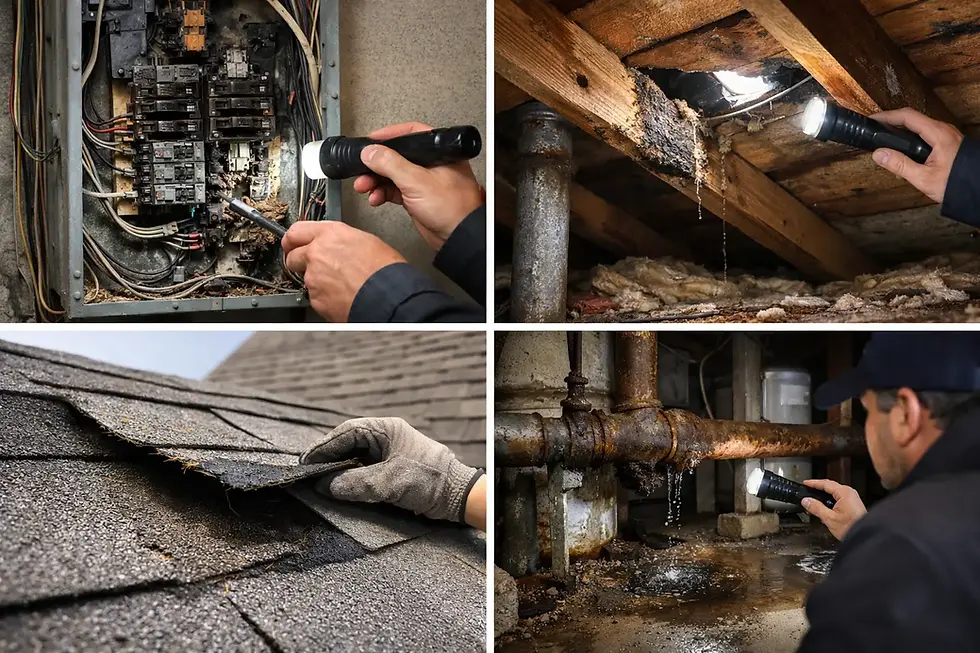
Crawlspaces are one of the most revealing areas of a South Jersey property. We regularly find damp soil, standing water, insulation hanging from floor framing, microbial-like growth, deteriorated vapor barriers, and rust at plumbing or HVAC components. Those conditions do not always mean there is a major structural problem, but they should not be dismissed as normal either.
The source may be poor exterior grading, short downspout discharge, a plumbing leak, an unsealed crawlspace entry, seasonal groundwater, or high humidity moving through the space. The inspection should identify the visible conditions and their likely contributors. That gives the buyer a starting point for appropriate follow-up rather than a vague note that the crawlspace was "damp."
Foundation cracking also requires interpretation. Small shrinkage cracks can be common in concrete. Wider, displaced, or repeatedly repaired cracks, especially when paired with moisture intrusion or uneven floors, call for closer evaluation. The report should describe what was observed without overstating what cannot be confirmed through a visual inspection.
Roofs, Attics, and Coastal Exposure
Roof problems are not limited to active leaks. In South Jersey, wind, humidity, tree cover, and salt-air exposure near the coast can shorten the life of exterior materials. A roof inspection considers covering condition, flashing, penetrations, gutters, visible drainage patterns, and the relationship between the roof surface and attic evidence.
The attic often tells a fuller story. Water staining, damaged sheathing, insufficient ventilation, compressed insulation, and bathroom exhaust ducts that terminate in the attic are findings that can affect moisture control and energy performance. Thermal imaging can help identify temperature differences or moisture patterns that deserve closer attention, but it is an additional tool, not a substitute for visual inspection and informed judgment.
For homes where the roof cannot be safely walked, drone roof inspection imagery can provide useful coverage of areas that would otherwise be difficult to evaluate. This is particularly helpful on steep roofs, multi-level homes, and properties with limited safe access.
Electrical Systems in Older Housing Stock
South Jersey has a wide range of aging housing stock, from early twentieth-century homes to shore properties that have been renovated in stages over decades. Electrical systems often reflect that history. An updated kitchen may be served by an older panel, or additions may contain wiring methods different from the original home.
Common inspection findings include missing covers, open junction boxes, double-tapped breakers where not permitted, improper grounding, damaged receptacles, outdated panels, and missing safety protection in locations where it is expected. Not every older electrical component is automatically unsafe, but older systems deserve careful evaluation because capacity, protection, and installation practices vary significantly by era.
The inspection report should identify visible conditions and recommend licensed electrical evaluation where the system shows signs of concern. A buyer should not have to guess whether an observation is cosmetic, a code-related upgrade issue, or a potential safety concern.
Plumbing, Heating, and Cooling Findings
Water supply and drainage components are checked for visible leaks, material condition, functional flow at accessible fixtures, and installation concerns. We often find active drips below sinks, loose toilets, aging shutoff valves, corroded piping, and evidence of prior leakage beneath bathroom fixtures. A small drip in an accessible cabinet is usually straightforward. A stain below a concealed shower area or corrosion at multiple fittings may point to a broader issue that warrants further evaluation.
Heating and cooling equipment is inspected through normal operating controls when conditions allow. The inspection evaluates visible installation, accessible components, operation at the time of inspection, and signs of age or deterioration. It does not predict exactly how long a system will run, but it can identify a unit that is beyond typical service life, poorly installed, or showing a condition that should be addressed.
Seasonal and shore properties deserve added attention here. A home that has been vacant for long periods may have deferred issues that are not obvious during a brief showing. Evidence of past winterization, corrosion, moisture, or inconsistent repairs can change the conversation before closing.
Why the Inspection Report Matters as Much as the Walk-Through
The inspection itself is only part of the service. Buyers need a report that is organized, specific, and usable after the inspector leaves. Same-day digital reporting is especially useful in a competitive transaction because it allows buyers and their agents to review findings while details from the inspection are still fresh.
Strong reports include photographs, location-specific descriptions, and clear recommendations. Instead of simply stating that an item is defective, the report should explain where it was found, what visible condition was observed, and what type of follow-up is appropriate. That level of detail helps clients communicate with contractors, attorneys, sellers, and real estate professionals without losing the original context.
For buyers who are not familiar with construction, the walkthrough matters too. A licensed South Jersey home inspector should be able to explain findings in plain language on site. The goal is not to overwhelm a client with a long list of imperfections. It is to make sure they understand the property they are considering and leave with realistic expectations.
When Additional Inspection Services Make Sense
A standard home inspection is broad, but certain risks require separate services. In this region, radon testing can be appropriate because radon levels cannot be determined by looking at a home. Mold inspection may be warranted when visible staining, odors, past water intrusion, or persistent crawlspace moisture raise questions that need more targeted assessment.
A wood-destroying insect inspection is also a separate consideration, especially where there is visible wood damage, moisture at exterior trim, or conditions favorable to termites. These services answer different questions than a general inspection and can provide useful information before a buyer's contingency period ends.
The right combination depends on the property. A newer condominium with no crawlspace has different inspection priorities than a raised shore house, a 1950s ranch with a basement, or a seasonal property that has been closed for much of the year.
A Clearer Decision Starts With Clear Findings
No inspection can eliminate every future repair or see through finished walls. What it can do is reduce surprises by documenting the conditions visible on inspection day and putting them in practical context.
For a buyer, that clarity can mean moving forward confidently, requesting appropriate repairs, seeking specialist evaluation, or reconsidering a property before the decision becomes final. That is the value of thorough, independent home inspections: not perfection, but a better understanding of the home before it becomes yours.