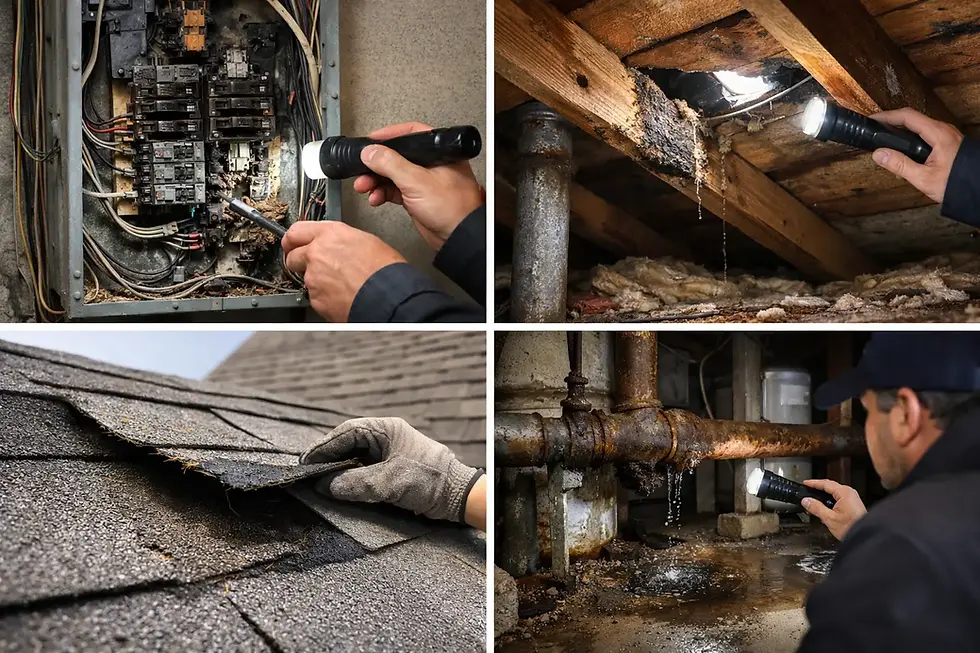
How Buyers Evaluate Inspection Defects Before Closing
- Eric Price
- 10 minutes ago
- 6 min read
An inspection report can contain dozens of findings, yet only a few may truly change a buyer's decision. Understanding how buyers evaluate inspection defects helps put the report in the right context: not as a pass-or-fail scorecard, but as a clear record of the property's condition on the day of inspection.
In South Jersey, that distinction matters. A shore home with crawlspace moisture, an older Atlantic County property with aging electrical components, or a seasonal Cape May County house with signs of deferred upkeep can all produce a detailed report. The buyer's job is to separate normal age-related conditions from issues that affect safety, major systems, water intrusion, or the ability to move forward confidently.
Buyers Start With the Defect's Real-World Impact
Experienced buyers rarely judge a finding by how alarming it sounds in writing. They look at what it means for the house, how soon it needs attention, and whether the condition could point to a larger hidden issue.
A loose handrail, for example, is a legitimate safety item, but it is usually straightforward. A damaged roof covering near the end of its service life is different. That finding can affect insurance, invite water intrusion, and create uncertainty about what may be concealed in the attic or wall cavities. The same report may list both items, but they do not carry the same weight in a purchase decision.
Buyers generally assess each defect through four practical questions:
Is there an immediate safety concern?
Is a major component failing, leaking, or near the end of its expected service life?
Could the visible defect be evidence of concealed damage?
Does the finding affect financing, insurance, occupancy, or the planned closing timeline?
The answers matter more than the number of items in the report. A well-maintained older home may have a long list of minor repairs. A newer home may have a shorter report with one significant drainage, structural, electrical, or moisture issue that deserves much closer attention.
Safety Findings Usually Rise to the Top
Safety defects are often the first items buyers discuss with their agent, attorney, lender, or inspector. These may include exposed electrical wiring, improper panel conditions, missing stair guards, combustion concerns, or unsafe venting at fuel-burning equipment.
That does not mean every safety item is a reason to walk away. Many are repairable, and some are common in aging housing stock. What buyers want to know is whether the condition is isolated and correctable or part of a broader pattern of poor workmanship or neglected systems.
Electrical findings are a good example. One missing cover plate is not viewed the same way as signs of overheating, incompatible equipment in the panel, outdated wiring concerns, or multiple improper modifications. A thorough report should help the buyer understand that difference without turning every defect into an emergency.
Water and Moisture Concerns Carry More Weight Near the Shore
For many South Jersey buyers, moisture-related findings deserve careful review. Coastal moisture conditions, high seasonal humidity, salt-air exposure, and low-lying drainage conditions can accelerate wear in ways that are not always obvious during a showing.
Crawlspaces are a frequent area of concern. An inspector may find elevated moisture, deteriorated insulation, microbial-like growth, inadequate vapor coverage, standing water, damaged wood framing, or evidence that a sump system has been working hard. Each condition needs context. A damp crawlspace after heavy weather is different from recurring water entry, active wood deterioration, or a drainage pattern that directs runoff toward the foundation.
Buyers often evaluate these findings based on recurrence and source. If the report identifies a clear source, such as poor exterior grading, a disconnected downspout, or an active plumbing leak, the next question becomes whether the visible damage is limited. If the source is unclear, or the condition appears longstanding, buyers may seek further evaluation before removing inspection contingencies.
This is especially relevant with seasonal and shore properties. A house that has been closed up for long periods can show humidity effects that were not noticed by the owner. Thermal imaging, moisture readings, and a careful visual inspection can help distinguish a surface condition from a possible concealed moisture issue.
Major Systems Shape the Negotiation More Than Minor Repairs
Buyers tend to focus on the systems that keep the property safe, dry, functional, and habitable: roofing, structure, electrical, plumbing, heating, cooling, and drainage. Their concern increases when several systems appear to be approaching the same stage of replacement or repair.
Consider a home with an older roof, a water heater near the end of its useful life, and an HVAC system showing performance concerns. None of those items automatically makes the purchase a poor choice. But together, they change the buyer's expected near-term investment and can affect how the offer is evaluated after inspection.
Condition language also matters. “Monitor” is not the same as “repair,” and “recommend further evaluation” is not the same as “replace immediately.” A buyer should read the narrative and photographs, not just scan the summary. The details identify where the defect was found, what was visible, and why the inspector considered it significant.
At Next Day Property Inspections, the goal of a same-day digital report is to give buyers that usable context while the transaction is still moving. Clear photographs and direct descriptions help buyers have a focused conversation instead of reacting to a long list of unfamiliar terms.
Buyers Look for Patterns, Not Just Isolated Defects
One of the most useful ways to evaluate an inspection report is to look for related findings. A single crack, stain, or repair may be isolated. Multiple signs in the same area often deserve a closer look.
For instance, a buyer may see peeling exterior paint, soft trim, stained sheathing in the attic, and damaged roof flashing. Viewed separately, those are individual report items. Viewed together, they may suggest a recurring water-management issue. Likewise, plumbing leakage below a bathroom, deteriorated subflooring, and staining in the crawlspace can point to a longer history than one visible drip.
Patterns also reveal the level of prior maintenance and renovation quality. South Jersey homes often include additions, converted porches, older mechanical upgrades, and work completed over many ownership periods. Buyers should pay attention when multiple defects involve unpermitted-looking alterations, inconsistent materials, or repairs that appear temporary. The concern is not age alone. It is whether the house has been maintained and altered in a way that creates uncertainty.
Further Evaluation Is a Decision Tool, Not a Diagnosis
When an inspection report recommends further evaluation, buyers sometimes assume the inspector has found a worst-case problem. That is not what the recommendation means.
A home inspection is visual and noninvasive. Inspectors identify observed conditions and explain when a specialized contractor, engineer, electrician, roofer, HVAC technician, or other qualified professional should determine the exact cause, scope, and correction. Buyers should view this recommendation as a chance to reduce uncertainty before closing.
The most useful follow-up questions are specific: Is the condition active? What is causing it? Is damage limited to the visible area? Does it affect safe operation? Is a repair sufficient, or does a larger component need replacement? A qualified specialist can answer questions that fall outside the scope of a standard inspection.
This step is particularly valuable when the report identifies possible structural movement, active leaks, sewer line concerns, mold-like growth, roof leakage, or electrical issues. The buyer does not need to assume the worst, but should avoid assuming the best without additional information.
How Buyers Evaluate Inspection Defects During Negotiation
After reviewing the report, buyers usually sort findings into three categories: conditions they accept as part of the home's age, issues they want clarified or repaired, and defects significant enough to reconsider the transaction. The right category depends on the property, the contract terms, the buyer's tolerance for projects, and the evidence collected during inspection.
The strongest requests are focused on material conditions rather than cosmetic items or ordinary aging. A buyer is more likely to prioritize an active roof leak, unsafe electrical condition, failed heating equipment, significant water intrusion, or a drainage issue affecting the foundation than a worn screen or minor interior crack.
It also helps to avoid treating an inspection report as a repair checklist for the seller. Some buyers prefer a properly documented repair by a qualified professional. Others may be more comfortable addressing a condition after closing, provided they understand the scope. There is no single approach that fits every transaction.
Real estate professionals can help manage the contract process, but the inspection findings should remain grounded in the report. Clear documentation keeps the discussion centered on property condition rather than assumptions.
A Detailed Report Should Create Clarity, Not Alarm
The best outcome from an inspection is not a house with no defects. Every property has limitations, wear, and items that will need attention over time. The useful question is whether the buyer understands the important conditions well enough to make a sound decision.
A careful inspection gives buyers a practical view of the home they are considering: what appears serviceable, what needs attention, what requires further evaluation, and where local conditions may increase risk. When buyers read the report in that order, they can move toward closing with clearer expectations and fewer surprises.