Home Inspections Checklist for South Jersey Buyers
- Eric Price
- Jul 16
- 6 min read
A home can look move-in ready at a showing and still have conditions that deserve a closer look. A useful home inspections checklist helps buyers focus on the parts of a South Jersey property that carry the most consequence: water management, structural movement, major systems, concealed moisture, and components nearing the end of their service life.
The checklist is not meant to turn a buyer into an inspector. It is a way to ask better questions, notice visible warning signs during a walkthrough, and understand what should be addressed in the inspection report. This matters especially in Atlantic County, Cape May County, and nearby shore communities, where humidity, salt-air exposure, crawlspaces, seasonal occupancy, and aging housing stock can affect a property's condition in ways a quick showing will not reveal.
Home Inspections Checklist: Start Outside
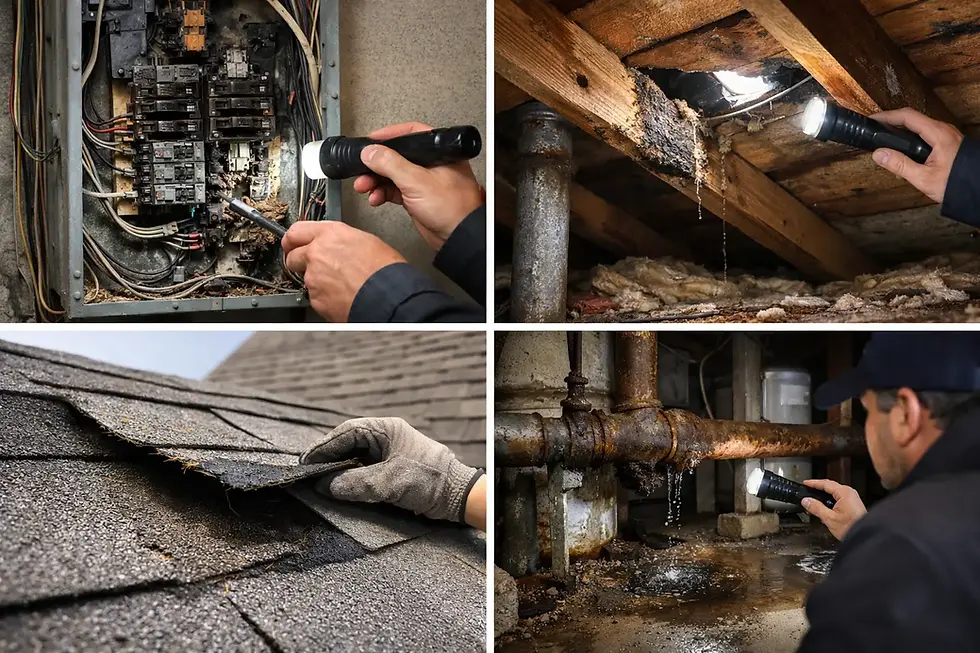
The exterior often explains problems found inside. Water that does not move away from the house can contribute to damp crawlspaces, foundation staining, basement moisture, wood damage, and mold-like conditions. During an inspection, the concern is not whether the lawn looks perfect. The concern is whether the site, roof, siding, and drainage systems are protecting the building.
Look closely at these exterior areas:
Grading and drainage: Soil should generally direct water away from the foundation. Low spots near the house, ponding water, eroded soil, or downspouts discharging at the foundation deserve attention.
Roof covering and flashing: Missing, damaged, or aging shingles are only part of the picture. Flashing at chimneys, walls, skylights, vents, and roof transitions is a common leak point.
Siding, trim, and exterior wood: Deteriorated trim, open joints, peeling coatings, and soft wood can indicate long-term water exposure. On coastal properties, wind-driven rain and salt air can accelerate wear.
Foundation and structural elements: Cracks are evaluated by their location, pattern, width, and associated movement. Not every crack is a structural failure, but horizontal cracking, significant displacement, or recurring water entry should be clearly documented.
Decks, porches, and stairs: Inspectors look for unsafe guardrails, improper ledger connections, damaged framing, deteriorated footings, and signs that exterior structures are pulling away from the home.
For shore homes, elevated homes, and houses with exposed framing below the main floor, the inspection should also consider visible corrosion at fasteners, connectors, and mechanical equipment. Salt-air exposure does not automatically mean a component has failed, but it can shorten service life and make close observation more valuable.
Check the Roof, Attic, and Ventilation Together
A roof cannot be evaluated properly by looking at shingles alone. The roof covering, attic, insulation, ventilation, and interior ceilings often tell one connected story. A stained ceiling may point to an active roof leak, an older repaired leak, condensation, or a plumbing issue above. The inspection process is about narrowing down the likely source based on visible evidence.
In attic spaces, common findings include inadequate insulation coverage, disconnected bath exhaust ducts, signs of past leakage, microbial growth associated with moisture, and insufficient ventilation. Bath fans that discharge into an attic instead of outdoors are a recurring concern because they introduce warm, humid air into an enclosed space.
Some roofs cannot be safely walked because of pitch, material condition, weather, or access limits. In those cases, drone roof inspection can provide a better view of areas that would otherwise remain difficult to evaluate. A report should state how the roof was viewed and identify any limitations, rather than implying that inaccessible areas were fully inspected.
Pay Close Attention to Crawlspaces and Basements
Crawlspaces are among the most revealing areas in many South Jersey homes. They can show evidence of drainage problems, plumbing leaks, insulation deficiencies, insect activity, damaged framing, and moisture conditions that may not be visible from the living area.
A damp crawlspace is not unusual in this region, particularly where high groundwater, poor drainage, or seasonal humidity is present. The relevant question is the severity and source of the moisture. Standing water, saturated soil, heavy condensation, decayed floor framing, fungal growth, or an inoperative vapor barrier call for a more serious discussion than a mildly humid space with no visible damage.
Basements require the same practical approach. Efflorescence on masonry walls, a white mineral deposit left behind by water, can indicate past or ongoing moisture migration. It is useful evidence, but it does not by itself establish an active leak. Inspectors should distinguish between visible conditions, likely causes, and areas where further evaluation is appropriate.
Review the Major Systems in the Home
The most expensive surprises are often tied to systems buyers use every day. A thorough inspection reviews visible and readily accessible components, identifies material defects, and explains what the findings mean in practical terms.
Electrical System
The electrical inspection includes the service equipment, panel condition, visible wiring, grounding and bonding, representative outlets, and safety devices where present. Older South Jersey houses may have additions, renovations, or panel changes completed across several decades. That can result in mixed wiring methods, missing covers, double-tapped breakers, open junction boxes, or outlets that are not properly protected in wet locations.
The age of a panel is not the only issue. The inspector is looking for its condition, visible installation concerns, signs of overheating, available capacity, and whether the system appears appropriate for the home as observed.
Heating, Cooling, and Water Heating
Heating and cooling equipment should be operated under suitable conditions and assessed for visible defects, approximate age, accessible installation issues, and normal response at the time of inspection. A system that starts and delivers air is not necessarily problem-free. Rust, leakage, damaged venting, improper clearances, missing service records, or age beyond typical service expectations can affect the recommendation.
Water heaters also deserve careful review. Common concerns include active leakage, corrosion, improper venting, missing safety components, and inadequate installation support. In shore and seasonal properties, equipment may have been inactive for periods of time, so visible condition and current operation both matter.
Plumbing and Sewer Conditions
Inspectors evaluate visible supply lines, drain piping, fixtures, water pressure, and representative drainage operation. Under-sink leakage, slow drains, loose toilets, older supply materials, and active corrosion are common findings. A visual home inspection does not show the inside condition of a buried sewer lateral.
For homes with older sewer lines, recurring drain history, mature trees, vacant periods, or signs of drainage backup, a sewer camera inspection can be a valuable separate service. It may reveal root intrusion, offsets, breaks, blockages, or deteriorated piping that cannot be confirmed from a fixture test inside the home.
Look for Moisture Indicators, Not Just Visible Mold
Moisture is a condition to investigate, not a reason for immediate alarm. Water staining, elevated moisture readings, musty odors, deteriorated materials, and visible organic growth can point to a current or past moisture source. The inspection should focus on where the condition is located and what may be contributing to it.
In coastal moisture conditions, bathrooms, attic spaces, crawlspaces, utility rooms, and areas behind finished basement walls warrant particular attention. Thermal imaging can sometimes help identify temperature differences consistent with moisture intrusion or missing insulation, but it is a screening tool, not a stand-alone diagnosis. When findings justify it, mold inspection or additional evaluation can help define the next step.
Read the Report for Priorities and Limitations
A detailed digital report is more useful when buyers know how to read it. Do not focus only on the number of comments. Every house, including a well-kept one, will have observations. Focus on conditions involving safety, active water intrusion, structural concerns, major system defects, and components that need further evaluation before closing.
Also review the limitations section. Furniture, stored belongings, locked rooms, snow cover, inaccessible crawlspace areas, or unsafe roof conditions can prevent a complete visual evaluation. A clear report identifies those restrictions so buyers can decide whether additional access or specialized inspection is needed.
Termite or wood-destroying insect inspections, radon testing, mold inspection, sewer camera inspection, and oil tank screening address risks beyond the scope of a standard visual inspection. Whether those services make sense depends on the property, its age, visible conditions, and local history. An experienced inspector should explain the reason for a recommendation without overstating the risk.
A good inspection does more than produce a repair list. It gives buyers a clearer picture of the home they are considering, including what is functioning, what needs attention, and what requires a qualified specialist's opinion. Before your inspection appointment, bring this checklist, attend if possible, and use the time on site to ask direct questions about the conditions that will matter after closing.