Galloway NJ Home Inspection Issues to Watch For
- Eric Price
- May 17
- 6 min read
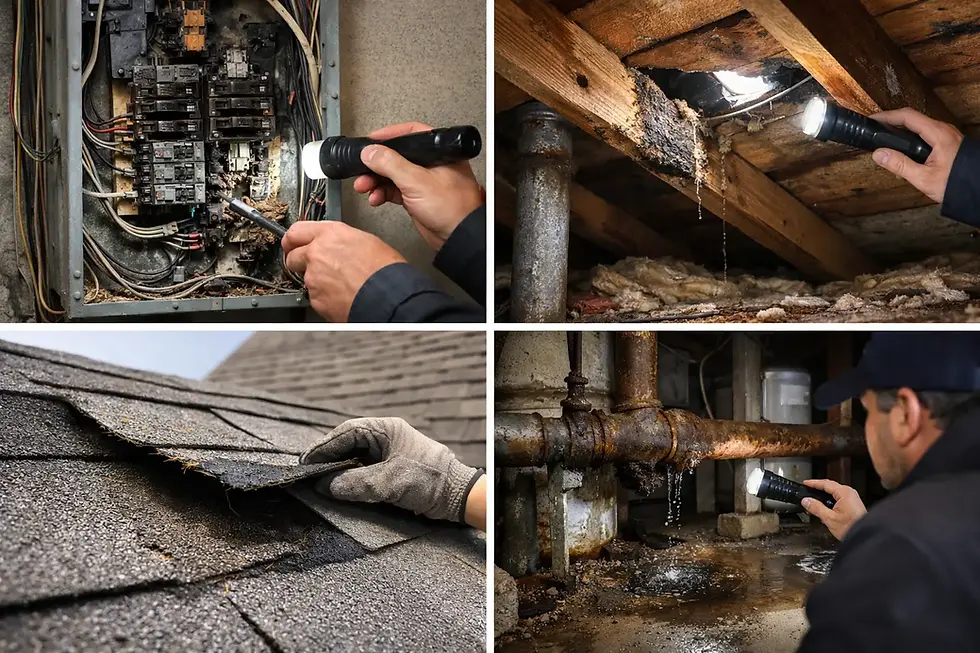
A house can look clean at a showing and still have problems hiding in the attic, crawl space, panel, or behind a finished basement wall. When buyers ask about galloway nj home inspection issues to watch for, the answer usually comes down to the same categories we see again and again in South Jersey - moisture, roofing wear, aging mechanical systems, electrical defects, and structural movement that may or may not be serious depending on the extent.
In Galloway, local conditions matter. Homes here range from older properties with long service histories to newer construction with installation defects that never should have been missed. Add in coastal humidity, wind-driven rain, seasonal temperature swings, and a mix of crawl spaces, basements, and slab homes, and the inspection needs to go well beyond a quick visual walk-through.
Galloway NJ home inspection issues to watch for often start with moisture
If there is one issue category that deserves careful attention, it is moisture. Moisture can show up as staining on a ceiling, elevated readings around a basement wall, musty conditions in a crawl space, rust at HVAC components, or fungal growth in areas with poor ventilation. Sometimes the source is active. Sometimes it is old and already repaired. That distinction matters, and a good inspection should help clarify it.
Crawl spaces are a common example. In this part of South Jersey, we often see high moisture conditions, fallen insulation, open vents that do not manage humidity well, and signs of past water entry. A crawl space does not have to be flooded to be a problem. Long-term dampness can affect framing, insulation performance, air quality, and even flooring above.
Basements tell a similar story but in a different way. Efflorescence, minor seepage staining, patched cracks, and moisture intrusion at wall penetrations are all worth noting. None of those automatically means a deal is off. It means the house needs to be evaluated as it actually performs, not just how it presents on a dry day.
Roof defects are common and not always obvious from the ground
Roofing issues are another major item on the list of Galloway NJ home inspection issues to watch for. Buyers often focus on the age of the roof, but age alone does not tell the whole story. We regularly find roofs that are relatively new but poorly installed, and older roofs that have held up better than expected because the flashing and drainage details were done correctly.
The most common concerns include missing or damaged shingles, exposed fasteners, flashing defects at chimneys and wall intersections, sagging areas, and signs of prior patching. On lower-slope sections, drainage can be a bigger issue than the roofing material itself. If water is not moving off properly, wear accelerates.
Attic evidence is often just as important as the roof covering. Water staining on sheathing, active drips around penetrations, blocked soffit intake, and inadequate ventilation can point to problems that are not visible from the yard. In some cases, what looks like a roof leak is actually condensation related to poor attic airflow. That is why a thorough inspection looks at the whole system, not just the shingles.
Electrical concerns range from minor fixes to real safety issues
Electrical defects are common in both older homes and renovated properties. In older homes, we may find outdated components, double-tapped breakers, missing panel knockouts, open junction boxes, or evidence of amateur wiring changes over time. In newer or flipped homes, the issue is often less about age and more about workmanship.
A finished room can distract from what is happening at the panel or in the attic. Recessed lights installed too close to insulation, loose receptacles, reversed polarity, missing GFCI protection, and spliced wiring outside proper enclosures all come up during inspections. Some items are straightforward corrections. Others raise bigger questions about who performed the work and whether permits or proper installation standards were followed.
This is one area where buyers should avoid assuming that cosmetic updates equal quality. Fresh paint and new fixtures do not mean the electrical system was upgraded correctly.
Heating and cooling problems can affect more than comfort
HVAC concerns show up often during inspections in Galloway, especially in homes with older systems, deferred maintenance, or additions that changed the original layout of the house. We commonly see rusted components, dirty evaporator areas, damaged insulation on refrigerant lines, disconnected duct sections, and systems that appear undersized or poorly distributed for the living space.
The key point is that HVAC issues are not just about whether cool air comes out of a vent on inspection day. We are also looking at system condition, visible installation defects, signs of leakage, and whether the equipment appears near the end of its service life. A system can still operate while showing clear signs of wear or improper setup.
In crawl space and attic runs, ductwork often tells the story. Crushed ducts, disconnected sections, missing supports, and air loss at seams can affect performance significantly. In humid conditions, poor HVAC operation also ties back into moisture control inside the home.
Structural movement needs context, not guesswork
Few things make buyers more nervous than cracks. The truth is that some cracking is common, especially in older homes. The question is whether what we see suggests typical settlement, moisture-related movement, or a more significant structural concern.
In this area, we pay close attention to foundation cracking patterns, sloped floors, door and window operation, support conditions in crawl spaces, and framing alterations. A patched crack is not automatically a red flag. Multiple indicators moving in the same direction can be.
For example, a single shrinkage crack in a foundation wall is different from horizontal cracking with displacement, or from moisture entry combined with movement at beam supports. Likewise, uneven floors in an older home may reflect age and construction methods, or they may point to compromised supports below. This is where experience matters. The goal is not to overstate every imperfection but to identify when the pattern deserves further evaluation.
Exterior drainage and grading can create interior problems
Some of the most expensive inspection findings start outside. Improper grading, downspouts discharging too close to the house, hard surfaces pitched toward the foundation, and settlement around exterior entry points can all contribute to water intrusion.
This is especially relevant when a home shows repeated signs of moisture at lower levels. If water management around the exterior is poor, interior symptoms tend to follow. We often see a chain reaction - roof drainage issues lead to saturated soil, which contributes to seepage, crawl space humidity, or movement at foundation areas.
The reason this matters during a home inspection is simple. If you only look at the stain on the inside wall, you miss the condition that may be feeding it from outside.
Windows, siding, and trim often reveal deferred moisture damage
Exterior cladding and trim defects do not always look dramatic, but they can say a lot about how a property has been holding up. In Galloway homes, common findings include deteriorated trim, failed caulking at penetrations, soft wood at lower window areas, damaged siding sections, and signs that prior repairs were cosmetic rather than complete.
These issues are easy to underestimate because they can appear minor from a distance. Up close, they may indicate long-term water exposure at vulnerable openings. We also look for signs of improper flashing details around windows and doors, because that is where hidden moisture intrusion can develop.
A home does not need widespread damage to have a meaningful issue. Sometimes one poorly managed exterior wall or one chronically wet corner tells you more than the rest of the facade.
Interior red flags that deserve a closer look
Inside the house, certain conditions should slow the conversation down. Freshly painted isolated ceiling areas, patched drywall around windows, uneven flooring transitions, musty odors, and bathroom exhaust fans venting improperly all deserve attention. None of these automatically means there is a major defect. They are clues.
The inspection process is about putting those clues together. A ceiling patch beneath an upstairs bathroom means one thing if the surrounding area is dry and there is no active evidence. It means something else if moisture readings are elevated, the bathroom fixtures are loose, and staining continues into an adjacent closet.
This is why same-day digital reporting and clear photo documentation matter. Buyers need to understand not just what was found, but how the findings relate to each other and where follow-up is reasonable.
What buyers should take from these common inspection findings
The biggest mistake buyers make is treating every defect the same. Some findings are maintenance-type conditions or typical wear for the age of the home. Others affect safety, moisture control, or the ability of major systems to perform as intended. A thorough inspection helps separate those categories.
That is especially useful in a market where homes can move quickly. A rushed decision based only on appearance can miss issues that become expensive after closing. On the other hand, overreacting to every imperfect detail can cause buyers to walk away from solid homes with manageable concerns.
The value of a careful inspection is not just finding defects. It is understanding which findings are common, which are more significant, and how the house is performing as a whole on the day it is inspected. For buyers in Galloway and throughout South Jersey, that kind of clarity makes the next decision a lot easier.