10 Home Inspection Red Flags to Watch For
- Eric Price
- Jun 23
- 7 min read
A house can look clean, freshly painted, and move-in ready, then show a very different story once the inspection starts. That is why home inspection red flags matter. The biggest issues are not always dramatic. In many South Jersey homes, the concerns that deserve the closest attention are moisture patterns, structural movement, unsafe electrical conditions, and older systems that are near the end of service life.
Buyers often ask whether a red flag means they should walk away. Sometimes yes, but more often it means the property needs a closer look, a repair plan, or a different level of negotiation. The key is understanding which findings are cosmetic, which are manageable, and which suggest a broader pattern in the home.
What counts as a real home inspection red flag?
A real red flag is not just a defect. It is a condition that points to elevated cost, hidden damage, safety concerns, or ongoing deterioration. One missing handrail is a defect. Widespread settlement cracks combined with sticking doors and sloping floors may point to a bigger structural concern. A small water stain from an old repair is one thing. Active moisture in a crawlspace with fungal growth and damaged insulation is something else entirely.
In Atlantic County, Cape May County, and other parts of South Jersey, homes often deal with high humidity, coastal moisture conditions, and aging materials. Shore homes and seasonal properties can show deferred maintenance in ways that are not obvious during a quick showing. That is why the inspection process has to look past surface appearance.
Structural movement that looks active
Some cracking is common, especially in older homes. What gets attention during an inspection is the pattern, width, and location of the cracks. Horizontal foundation cracks, stair-step cracking in masonry, significant displacement, or interior signs like uneven floors and door frames out of square can suggest movement that may still be active.
In the field, this is where context matters. A century-old home may have some settling that has been stable for years. A newer home with fresh patching over recurring cracks raises a different question. If multiple signs line up at once, it usually deserves further evaluation before a buyer gets comfortable with the condition.
Why this matters in South Jersey
Drainage and soil conditions can affect movement over time, especially where grading sends water toward the foundation. In homes with crawlspaces, moisture intrusion can also contribute to framing concerns, weakened supports, and settlement-related symptoms.
Moisture intrusion and evidence of chronic water entry
Water is one of the most common and most expensive problems behind home inspection red flags. On inspections throughout South Jersey, the issue is often not one dramatic leak. It is repeated moisture entry that has affected multiple building components over time.
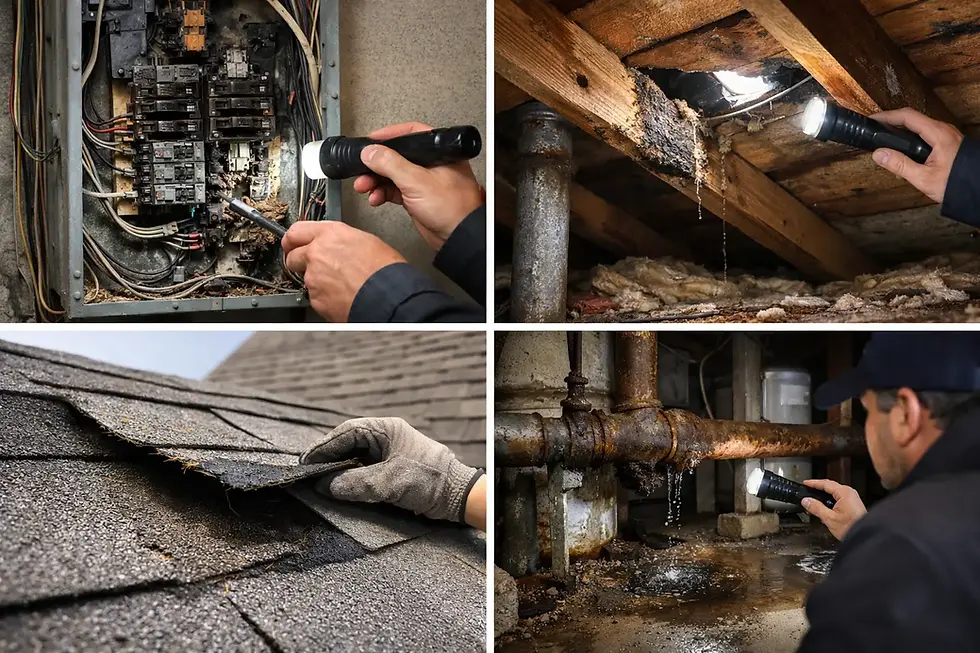
This can show up as staining in an attic, damp basement walls, soft trim, peeling paint, swollen window frames, musty odors, or elevated moisture readings around bathrooms and exterior walls. In crawlspaces, signs may include standing water, vapor barrier issues, rusted supports, damaged insulation, or wood deterioration.
A buyer should pay close attention when moisture appears to be active or recurring. Fresh paint over water staining, dehumidifiers running in problem areas, or recently replaced materials in isolated sections can all warrant a closer look. In shore-area homes, salt-air exposure and seasonal vacancy can accelerate the damage once water gets in.
Roof problems beyond normal wear
An older roof is not automatically a deal breaker. What matters is whether the roof is simply aged or actively failing. Missing shingles, soft decking, flashing defects, patchwork repairs, sagging roof lines, and signs of leakage inside the attic all deserve attention.
Roof conditions often connect to other findings. When an inspector sees staining on sheathing, damaged soffits, moisture around penetrations, or insulation compressed by prior leaks, the issue may be broader than roof covering alone. On some South Jersey shore homes, wind exposure and salt-air conditions can shorten material life and worsen weak spots faster than buyers expect.
Red flags in the attic
The attic often tells the real story. Poor ventilation, visible mold-like growth, active staining, and concealed repair work can indicate a roof system that has had ongoing performance issues. Even when the ceiling below looks fine, the attic may show whether leakage has been happening over time.
Electrical conditions that raise safety concerns
Electrical issues are among the clearest red flags because the concern is not just repair cost. It is safety. During an inspection, this may include double-tapped breakers where not permitted, overheated conductors, improper panel wiring, open splices, missing covers, aluminum branch wiring concerns, or evidence that additions were wired without professional standards.
Older homes in this area sometimes have a mix of original wiring and later modifications. That patchwork is where problems show up. A modern kitchen may have updated finishes, but if the panel is overcrowded or safety protections are missing in required locations, the cosmetic improvements do not mean the electrical system is in good shape.
When electrical defects appear isolated, they may be manageable. When they show up in multiple areas, it often suggests a history of unpermitted or inconsistent work.
HVAC, plumbing, and water heater issues that show age and neglect
A system nearing the end of its service life is not unusual. A red flag is when age is paired with performance concerns, leaks, corrosion, unsafe venting, or visible lack of maintenance. An air conditioning unit that is old but operating normally is one thing. A rusted system with poor cooling response, damaged insulation, and improvised repairs is another.
The same goes for plumbing. Corroded supply lines, active drain leaks, water pressure concerns, staining under fixtures, and outdated materials can point to more than a simple repair. In vacant and seasonal homes, plumbing issues sometimes become more serious because small leaks can continue unnoticed for long periods.
Water heaters deserve the same scrutiny. Improper venting, leakage, rust at the tank body, missing discharge piping, or unsafe installation details can quickly move a routine finding into a more urgent category.
Crawlspace conditions that suggest hidden deterioration
Crawlspaces are one of the biggest sources of concern in a home inspection in South Jersey, especially in older homes and properties near the shore. Buyers do not usually see this area before closing, but inspectors often find the conditions that explain everything happening above it.
Excess moisture, standing water, damaged joists, fungal growth, poor support conditions, disconnected ductwork, and insulation hanging from the subfloor are all warning signs. Sometimes the floors feel uneven or bouncy upstairs, and the crawlspace reveals why. In other cases, the home appears fine inside, but the structure below has been affected by long-term damp conditions.
This is one area where a detailed inspection matters. A quick walk-through does not tell you much. A thorough inspector is looking for moisture patterns, structural response, and whether the issues appear isolated or widespread.
Signs of poor-quality repairs or concealed defects
One of the more serious home inspection red flags is evidence that prior work was done to cover a problem rather than correct it. Freshly painted basement walls over staining, new drywall patches without explanation, mismatched flooring around plumbing fixtures, or recently boxed-in areas around structural components can all raise questions.
Not every repair is suspicious. Homes get updated all the time. The concern is when the workmanship is poor, the repair does not match the surrounding condition, or the fix appears to hide active damage. Inspectors see this often enough to know when a clean finish deserves a second look.
For buyers and agents, this is where same-day reporting and clear documentation help. The goal is not to create alarm. It is to separate normal updates from signs that the visible condition may not reflect the full story.
Pest or wood-destroying damage
Termite-related findings and other wood-destroying insect damage can range from old, treated evidence to active structural deterioration. What makes this a red flag is visible damage to framing, trim, or sill areas, especially when combined with moisture conditions that continue to attract infestation.
In many cases, insect activity and moisture go together. A damp crawlspace, leaking exterior trim, or rotted wood near grade creates the conditions where damage gets worse over time. If the home shows both moisture intrusion and wood damage, the issue usually deserves more attention than either finding alone.
When a red flag is manageable and when it is not
Not every serious finding means the purchase should stop. Some homes have one or two major issues but still make sense if the buyer understands the scope and plans accordingly. The homes that deserve the most caution are the ones with stacked concerns - structural symptoms, active water intrusion, unsafe electrical conditions, and visible deferred maintenance all at once.
That combination usually tells you something important about ownership history and overall risk. A house with widespread neglected systems can become expensive quickly, even if each individual defect seems fixable on paper.
How buyers should read inspection findings
The most useful inspection reports do more than list defects. They show pattern, severity, and context. That is especially important in South Jersey, where homes may deal with humidity, shore exposure, older construction, and drainage-related wear all at the same time. A licensed South Jersey home inspector should be able to explain which findings are common for the area, which ones need prompt attention, and which ones deserve specialist review before closing.
At Next Day Property Inspections, that practical distinction is what helps buyers make decisions with confidence. A red flag is not just a scary item in a report. It is a clue about how the home has performed, what may be happening behind finished surfaces, and what level of risk a buyer is really taking on.
If you are buying a property and something feels off even before the inspection starts, pay attention to that instinct. The right inspection does not just confirm what is visible. It helps you understand the house you are actually buying.