When Is Mold Inspection Needed for a South Jersey Home?
A faint musty smell in a shore home, dark spotting along a basement wall, or a stained ceiling below a bathroom can change the scope of a property decision quickly. The question is not whether every mark is mold. It is when is mold inspection needed to determine whether there is an active moisture problem, visible fungal growth, or a condition that deserves further evaluation before closing.
In South Jersey, we regularly see the conditions that allow mold to develop: humid crawlspaces, seasonal homes that sit closed for long periods, older plumbing connections, coastal moisture conditions, and roof or exterior drainage issues. Mold is usually a symptom. The inspection should focus on what is allowing moisture to remain where it does not belong.
When Is Mold Inspection Needed During a Home Purchase?
A mold inspection is most useful when there is a specific reason to investigate. It is not automatically necessary for every transaction, but it should be considered when a home inspection identifies signs of moisture intrusion or conditions that cannot be fully explained by a visual review alone.
For buyers, the most common trigger is visible staining or suspected growth in an area with a known water source. That could be beneath a leaking sink, around an attic roof penetration, on framing in a crawlspace, or behind a finished basement wall where moisture has been recurring. A standard home inspection can identify many of these conditions, but a dedicated mold evaluation can help document the extent of the concern and determine whether elevated airborne mold conditions are present in the areas tested.
The timing matters. If evidence appears during the inspection contingency period, further evaluation gives the buyer, seller, and their representatives a clearer basis for discussing repairs, remediation, or additional investigation. Waiting until after settlement often means the source, scope, and responsibility are harder to sort out.
A Musty Odor Without Visible Growth
A persistent musty odor is one of the more common reasons to request a mold inspection, especially in homes with enclosed crawlspaces, finished basements, and seasonal-use rooms. Odor alone does not confirm mold, and air fresheners can temporarily mask it. Still, a recurring damp or earthy smell often points to moisture that deserves a closer look.
In Atlantic County properties near the shore, we often find that the odor is connected to crawlspace humidity, wet insulation, condensation on ductwork, or long-term dampness at the foundation perimeter. The visible evidence may be limited because the affected material is concealed or the area has poor access. A targeted inspection helps distinguish a general humidity issue from an active condition affecting building materials.
Past Water Damage That Was Never Fully Explained
A seller may disclose a prior pipe leak, roof leak, appliance overflow, or storm-related water entry. That history does not automatically mean mold is present. What matters is how much water was involved, how long materials remained wet, whether damaged materials were removed, and whether staining or odors remain.
Fresh paint over a localized ceiling stain, new drywall in one section of a basement, or recently replaced flooring can be entirely legitimate repairs. They can also limit what is visible during a walkthrough. When the repair history is unclear, a mold inspection with moisture evaluation and, when appropriate, sampling provides a more defensible assessment than assumptions based on appearance alone.
Conditions We See in South Jersey Homes
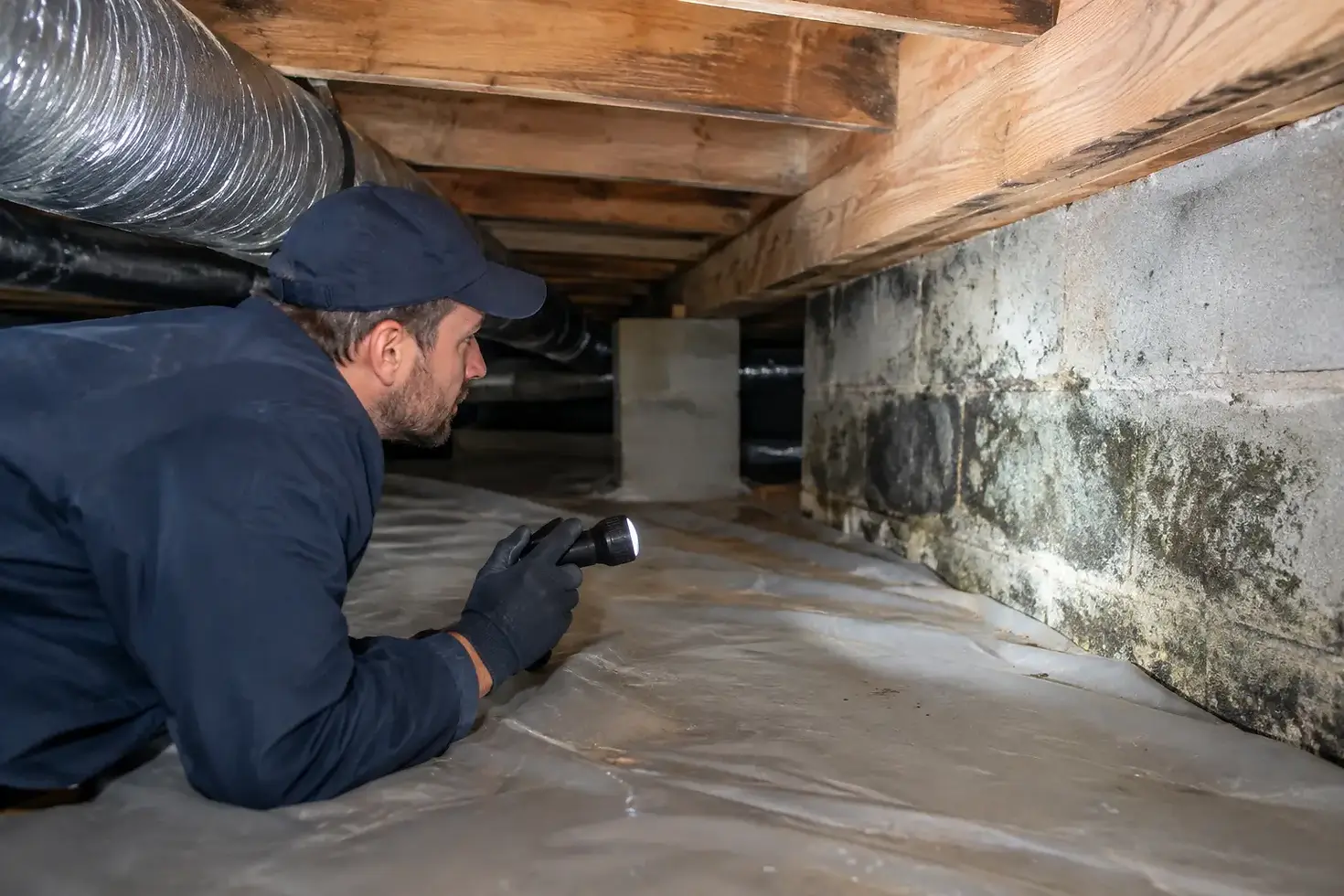
Crawlspaces are a frequent source of moisture-related findings in this region. Older homes may have exposed soil, incomplete vapor barriers, deteriorated insulation, standing water, or ductwork sweating in humid weather. Shore and bay-area properties can be especially vulnerable when high groundwater, poor site drainage, and salt-air exposure combine with limited ventilation.
The concern is not simply that a crawlspace feels damp on the day of inspection. We look for evidence of a continuing condition: microbial-like growth on wood framing, moisture staining, wet or compressed insulation, rusting metal components, fungal growth on stored debris, or water marks along foundation walls. A mold inspection may be appropriate when these observations are present, particularly if the home has occupied space directly above the crawlspace.
Finished basements create a different challenge. Wall finishes, carpet, and stored contents can conceal moisture damage. In older South Jersey housing stock, below-grade walls may have a history of seepage even when the basement is dry during the inspection. Staining at baseboards, loose flooring, peeling finishes, or a concentrated odor near one wall can justify additional evaluation.
Attics also warrant attention after roof leaks or bathroom exhaust issues. We occasionally find darkened roof sheathing around improperly terminated bath vents or beneath older roof repairs. Surface discoloration is not always mold, which is why the source of moisture and the pattern of the material condition matter more than color alone.
Inspection, Testing, and Remediation Are Different Services
Clients sometimes use these terms interchangeably, but they serve different purposes. A mold inspection is an evaluation of visible conditions, moisture indicators, building components, and accessible areas where mold may be present. It may include moisture readings, thermal imaging where conditions support its use, and an assessment of likely moisture sources.
Mold testing usually refers to collecting air or surface samples for laboratory analysis. Testing can be useful when visible evidence is limited, when occupants need documentation, when comparing indoor and outdoor air conditions, or when a buyer needs more information before moving forward. It is not always the best first step. If extensive visible growth and active water intrusion are already present, identifying and correcting the moisture source is usually the central issue.
Remediation is the work of removing affected materials or cleaning and containing impacted areas. An inspector identifies and documents conditions; a qualified remediation professional addresses the work. Keeping those roles separate can provide buyers with a more independent picture of the property condition.
When a Mold Inspection May Not Add Much Value
Not every small spot requires a separate mold inspection. Minor mildew-like growth on a bathroom caulk joint or a small area of surface staining with an obvious, corrected cause may not change a purchase decision. The key is whether the condition is isolated, whether the material remains damp, and whether there is evidence of a broader concealed issue.
Similarly, no inspection can see through every finished wall or beneath every floor without invasive investigation. A careful visual inspection can identify red flags and recommend next steps, but it cannot guarantee that no mold exists anywhere in a house. Buyers should be cautious of anyone offering that kind of certainty.
The decision also depends on the property. A newer, well-documented home with no odors, staining, leaks, or elevated moisture readings may not need separate mold testing. A vacant shore property with a damp crawlspace, recent staining, and closed-up interior air presents a very different risk profile.
What to Expect From a Focused Evaluation
A useful inspection starts with the observed condition, not a generic checklist. The inspector should review accessible crawlspaces, basements, attics, plumbing areas, exterior drainage clues, and rooms adjacent to known water sources. The report should clearly describe what was observed, where it was found, what moisture source may be involved, and what further action is warranted.
For buyers who need fast clarity during a real estate transaction, Next Day Property Inspections provides detailed reporting that separates visible findings from conditions that need specialized follow-up. That distinction matters. A vague note about “possible mold” does not help a client make a sound decision; documented observations and a clear explanation of the likely moisture pathway do.
If a home has a musty odor, unexplained staining, recurring water entry, a damp crawlspace, or a history of leaks that was never fully documented, it is reasonable to ask for a mold inspection before the transaction moves forward. The goal is not to create alarm. It is to understand what the property is telling you while there is still time to make an informed decision.