What an Inspection Contingency Really Protects
A house can look ready for closing and still have conditions that only become clear once an inspector reaches the crawlspace, attic, electrical panel, roofline, or sewer cleanout. An inspection contingency gives a buyer a defined period to understand those conditions before moving forward under the purchase contract. For South Jersey buyers, that protection is especially meaningful in homes with aging systems, damp crawlspaces, seasonal occupancy, and coastal exposure.
The contingency is not a guarantee that a home will be defect-free. It is also not a blank check to reopen every cosmetic issue after an accepted offer. Its value is much more practical: it creates time to gather facts, evaluate material findings, and make a decision before the buyer loses the ability to act.
What an inspection contingency does
An inspection contingency generally allows the buyer to have the property inspected within a stated deadline and then respond according to the terms of the contract. Depending on the agreement, the buyer may proceed as-is, request repairs or a credit, negotiate another solution, or terminate the contract within the allowed time if the findings are unacceptable.
The exact rights, deadlines, notice requirements, and wording depend on the contract. Buyers should review those details with their real estate agent and attorney rather than assume all inspection clauses work the same way. Missing an inspection deadline can change a buyer's leverage quickly, even when a significant concern is identified later.
From an inspector's perspective, the contingency creates the working window needed to evaluate the property without rushing past systems that deserve a closer look. A detailed inspection report can document observed conditions, explain why they matter, and help the buyer decide which findings warrant further evaluation by a qualified specialist.
Why the inspection contingency matters in South Jersey
Many Atlantic County and Cape May County properties have characteristics that deserve more than a quick walkthrough. Shore homes and seasonal properties may sit closed for part of the year. Humidity can affect crawlspaces, attics, and concealed framing. Salt-air exposure can accelerate corrosion at exterior components, HVAC equipment, electrical service equipment, and fasteners. Older housing stock may include aging plumbing, original drainage components, or electrical updates completed in stages over many years.
None of those conditions automatically makes a property a bad purchase. The question is whether the house's condition is understood and whether the buyer is comfortable with the likely scope of repairs, further evaluation, or future replacement.
For example, a damp crawlspace may be related to exterior grading, a disconnected vapor barrier, plumbing leakage, high seasonal groundwater, or a combination of factors. A home inspection can identify visible moisture evidence and related concerns, but the inspection contingency gives the buyer time to ask the right follow-up questions before accepting a condition they did not anticipate.
The same applies to roofs. On South Jersey shore homes, inspectors often look closely for wind-related wear, flashing conditions, exposed fasteners, staining below roof penetrations, and corrosion around exterior metal components. A roof that appears acceptable from the driveway can tell a different story when viewed safely with a drone or from accessible attic areas.
What should be included during the contingency period?
A general home inspection should be the starting point, not always the finish line. The appropriate scope depends on the house and on what is visible during the inspection.
A thorough home inspection in South Jersey commonly evaluates readily accessible structural components, roofing, exterior elements, electrical systems, plumbing fixtures, heating and cooling equipment, interiors, insulation, ventilation, and accessible crawlspaces or attics. The report should distinguish between observed defects, maintenance-related conditions, safety concerns, and items that need further evaluation.
Additional services are often worth considering when the property presents a specific risk. Radon testing can be appropriate for buyers who want a measured result before closing. Mold inspection may be useful where there is visible suspected growth, persistent moisture evidence, or odors in a basement, attic, or crawlspace. A WDI inspection can identify visible evidence of wood-destroying insects and related damage. Thermal imaging can sometimes help identify temperature anomalies associated with moisture, missing insulation, or electrical concerns, although it does not see through walls or diagnose every hidden issue.
The key is not to order every available service automatically. It is to use the contingency period to investigate the systems that cannot be reliably judged from a showing or a seller disclosure.
Do not overlook the sewer line
The underground sewer line is one of the most commonly missed parts of a purchase evaluation because it is not visible during a standard home inspection. Fixtures may drain normally during a brief inspection while the buried line has a developing restriction, deterioration, or alignment issue farther out toward the street or septic connection.
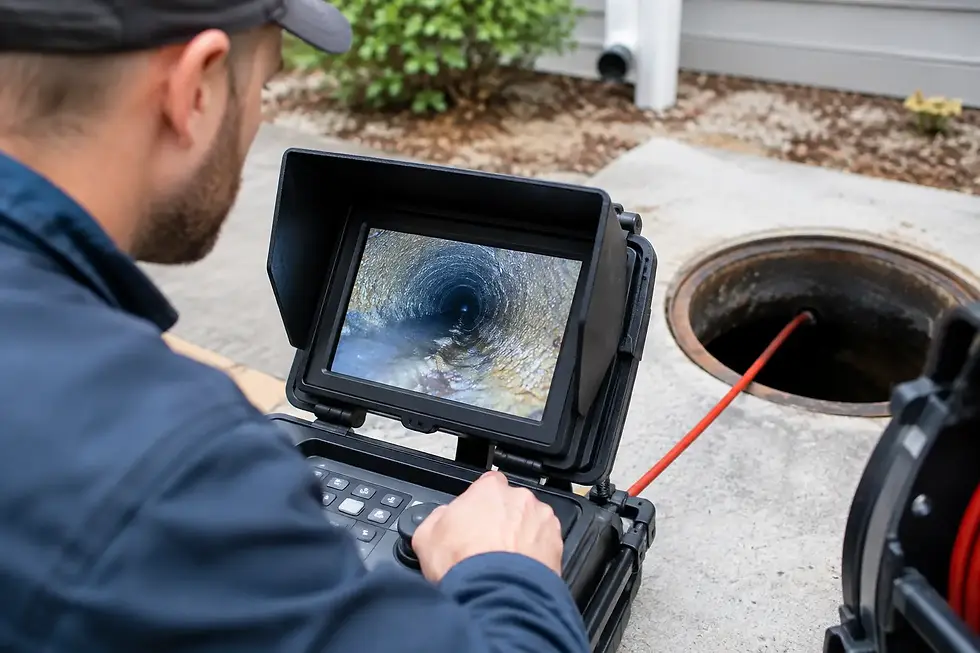
A sewer scope inspection uses a specialized camera to visually inspect accessible underground sewer piping. In older South Jersey homes, common findings can include root intrusion at joints, deteriorated cast iron piping, offsets where pipe sections have shifted, cracked piping, construction debris, and partial obstructions. In some cases, the camera reveals a line that is functioning at the moment but shows enough deterioration to justify further evaluation before closing.
This is particularly relevant for properties with mature trees, older plumbing systems, recurring drain history, additions, or homes that have been vacant. Buyers should not assume that a recently renovated kitchen or new bathroom means the underground line was replaced. Interior updates and buried piping are often separate projects.
Next Day Property Inspections provides sewer scope inspections as an addition to a home inspection or as a standalone service, giving buyers and homeowners a clearer view of conditions that cannot be evaluated from inside the home.
How to use inspection findings without losing focus
Inspection reports are detailed by design. A buyer may see dozens of comments, particularly in an older property. That does not mean every comment should become a repair request or a reason to walk away.
The most productive approach is to separate findings into practical categories. First are significant conditions that may affect safety, structural performance, water intrusion, major system function, or substantial future expense. Second are conditions that need specialist evaluation because the full extent is not visible or cannot be determined during a noninvasive inspection. Third are ordinary aging and maintenance conditions that may be expected for the property's age and type.
A loose outlet, a missing screen, and worn caulk are not equivalent to active foundation movement, a compromised electrical service, widespread moisture damage, or a failing sewer line. Experienced buyers and agents focus first on conditions that materially change the property's risk profile.
It also helps to keep the inspection report in context. An inspector reports what was visible and accessible on the day of the inspection. Furniture, stored belongings, finished wall surfaces, snow cover, standing water, and inaccessible areas can limit what can be observed. A good report states those limitations clearly rather than making assumptions.
Timing is part of the protection
The contingency period can move fast. Scheduling the inspection promptly after the contract is accepted leaves room for report review, specialist follow-up, and thoughtful negotiation. Waiting until the final days can create unnecessary pressure, especially when a roofing contractor, plumber, electrician, structural professional, or sewer camera inspection is needed to clarify a finding.
Same-day digital reporting can make a real difference here. Buyers, agents, and attorneys need clear documentation while the contingency is still active. The goal is not to create alarm. It is to provide enough detail to make a decision based on the actual condition of the property.
For investors, the timing issue can be even more significant. A property may be purchased for renovation, rental use, or seasonal use, but the condition of the main drain, crawlspace framing, electrical capacity, and moisture history still affects the project timeline and risk. A fast closing does not reduce the importance of understanding those systems.
An inspection contingency is a decision window
The best inspection contingency does not turn a buyer into an expert or eliminate every unknown in a house. It gives the buyer a reasonable opportunity to replace assumptions with evidence. That is especially valuable when a property has concealed systems, a long history, or the moisture and drainage exposures common across South Jersey.
A clear inspection, appropriate follow-up testing, and a careful review of the report allow a buyer to move ahead with more confidence. When the findings are more serious, it is better to learn that while there is still time to make an informed choice.