Sewer Line Problems in Older South Jersey Homes
A house can have a clean basement, updated kitchen, and a solid-looking crawlspace while one of its most consequential systems remains unknown. Sewer line problems in older South Jersey homes are often underground, outside the view of a standard home inspection, and may not show obvious symptoms during a brief walkthrough. That is why a sewer camera inspection can be a useful part of due diligence for buyers, sellers, investors, and real estate professionals.
Older neighborhoods throughout Atlantic, Cape May, Cumberland, Camden, Gloucester, Burlington, and Ocean counties contain a wide range of original piping materials, prior repairs, additions, and drainage conditions. The age of the house matters, but so do the trees on the lot, the soil movement around the foundation, the location of the municipal connection, and whether the property has been used seasonally. A sewer line may be working at the time of inspection and still show conditions worth understanding before a transaction moves forward.
Why Sewer Line Problems in Older South Jersey Homes Stay Hidden
Most visible plumbing fixtures only tell part of the story. A toilet may flush normally, and a sink may drain during an inspection, even when the buried line has internal deterioration, root entry, an offset joint, or a developing obstruction farther from the house. Water used during a typical inspection often does not duplicate the volume and timing of normal household use.
This is especially relevant in aging housing stock, where original cast iron, clay, Orangeburg, or older plastic piping may still be in service. Each material has different failure patterns. Cast iron can corrode and scale internally, reducing the effective diameter of the pipe. Clay pipe sections can separate or shift at joints. Orangeburg, a fiber-based pipe material used in some mid-century construction, can deform or flatten over time. Even newer PVC sections may be connected to older materials or installed with alignment issues.
In South Jersey shore homes and properties near coastal areas, moisture conditions can add another layer to the evaluation. High groundwater, wet soils, and drainage patterns do not automatically mean the sewer is defective, but they can affect excavation history, settlement, and the way buried piping performs over many years. Crawlspaces may also show evidence of moisture or plumbing repairs without revealing the actual condition of the line after it exits the building.
What We Commonly Look For With a Sewer Camera
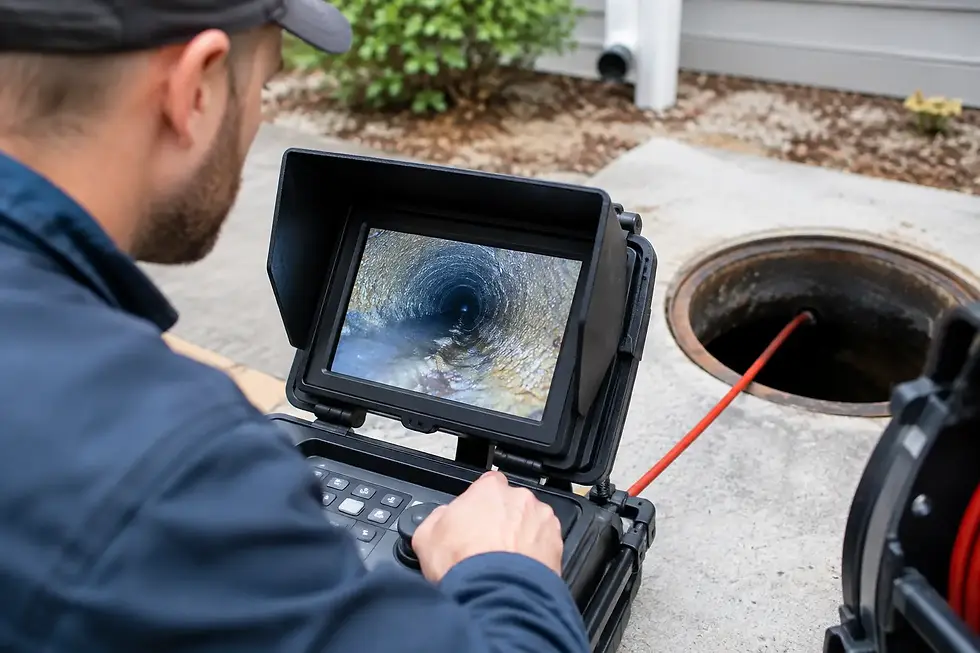
A sewer scope inspection uses a specialized camera to inspect accessible portions of the underground sewer line. The camera is typically introduced through a suitable cleanout or other accessible entry point and advanced toward the municipal sewer connection or septic component, depending on the property. The inspection is visual, and its purpose is to identify observable conditions that are not accessible during a standard home inspection.
Root intrusion is one of the most common findings in established South Jersey neighborhoods. Tree roots are drawn to moisture and can enter through small gaps at pipe joints, cracks, or deteriorated connections. A few fine roots may be a manageable condition, while heavy root growth can catch paper and waste, contributing to recurring slow drains or backups. The camera helps show the location and extent of visible intrusion rather than relying on assumptions.
Internal deterioration is another frequent concern, particularly with cast iron lines. As cast iron ages, corrosion can create rough, scaled surfaces inside the pipe. Material may collect on these surfaces, and the opening can become noticeably reduced. A line can still pass water during a short inspection while showing enough deterioration to justify further evaluation by a qualified plumbing contractor.
Offsets, separated joints, cracked piping, and bellies also deserve attention. An offset occurs when adjoining pipe sections no longer line up properly. A belly is a low area where water or debris may remain in the line rather than flowing freely. These conditions can develop from settlement, previous excavation, poor installation, or changes in the surrounding soil. The practical concern is not simply the name of the defect. It is whether the condition is catching debris, restricting flow, allowing roots in, or creating a likely repair issue.
Obstructions can range from wipes and accumulated debris to construction material or damaged pipe sections. In some cases, the camera cannot continue because of a blockage, heavy roots, standing water, or an inaccessible configuration. That limited result is still useful information. It establishes that the entire line was not visually confirmed and may point to the need for further diagnosis.
A Clear Sewer Scope Result Is Not Always a Perfect Line
Buyers sometimes expect a sewer camera report to produce a simple pass-or-fail answer. Underground piping is rarely that simple. Older lines often have minor root activity, surface wear, or standing water at a point in the run without an immediate backup. Conversely, a line that appears generally open may have a localized defect that becomes significant under heavier use.
The useful question is whether the visible condition is consistent with normal aging, whether it is affecting function, and whether a plumbing specialist should assess repair options before closing. A detailed report with images or video helps buyers, sellers, and agents discuss the actual observation instead of relying on vague statements such as “the sewer seems fine.”
There are also limits to any camera inspection. The camera can only document portions of the line it can access and see. Heavy debris, water, sharp turns, collapsed piping, and inaccessible cleanouts can prevent a complete inspection. A sewer scope does not predict the exact remaining life of every pipe section, locate every buried utility, or guarantee that a future blockage will not occur. It does, however, provide far more direct information than a fixture test alone.
When a Sewer Camera Inspection Makes Particular Sense
A sewer scope is worth considering whenever a property has age, site conditions, or history that makes the buried line a meaningful unknown. It is commonly helpful for homes with mature trees, older cast iron or clay piping, a history of slow drains, prior sewer repairs, or an addition that may have altered plumbing runs.
It is also valuable for seasonal and shore properties. A home that sits vacant for periods of time can appear trouble-free during a showing, even though the plumbing system has not been used under typical daily demand. Investors evaluating older properties may benefit from documenting sewer conditions before budgeting for renovations, particularly when interior upgrades could make later access more complicated.
For real estate transactions, the timing matters. A sewer scope is most useful while inspection and negotiation periods are still active. If visible defects are found, the parties can seek additional evaluation from an appropriately qualified contractor and make decisions with better information. If the accessible line appears serviceable, that result can reduce uncertainty around a major hidden component.
How Sewer Findings Should Be Reported
A useful sewer camera report should identify what portion of the line was inspected, the direction of travel when known, visible pipe materials, and observed conditions. Photos or video documentation help connect the written finding to the actual line. The report should also distinguish between an observed condition and a repair recommendation that requires a licensed plumbing or sewer contractor’s further evaluation.
For example, reporting “visible root intrusion at an apparent joint approximately 35 feet from the access point” is more helpful than simply stating “roots in sewer.” Likewise, noting that a camera could not pass a blocked section is different from claiming the pipe has fully collapsed. Clear reporting gives clients the facts needed to ask the right follow-up questions without overstating what the inspection can confirm.
At Next Day Property Inspections, sewer scope inspections are available as a standalone service or alongside a home inspection in South Jersey. The goal is straightforward: document visible underground sewer conditions clearly, deliver findings promptly, and help clients understand where additional evaluation may be warranted.
The Best Time to Investigate Is Before the Line Becomes an Emergency
A sewer line is easy to overlook because it is out of sight, but its condition can affect a purchase decision, renovation plan, or repair negotiation. For an older South Jersey property, a camera inspection adds a direct look at a system that standard inspection methods cannot fully evaluate. It replaces a major unknown with documented observations and a clearer basis for the next decision.