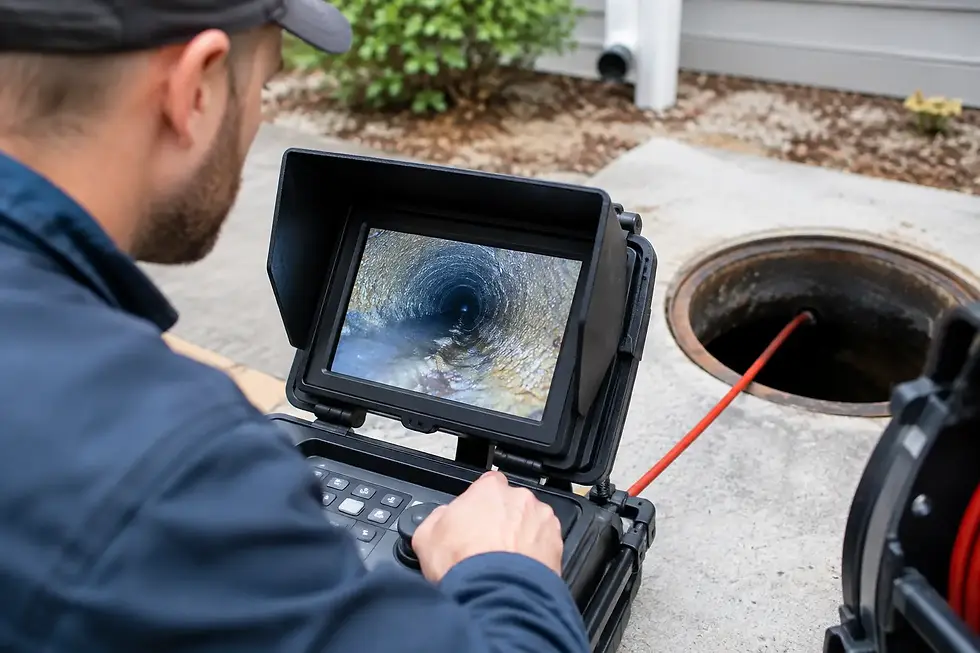
Sewer Camera Inspection Egg Harbor Township NJ
A sewer camera inspection Egg Harbor Township NJ can answer a question that a standard home inspection cannot: what condition is the buried sewer line actually in? The line may be working on inspection day, yet still have root intrusion, deteriorated cast iron, a shifted joint, or a developing blockage below grade. For a buyer, that distinction can matter well before closing.
Why the Sewer Line Deserves Its Own Inspection
A home inspection evaluates many visible and readily accessible components, but the underground sewer lateral is usually not visible. This is the pipe that carries wastewater from the house to a public sewer connection or, at some properties, toward a septic system. Because it is buried, the absence of a backup or slow drain does not confirm that the line is in good condition.
In Egg Harbor Township and elsewhere in Atlantic County, the age and history of the home often tell part of the story. Older houses may still have cast iron, clay, or other legacy piping. Newer construction can have plastic piping but may still show installation-related concerns, settlement, or debris. Homes surrounded by mature trees may have roots seeking small openings at pipe joints.
A sewer scope puts a specialized camera into an accessible cleanout or other suitable entry point. It provides a visual review of the accessible interior of the sewer line and allows the inspector to document visible conditions with video and report findings. It is a focused inspection, not a guess based on whether a toilet flushes normally.
What a Sewer Camera Inspection Can Reveal
The most useful sewer scope findings are usually not dramatic failures. Often, the camera identifies conditions that are still allowing water to pass but deserve attention before they become a larger disruption. A clear report helps a buyer, seller, or property owner understand what was observed and whether further evaluation by a qualified sewer contractor is warranted.
Root Intrusion at Joints
Roots commonly enter older sewer lines through separated joints, cracks, or worn connection points. At first, the intrusion may look like fine strands along the pipe wall. Over time, it can hold paper and waste, creating recurring restrictions. This is especially relevant at properties with established landscaping, where the sewer line runs near large trees or shrubs.
A camera inspection documents the location and extent of visible root growth. The next step depends on the severity, pipe material, and whether the line is flowing freely. Minor roots and heavy root masses are not the same condition, and the video should show the difference.
Cast Iron Deterioration
Cast iron was widely used in older homes, including many properties found across South Jersey. As it ages, the interior surface can become rough, scaled, or flaked. In more advanced cases, deterioration narrows the usable interior of the pipe or creates channels where waste catches.
From the outside, a cast iron sewer line may appear unremarkable because it is underground. The camera view is valuable because it shows the interior condition where drainage performance is affected. A sewer scope cannot determine every aspect of pipe thickness, but visible scaling, corrosion, and channeling should be documented clearly.
Offsets, Separations, and Settlement
An offset occurs when sections of pipe no longer align properly. This may result from ground movement, aging joints, previous repairs, or changes in the surrounding soil. A slight offset may not be causing an active blockage, while a larger displacement can catch debris and allow roots to enter.
Egg Harbor Township properties can vary considerably by neighborhood, age, and site conditions. Drainage patterns, prior excavation, and settling can all affect underground piping. The camera helps identify whether the line has a smooth, continuous path or a visible point of disruption that requires further review.
Cracks, Breaks, and Obstructions
A camera can also identify visible cracking, fractured sections, construction debris, grease buildup, or other obstructions inside the line. Some defects are obvious; others appear as a recurring area where the camera hangs up, flow is restricted, or the pipe shape changes.
Not every dark spot on a recording is a broken pipe. Image quality can be affected by water, debris, or the camera's position. An experienced inspector separates a clearly visible defect from a condition that needs confirmation by a sewer professional. That measured approach is more useful than overstating what the video can prove.
When a Sewer Scope Makes Sense for a Home Purchase
For many buyers, a sewer camera inspection is most valuable before the end of an inspection contingency period. Once a transaction is complete, the responsibility for an underground line issue often shifts to the new owner. Including the scope while arranging a home inspection in South Jersey gives buyers a more complete view of systems that are otherwise hidden.
It is particularly worth considering when the house is older, the property has mature trees, or the sewer line material is unknown. It also makes sense when there are signs of prior drainage concerns, such as repair records, patched flooring near a plumbing area, a history of backups, or an older cleanout arrangement.
Investors should not assume that a recently renovated interior means the sewer lateral has been replaced. Kitchen cabinets, bathrooms, and finishes are visible improvements. The main sewer line may be original, partially repaired, or simply outside the scope of the renovation work. A quick visual evaluation can help avoid making assumptions based on the appearance of the home above ground.
What to Expect During the Inspection
The inspector first looks for an accessible entry point, typically a sewer cleanout. Access is an important limitation. If there is no suitable cleanout, if the line is obstructed, or if site conditions prevent safe entry, the full line may not be viewable. A professional report should state what portion of the line was accessible and any limitations encountered.
The camera is advanced through the line while the inspector watches for visible defects, material transitions, standing water, root intrusion, pipe damage, and obstructions. When possible, the inspection identifies the approximate location of a concern in relation to the house or cleanout. Exact depth and repair scope are generally matters for a qualified sewer contractor using the appropriate locating equipment.
At Next Day Property Inspections, sewer scope inspections are available as an added service with a home inspection or as a standalone inspection. The goal is straightforward: provide a documented visual assessment of accessible underground sewer piping and deliver findings promptly enough to support an informed decision.
A Clear Result Is Still Valuable
Sometimes the camera shows a line that is flowing and appears to be in serviceable condition throughout the accessible run. That is useful information, especially for a buyer weighing the overall condition of an Atlantic County property. It does not create a lifetime guarantee, and it does not eliminate the possibility of future issues. It does, however, replace uncertainty with a documented observation from the date of inspection.
The same is true when limitations are present. If the camera cannot pass a certain point, that may reflect an obstruction, a bend, a damaged section, or another access issue. Rather than treating an incomplete view as a pass, the report should explain what was visible, where the inspection stopped, and why further evaluation may be appropriate.
Sewer Conditions Are Easier to Address Before They Become Emergencies
Recurring drain concerns, an older sewer line, or a home purchase are all reasonable times to schedule a sewer scope. This is particularly true for shore-area and seasonal properties, where a line may not receive the same regular use as a year-round home and problems can remain unnoticed until occupancy increases.
A sewer camera inspection does not need to create alarm. Its purpose is to identify visible conditions below ground, explain their practical significance, and give the client clear information for the next decision. When the sewer line is one of the few major systems that cannot be evaluated from the surface, a camera inspection is often the most direct way to see what is there.