Radon Test Versus Radon Monitor: Which Is Right?
A radon test versus radon monitor decision usually comes up when a buyer sees two different options and assumes they provide the same answer. They do not. Both can be useful, but they are designed for different purposes, and choosing the wrong one can create confusion during a real estate transaction.
For South Jersey buyers, this matters because radon levels can vary between homes on the same street. We see differences tied to foundation type, crawlspace conditions, sump systems, soil contact, and how a home is used. A seasonal shore property with closed windows and a damp crawlspace may behave differently from a year-round home with a finished basement, even when both are in the same neighborhood.
Radon Test Versus Radon Monitor: The Basic Difference
A radon test is the process used to determine the radon level in a home during a defined testing period. In a purchase transaction, that often means a short-term test placed in the lowest livable level of the home for the required period under controlled conditions. The result is used to help the buyer, seller, and their agents make a timely decision.
A radon monitor is the device that records the air sample and reports the result. Some monitors are continuous radon monitors, meaning they collect readings at regular intervals throughout the test. Others are long-term devices used to observe radon patterns over months rather than days.
The distinction is practical: a test answers a transaction-related question within a set timeframe. A monitor can provide more detail about changing conditions, depending on the equipment and how long it remains in place.
When a Short-Term Radon Test Makes Sense
For most homebuyers, a professionally conducted short-term radon test is the appropriate starting point. It fits the inspection timeline and provides a documented result while the buyer still has time to address findings through the contract process.
The test should be placed in a suitable location, usually the lowest level that could be occupied. That does not always mean the basement. A finished basement, slab-on-grade living area, or lower-level family room may be the relevant testing location. An unfinished crawlspace is not normally treated the same as a living space, but its condition can still affect the air above it.
During a real estate test, controlled conditions matter. Open windows, exterior doors left open for extended periods, or unusual ventilation practices can affect the reading. A professional test is not just about putting a device on a shelf. Placement, timing, home conditions, and documentation all affect whether the result is useful.
At Next Day Property Inspections, the goal is to give clients a clear report they can use, not simply a number without context. If a result is elevated, the report should make clear what was tested, where the device was located, and what the reading means for the next decision.
What a Continuous Radon Monitor Adds
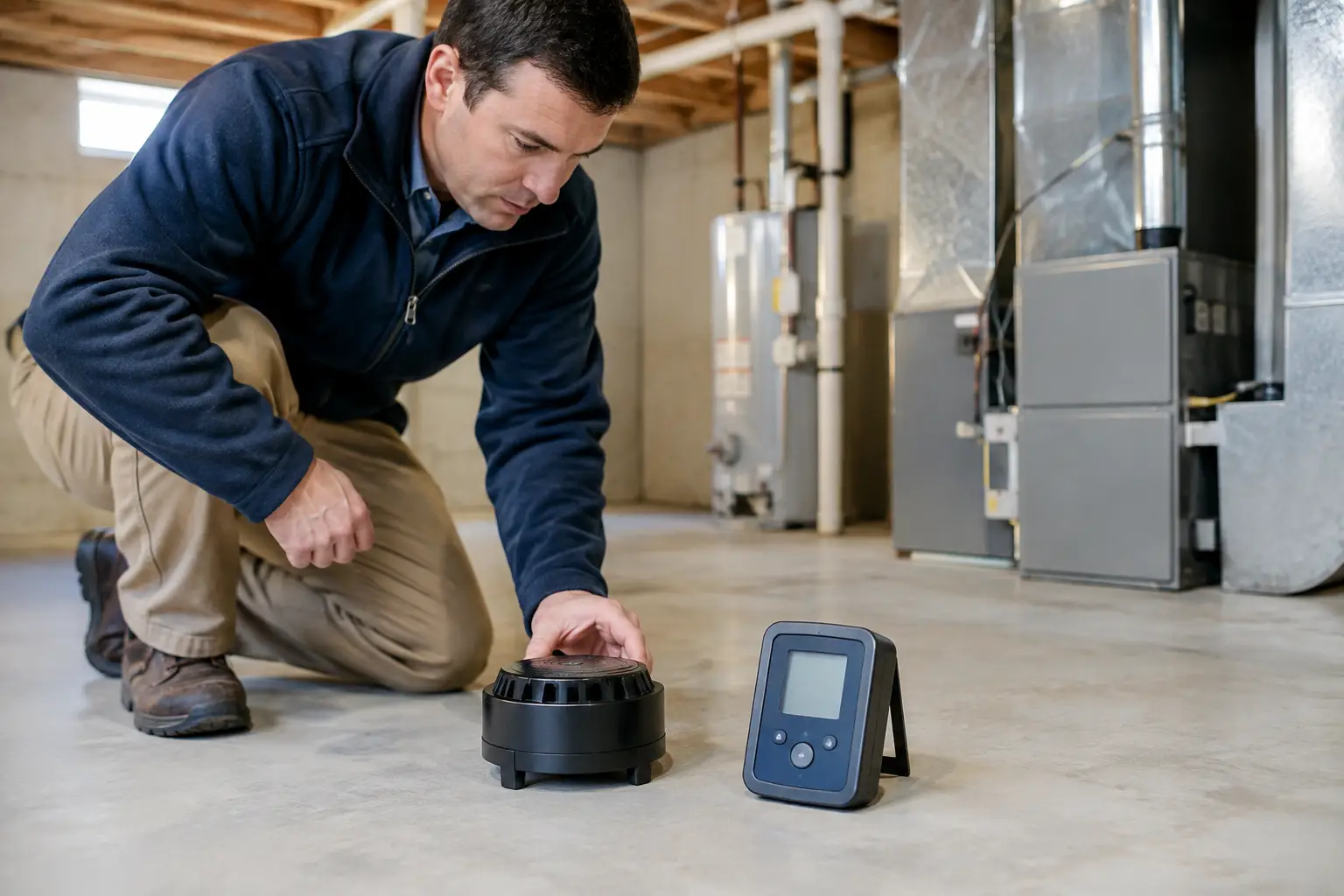
A continuous radon monitor is often the best tool for a short-term real estate test because it takes multiple readings rather than producing only one final average. That pattern can be valuable when reviewing whether the result appears consistent throughout the test period.
Many professional monitors also record environmental data and can identify certain conditions that may affect test integrity. This is useful in occupied homes, vacant homes, and properties where access is shared among sellers, agents, contractors, and buyers.
A monitor does not make radon testing more alarming. It makes the testing process more accountable. If a result is close to the action level or shows meaningful variation, the monitor data may help explain whether additional testing is reasonable before a buyer makes a major decision.
That said, more data is not always necessary. When a properly conducted short-term test produces a clear result, the transaction can usually move forward based on that report. A monitor is a measurement tool, not a substitute for sound judgment.
When Long-Term Monitoring Is Worth Considering
Long-term radon monitoring is most helpful when a homeowner wants to understand how radon changes over time. Radon can fluctuate with weather, heating and cooling cycles, rainfall, barometric pressure, building ventilation, and how the lower level is used. A two- or three-day test is a snapshot. A long-term device provides a broader picture.
This can be especially relevant after closing, when a homeowner has more time to evaluate the property without a contract deadline. It may also make sense when a short-term result falls near the level where mitigation is commonly considered, or when the home has unusual conditions that could influence readings.
In South Jersey, we see this question more often in homes with crawlspaces, older basements, additions built over different foundation types, and seasonal properties. Coastal moisture conditions do not cause radon, but damp crawlspaces, sealed-up homes, and changing ventilation patterns can complicate how air moves through a structure.
Long-term monitoring is not typically the first choice when a buyer needs an inspection-period answer. It is better viewed as a follow-up tool for a homeowner who wants additional confidence in the result or wants to verify conditions over multiple seasons.
Why Home Conditions Matter as Much as the Device
The type of foundation often matters more than buyers expect. Atlantic County properties may have full basements, slab foundations, partial crawlspaces, or a mix of all three after additions and renovations. Each configuration creates different pathways for soil gases to enter the home.
A dirt-floor crawlspace, gaps around utility penetrations, open sump pits, cracks in a slab, and unsealed joints around foundation walls can all be relevant observations during a home inspection. These conditions do not prove a home has elevated radon, but they help explain why testing is worthwhile.
Older housing stock can add another layer. A home may have been renovated several times, with mechanical systems moved, basements partially finished, or former porches enclosed into conditioned space. The lowest occupied area may no longer be obvious. An experienced inspector considers how the building is actually used before selecting the testing location.
Common Misunderstandings Buyers Should Avoid
One common misunderstanding is that radon is only a basement issue. Homes without basements can have elevated levels, including slab-on-grade homes and properties with crawlspaces. Another is that a neighboring home's result predicts the next home's result. It does not. Nearby results can support the decision to test, but each home needs its own measurement.
Buyers also sometimes assume a closed-up seasonal property cannot be tested accurately. It can be tested, provided the required conditions are followed and the property can remain undisturbed during the testing period. In fact, shore homes that remain closed for long periods may be exactly the properties where buyers should avoid assumptions.
Finally, a low result from years ago is not a current result. Changes to the home, drainage conditions, HVAC operation, basement finishing, and occupancy can alter air movement. When buying a property, current testing is the meaningful information.
Choosing the Right Approach for a Purchase
For a typical real estate transaction, the practical choice is a professional short-term radon test using a continuous monitor. It provides a timely result, a documented testing process, and enough detail to support a decision before the inspection contingency expires.
A long-term monitor is more appropriate when the buyer or homeowner needs a broader view of conditions over time. It is often a sensible second step when the short-term result is borderline, when the house has unusual foundation conditions, or when a homeowner wants post-closing confirmation.
The best result is not simply the lowest number or the most complicated report. It is a test performed correctly, in the right location, with findings explained clearly enough for the client to decide what comes next. For buyers looking at South Jersey homes, that clarity is far more useful than guessing based on the age of the house, the neighborhood, or a neighbor's experience.