Radon Mitigation Versus Radon Testing Explained
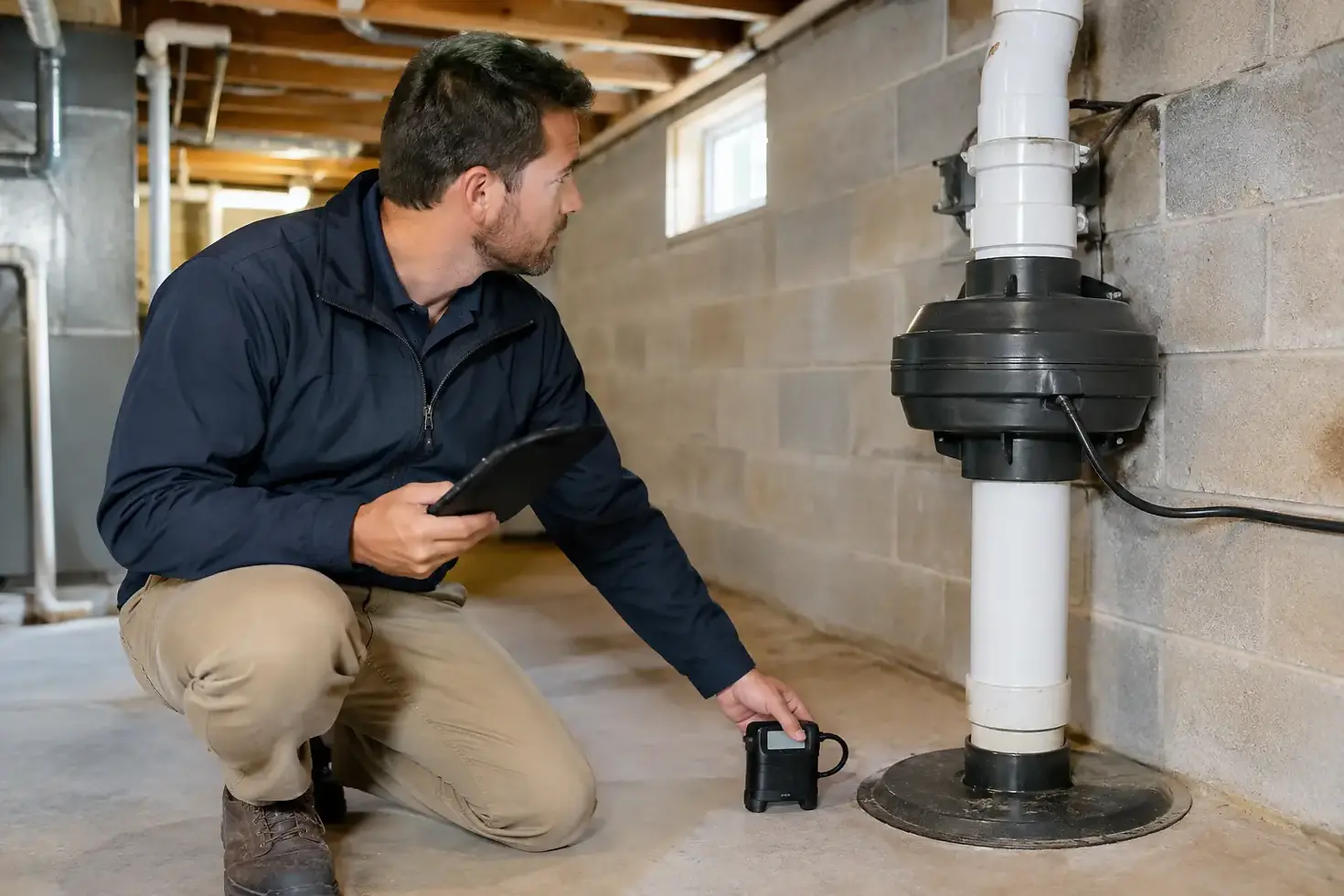
A radon fan on the outside of a house and a small testing device in the basement serve very different purposes. That distinction matters during a real estate transaction, especially when buyers are trying to keep inspections, negotiations, and closing timelines moving. Radon mitigation versus radon testing is not an either-or decision in most cases. Testing identifies the condition. Mitigation is the corrective work considered when results show elevated radon levels.
At Next Day Property Inspections, we regularly see buyers assume that a house with a newer-looking vent pipe has already resolved the issue, or assume a dry crawlspace means testing is unnecessary. Neither is a reliable conclusion. Radon cannot be seen or smelled, and a mitigation system should be verified with a follow-up test rather than judged by appearance alone.
Radon Testing Comes Before a Mitigation Decision
Radon testing measures the concentration of radon gas in the air over a defined testing period. In a typical South Jersey home purchase, the goal is to understand the radon condition of the lowest level that could be occupied, whether that is a basement, finished lower level, slab-on-grade area, or crawlspace-connected living area.
The test does not identify where radon enters the structure with complete precision. It provides a documented result that helps a buyer, seller, or homeowner decide whether further action is warranted. During a real estate inspection period, that result can become part of the broader property-condition discussion alongside roofing, electrical, plumbing, moisture, and structural findings.
Testing is especially useful because South Jersey housing varies widely. Atlantic County properties may have basements, crawlspaces, additions built on slabs, or combinations of all three. Shore homes can have elevated foundations and enclosed lower areas. Older homes may have utility penetrations, sump pits, floor cracks, and unfinished sections that create multiple potential pathways for soil gas entry.
A property’s age, location, or appearance does not reliably predict its radon result. Two similar homes on the same street can test differently because of foundation details, how the house is ventilated, soil conditions, and the way air moves through the structure.
What a Professional Radon Test Tells You
A properly conducted test provides a result for the specific conditions present during the testing period. In a purchase transaction, this gives all parties a defined starting point rather than relying on assumptions or a neighbor’s prior result.
Testing also establishes a baseline when a home already has a mitigation system. If the system is running, a current test confirms whether it is reducing indoor radon to an acceptable level. A fan operating does not automatically mean the system is working as intended. We have encountered systems with disconnected piping, nonfunctioning fans, missing warning devices, or configurations that were never suited to the home’s foundation layout.
Test results should be read in context. A qualified radon professional can explain what the result means, whether mitigation should be considered, and whether a retest or additional evaluation makes sense for the property.
When Radon Mitigation Is the Right Next Step
Radon mitigation is a system designed to reduce radon entering and collecting inside a building. The most common approach uses piping and a fan to draw soil gas from below the foundation and discharge it safely above the roofline or at an appropriate exterior location. The exact design depends on the home.
A basement home may need suction points through the slab. A crawlspace home may require a sealed vapor barrier and sub-membrane depressurization. Houses with multiple foundation sections can need more than one suction point or a more involved design. This is why mitigation should not be treated as a one-size-fits-all add-on.
The practical sequence is straightforward: test first, review the result, then use a qualified mitigation contractor when the result supports that decision. After installation, conduct a follow-up radon test to confirm that the system is performing.
There are exceptions. If a home already has a visibly incomplete or damaged system, repairs may be needed before a meaningful verification test can be performed. Likewise, a buyer may choose to negotiate for a mitigation system based on an inspection-period test result, with post-installation testing required to document performance.
Mitigation Is Not a Substitute for Testing
Installing a system without testing may be reasonable in limited circumstances, such as a new construction plan or a homeowner’s preference for added protection. But it does not eliminate the need for a post-installation test. The system’s purpose is to lower measured radon levels, so the result still needs verification.
This is particularly relevant in homes with crawlspaces. Crawlspace conditions can be affected by seasonal moisture, open or damaged vapor barriers, and gaps around mechanical equipment. Coastal moisture conditions may complicate the space, but humidity and radon are separate issues. A damp crawlspace may need attention for several reasons, while only radon testing can tell you the radon condition inside the home.
Common Misunderstandings During South Jersey Home Inspections
One frequent misconception is that radon only affects homes with basements. Slab homes, raised homes, and homes over crawlspaces can also have radon concerns. Soil gas can enter through openings around pipes, cracks in concrete, sump covers, foundation joints, and other accessible pathways.
Another misconception is that opening windows for a showing or keeping a home vacant makes the concern disappear. Short-term ventilation changes can affect indoor conditions, which is why test protocols and closed-house conditions matter. A reliable result depends on performing the test correctly, not simply placing a device in a room.
Buyers also sometimes confuse radon testing with the standard visual home inspection. A thorough home inspection can identify an existing mitigation system, visible foundation openings, crawlspace conditions, and general site drainage concerns. It cannot determine a radon level without a dedicated test. This is why radon testing is commonly added to a home inspection in South Jersey rather than assumed to be included.
For real estate professionals, clear documentation is useful. A detailed inspection report can identify the visible presence and apparent condition of mitigation components, while the radon report documents the measured result. Keeping those findings separate avoids confusion about what was observed and what was measured.
Choosing the Right Service for Your Situation
For a buyer under contract, radon testing is usually the first service to schedule. The result can guide the next conversation before the inspection contingency period expires. If elevated results are found, the parties can determine whether mitigation, a credit, a repair agreement, or another solution fits the transaction.
For a homeowner with an existing mitigation system, testing is the appropriate way to verify performance. This is worth doing after major changes that may affect the lower level, such as finishing a basement, modifying a crawlspace, or making foundation-related repairs.
For investors evaluating older housing stock, radon testing belongs in the same practical category as checking other conditions that are not obvious from a walk-through. A freshly renovated lower level can conceal the fact that the home’s foundation and air pathways have never been evaluated for radon.
A good inspection process does not create unnecessary alarm. It gives buyers and owners enough information to make a grounded decision. Radon testing answers a measurable question. Radon mitigation addresses that question when the result indicates action is needed.
What to Expect From the Inspection Process
A professional radon test should be coordinated around the property’s occupancy and transaction schedule. The testing equipment is placed in an appropriate location, and the home must meet required testing conditions during the test period. After retrieval, the result is reported promptly so the client can understand the next step.
If mitigation is later recommended, the contractor should evaluate the actual foundation configuration instead of quoting a generic system from a listing description. A split-level home with a basement addition and a crawlspace is not the same as a simple slab-on-grade house. The layout affects where suction can be created, where piping can run, and how the finished system will be verified.
The useful question is not whether testing or mitigation is more important. Testing provides the evidence. Mitigation is the response when the evidence calls for it. For a South Jersey buyer, getting that order right keeps the decision tied to the property in front of you, not assumptions about the neighborhood or the age of the house.